


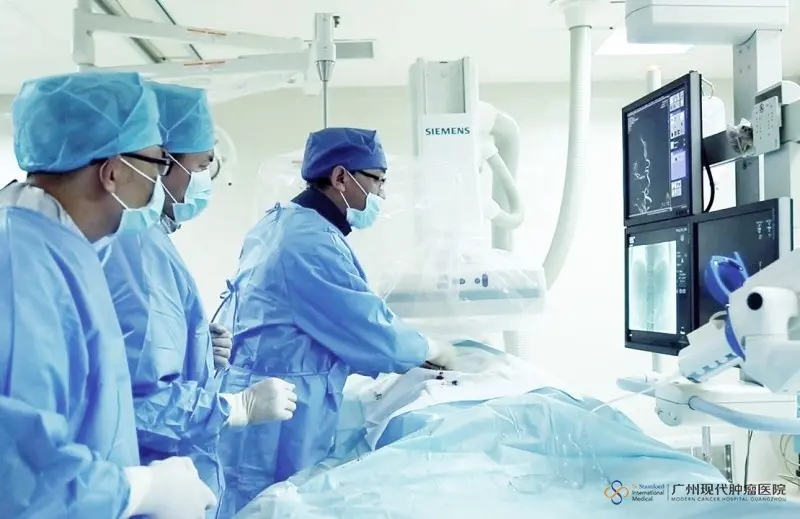
Interventional Therapy
Understanding Interventional Therapy
Interventional therapy encompasses both vascular and nonvascular approaches and represents a sophisticated, minimally invasive treatment modality performed with real-time imaging guidance. This advanced technique utilizes precision imaging technology to guide medical instruments through extraordinarily small openings—typically just 1-2 millimeters—allowing physicians to deliver specialized treatment directly to tumor sites.
The procedure involves inserting catheters and other sophisticated medical devices through these minimal access points. Once positioned correctly, these instruments work to suppress cancer cell proliferation and stop malignant spread by interrupting the tumor’s blood supply. Simultaneously, therapeutic agents are delivered directly to the cancer site, producing a powerful localized chemotherapy effect without the widespread toxicity associated with traditional systemic treatments.
Interventional Therapy Versus Systemic Chemotherapy: A Comprehensive Comparison
Safety Profile
- Interventional Therapy: Demonstrates a superior safety profile with minimal risk to surrounding tissues
- Systemic Chemotherapy: Carries substantially higher risk due to whole-body drug distribution and potential complications
Extent of Physical Trauma
- Interventional Therapy: Requires only a 2-millimeter incision; delivers medication locally to the tumor; produces minimal toxic reactions and fewer complications; enables faster healing
- Systemic Chemotherapy: Produces severe side effects including reduced white blood cell counts, diminished platelet levels, hair loss, persistent nausea, and compromised immune function
Medication Concentration Levels
- Interventional Therapy: Delivers drugs through arterial administration directly into the tumor, achieving drug concentrations that are 2-92 times higher than traditional chemotherapy methods. This superior concentration dramatically improves cancer cell elimination
- Systemic Chemotherapy: Distributes medication throughout the circulatory system, resulting in relatively low drug levels reaching the tumor site and limiting therapeutic effectiveness
Defining Treatment Features
- Interventional Therapy: Eliminates tumor blood supply; targets cancer cells with precision; utilizes concentrated therapeutic agents; minimizes adverse reactions; allows immediate assessment of treatment progress; delivers demonstrable results
- Systemic Chemotherapy: Destroys both malignant and healthy cells indiscriminately; damages the body’s natural defenses; creates substantial side effects; demonstrates limited effectiveness for advanced-stage disease
The Three Fundamental Breakthroughs of Interventional Therapy
1. Nutrient Supply Disruption and Tumor Growth Inhibition
Medical evidence indicates that patients with early-stage malignancies achieve five-year survival rates ranging from 60-90%. Unfortunately, diagnostic limitations frequently mean that disease has already progressed to intermediate or advanced stages at the time of initial detection. During intermediate and advanced stages, cancerous cells rapidly spread to other areas with abundant blood flow and nutritional resources.
Interventional therapy proves particularly valuable at this critical juncture. By cutting off the nutritional blood supply to tumors, this approach effectively halts cancer cell proliferation and controls disease progression even in advanced disease stages.
2. Minimally Invasive Approach with Reduced Side Effects Through Direct Tumor Administration
Conventional chemotherapy presents a fundamental paradox: while destroying malignant cells, it simultaneously damages healthy tissues and weakens immune defenses. Patients receiving systemic chemotherapy commonly experience neutropenia (dangerously low white blood cells), thrombocytopenia (platelet reduction), alopecia (hair loss), emesis (severe vomiting), and immune suppression. These debilitating effects prove particularly problematic for intermediate and advanced-stage patients whose bodies are already severely weakened by disease.
Interventional therapy revolutionizes this paradigm. With only a 2-millimeter surgical opening required, therapeutic agents travel directly to affected tissues. Consequently, local drug concentrations reach 2-8 times higher levels than systemic chemotherapy provides, while systemic toxicity remains minimal. Patients experience remarkably fewer adverse reactions and complications, enabling more tolerable treatment experiences.
3. Precise Cancer Cell Destruction with Reduced Metastatic Risk
Metastatic spread represents the defining characteristic distinguishing cancer from other conditions and serves as the primary cause of cancer-related mortality. The extensive network of blood vessels supplying tumors substantially elevates metastasis probability. Statistical evidence demonstrates that metastatic spread occurs in approximately 70% of all cancer patients.
Interventional therapy addresses this critical challenge through its capacity to precisely target and eliminate cancer cells while simultaneously reducing metastatic risk through nutrient supply interruption.
Six Major Advantages of Interventional Therapy
1. Exceptional Targeting Precision
Medical agents are directed specifically to malignant tissues to suppress blood supply and induce cancerous cell death through starvation. This focused approach preserves normal adjacent tissues from unwanted medication exposure.
2. Minimal Trauma with Rapid Restoration
Unlike surgical procedures, interventional therapy requires only a 2-millimeter opening, allowing patients to recover their health and resume normal activities remarkably quickly.
3. Limited Adverse Reactions
Interventional therapy overcomes the severe limitations of traditional systemic approaches. Therapeutic agents reach malignant areas in high concentrations, generating minimal side effects and substantially reducing patient suffering throughout the treatment course.
4. Substantial Clinical Outcomes
Following interventional therapy, patients experience extended survival duration and significantly enhanced quality of life throughout their treatment journey and beyond.
5. Multiple Treatment Capacity
Interventional therapy can be administered repeatedly without metabolic restrictions or limitations on cancer cell response, unlike many other treatment modalities.
6. Local Anesthetic Administration
Interventional therapy typically utilizes local pain management rather than general anesthesia, eliminating the inherent risks and complications associated with systemic anesthetic approaches.
Applicable Conditions and Candidate Patient Populations
Interventional therapy demonstrates effectiveness across a broad spectrum of malignant conditions at all disease stages. The procedure proves particularly beneficial for the following patient populations:
- Patients diagnosed at any stage of cancer progression
- Those unwilling or medically unsuitable for conventional surgical procedures, radiation therapy, or chemotherapy
- Patients unable to tolerate additional surgical intervention due to recurrent disease
- Those demonstrating inadequate response to traditional surgical resection, chemotherapy, or radiotherapy
- Patients experiencing intolerance or adverse reactions to radiation or chemical therapies
- Individuals diagnosed with liver cancer, lung malignancy, breast cancer, colorectal disease, cervical cancer, nasopharyngeal cancer, thyroid malignancy, prostate cancer, gastric cancer, and various other solid malignancies
Clinical Excellence at Modern Cancer Hospital Guangzhou
Highly Experienced Interventional Oncologists
Successful interventional therapy demands extraordinary technical precision and specialized medical knowledge. Physicians performing these procedures must possess three indispensable competencies:
- Advanced Puncture Methodology: Sophisticated needle insertion techniques ensuring absolute accuracy in anatomical targeting
- Comprehensive Vascular Anatomy Expertise: Thorough understanding of blood vessel systems enabling rapid and precise vessel identification
- Exceptional Imaging Interpretation Skills: Expert-level knowledge of diagnostic imaging technologies guiding therapeutic delivery
The medical staff at Modern Cancer Hospital Guangzhou represents carefully selected specialists maintaining extensive clinical experience combined with mastery of all three essential competencies. This comprehensive skill set guarantees superior procedural success and optimal patient outcomes throughout the treatment journey.
Sophisticated Anticancer Pharmaceutical Agents
Interventional procedures at Modern Cancer Hospital Guangzhou utilize pharmacologically advanced anticancer formulations containing traditional Chinese herbal medicine components. These specialized agents work through multiple mechanisms to suppress neovascularization (new blood vessel formation that feeds tumors), thereby inhibiting malignant cell proliferation and progression. The interventional approach incorporating these agents provides concentrated drug delivery, absence of medication resistance, minimal toxic manifestations, and superior targeting characteristics compared to conventional treatments.
Applicable Malignancies
Interventional therapy finds primary application in managing the following solid tumor types:
- Hepatocellular carcinoma (liver cancer)
- Pulmonary malignancy (lung cancer)
- Mammary carcinoma (breast cancer)
- Colorectal adenocarcinoma
- Cervical cancer
- Nasopharyngeal carcinoma
- Thyroid cancer
- Prostatic malignancy
- Gastric adenocarcinoma
- Various other solid tumors affecting different organ systems