


Photodynamic Therapy (PDT)
What Is Photodynamic Therapy?
Photodynamic therapy, commonly abbreviated as PDT, is an anticancer treatment method that combines a light-sensitive drug known as a photosensitizer with a specific wavelength of light. Once the photosensitizing compound is exposed to this particular light, it triggers the generation of a reactive form of oxygen capable of destroying nearby cells. The therapy received clinical approval from the U.S. Food and Drug Administration in 1996, and China’s State Food and Drug Administration granted its own clinical approval for the technique in 2003.
How Does PDT Work in Cancer Treatment?
The treatment process begins with an intravenous injection of a photosensitizing agent into the patient’s bloodstream. Although this substance circulates throughout the body and is taken up by cells generally, it tends to remain within cancerous cells for a longer duration compared to healthy tissue. Roughly 24 to 72 hours following the injection—once most of the agent has cleared from normal cells but is still concentrated in the tumor—the affected area is exposed to light. The photosensitizer retained in the tumor absorbs this light and generates a reactive oxygen species that damages and destroys the surrounding cancer cells.
Beyond its direct cytotoxic effect on cancer cells, PDT is understood to shrink or eliminate tumors through two additional mechanisms. First, it can injure the blood vessels supplying the tumor, cutting off the flow of nutrients the cancer needs to grow. Second, the therapy may stimulate the body’s immune response, prompting it to attack the tumor cells directly.
The light source used in PDT may be a laser or another form of illumination. When a laser is used, the light can be channeled through fiber optic cables—thin strands capable of transmitting light—to reach tumors located deep within the body. For instance, such a cable can be threaded through an endoscope, a slender illuminated instrument used to visualize internal tissue, to deliver treatment to cancers in organs such as the lungs or esophagus. For tumors located on or near the body’s surface, such as skin cancer, light-emitting diodes (LEDs) or other external light sources may be used instead.
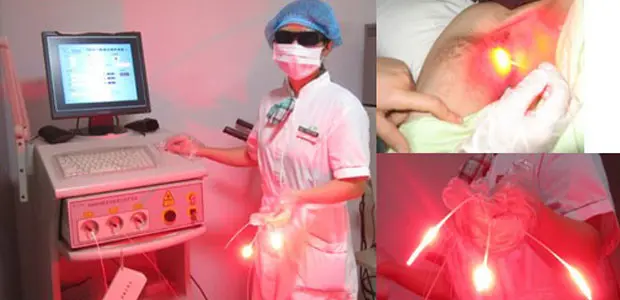
Advantages of PDT
- Minimally invasive: The procedure does not require surgical incisions, resulting in less pain for the patient.
- Rapid response: Treatment effects can typically be observed within 48 to 72 hours.
- Reduces recurrence risk: The therapy is able to destroy small, hidden cancerous lesions, helping to minimize the chance of tumor recurrence.
- Low complication rate: Because of its low toxicity, PDT is well suited to patients with advanced-stage cancer, elderly patients, and those with generally poor physical condition.
Potential Complications and Side Effects
One notable side effect involves the photosensitizing drug porfimer sodium, which can leave the skin and eyes sensitive to light for approximately six weeks after treatment. Patients are therefore advised to avoid direct sunlight and strong indoor lighting during this recovery period.
Because photosensitizers accumulate preferentially in tumor tissue and the activating light is concentrated on the tumor site, damage to surrounding healthy tissue is generally limited. Nevertheless, PDT can occasionally cause burns, swelling, pain, or scarring in nearby healthy areas.
Additional side effects tend to correspond to the specific site being treated. These may include coughing, difficulty swallowing, abdominal pain, painful breathing, or shortness of breath—symptoms that are usually temporary in nature.
Cancer Types Currently Treated with PDT
- Oropharyngeal cancer – The effectiveness rate reaches as high as 75% for early-stage oral cancer and nasopharyngeal cancer.
- Esophageal cancer – PDT can substantially relieve obstruction caused by progressive esophageal cancer. It is also effective for cervical esophageal cancer and disseminated submucosal esophageal cancer, and is capable of clearing intracavity tumor tissue in patients treated with esophageal stents.
- Barrett’s esophagus – The therapy is able to eliminate Barrett’s esophagus epithelium and can also be used to treat early-stage esophageal adenocarcinoma.
- Lung cancer – The survival rate for early-stage bronchial cancer reaches 90%, while the improvement rate for progressive obstructive bronchial carcinoma reaches 85%.
- Gastric cancer – The survival rate for early-stage gastric cancer stands at 85%, and the therapy is also effective in relieving symptoms of progressive gastric cancer.
- Bladder cancer – PDT is used to treat carcinoma in situ, with an effectiveness rate of 71% for progressive-stage cases.
- Other applicable cancers – Colorectal cancer, bile duct carcinoma (particularly hilar cholangiocarcinoma), pancreatic cancer, ampullary cancer, abdominal cancers, pleural and abdominal mesothelioma, liver cancer, brain tumors, and genitourinary tract cancers.