

Living With Cancer for 15 Years: A Triple-Negative Breast Cancer Survivor’s Story
People who meet me at St. Stamford Modern Cancer Hospital Guangzhou often notice my belly first — it makes me look about five months pregnant, though I’m not. I like to joke about it using old Chinese medicine sayings: the liver is tied to the gallbladder, and the lungs are tied to the heart. So when I say my liver has a tumor, I say my gallbladder is “broken” — meaning I’m frightened. And since my lungs are affected too, I say my heart aches. I’m Ms. Guo, and I’ve been fighting triple-negative breast cancer for fifteen years.

When the doctors here first learned my history, they were stunned. Triple-negative breast cancer is one of the hardest breast cancer subtypes to treat, and most patients diagnosed with it aren’t expected to survive past five years. Fifteen years later, I’m still here, and the doctors call it something close to a medical miracle.
I’m originally from Singapore, and people are often surprised that I can talk about all this so calmly. To me, cancer is a bit like a difficult child — when it behaves, I let it be. When it acts up, I go to the hospital and put it back in its place.
How It All Began
In 2001 I had my second child. I was working as an engineer at the time, and like any parent, I pushed myself harder to give my kids a good future. But only a few months after my baby was born, everything changed.
In May of that year, I noticed a hard lump in my right breast, roughly 4 centimeters across. Tests confirmed it was stage 2 triple-negative breast cancer. Because I had a newborn to care for, I didn’t let myself dwell on the fear. I followed my Singaporean doctors’ advice — surgery, followed by five years of oral hormonal therapy. As the oncologists here later explained to me, triple-negative breast cancer tends to be aggressive, with a higher chance of coming back locally or spreading to other organs.
When Cancer Kept Coming Back
And it did come back. During a routine follow-up, doctors found a small tumor, about 0.8 cm, again in my right breast — and another, close to 5 cm, in my liver. I went through surgery once more, removing the new breast tumor and part of my liver. For a while, life returned to normal.
I thought that was the end of it, but the cancer returned twice more. The liver tumor grew to 4 cm, and then, at its worst, 12 cm. Doctors suggested another round of chemotherapy, but I said no. The last time I tried it, the tumor hadn’t shrunk even a single centimeter. I decided it was time to look elsewhere.
Seeking Treatment in China
Friends told me that cancer treatment in China had advanced a great deal, so I made the trip to St. Stamford Modern Cancer Hospital Guangzhou (MCHG). By the time I arrived, my liver tumor had grown to 14 cm and was causing real pain — my belly had swollen visibly. Further tests confirmed my triple-negative breast cancer had spread to both my liver and lungs.
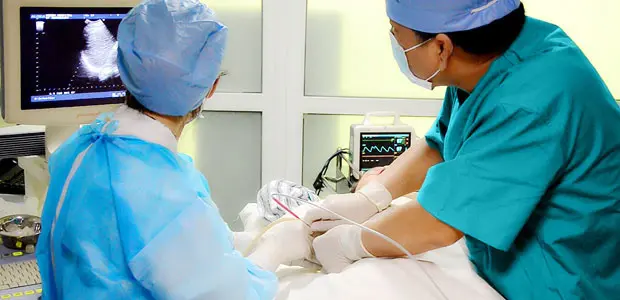
Two days later, the hospital’s multidisciplinary team (MDT) put together a plan for me, starting with cryotherapy and interventional therapy. Compared to what I’d had access to back in Singapore, this felt like a different world. Here, there were multiple options — nanoknife, interventional therapy, cryotherapy — all targeted directly at the tumor with fewer side effects than I’d experienced before.
Two months in, my first follow-up CT scan showed the tumor had already shrunk by about 2 cm. After each round of treatment since then, I’ve typically seen it shrink another 2 to 3 cm. So far I’ve had 5 sessions of cryotherapy, 3 sessions of microwave ablation, and 8 sessions of interventional therapy. My condition is stable now.
Fifteen Years, One Day at a Time
For most people, fifteen years passes quickly. For someone living with cancer, it can feel like a long, drawn-out nightmare. People often ask how I made it through. Honestly, part of it is my children — one is 19 now, the other 15 — and I simply didn’t want them to grow up without their mother. The other part is attitude. For fifteen years I’ve refused to treat myself like a sick person. I live like anyone else.
I’ve kept up with the things I love — shopping trips, singing, dancing — even on days when my body wasn’t cooperating. I remember one cooking competition where my back was in terrible pain the whole time, but I’d promised a friend I’d finish, so I pushed through it. I also enjoy traditional Chinese medicine, Japanese language, and drawing. TCM in particular means a lot to me — it’s what helped resolve my joint pain years ago, and that experience made me a believer.
What Triple-Negative Breast Cancer Means
Triple-negative breast cancer gets its name because the cancer cells test negative for three markers: estrogen receptors, progesterone receptors, and HER2. It tends to show up more often in younger patients and carries a tougher prognosis — the five-year survival rate is under 15%, compared with more than 50% for breast cancer overall at present.
Looking at cases like mine, the oncologists at St. Stamford Modern Cancer Hospital Guangzhou want other patients to know a few things: it’s possible to live a full life alongside cancer; triple-negative patients especially shouldn’t give up hope and should keep pursuing treatments suited to their case; and with breast cancer survival rates continuing to improve, getting the right treatment early gives patients a real chance at a good outcome.
Note: In keeping with the patient’s wish for privacy, her full name and identifying photographs have not been published.