

Rectal Cancer Vanished: Minimally Invasive Strategy Achieves Remarkable Tumor Elimination
A Breakthrough in Advanced Rectal Cancer Treatment
When confronted with a diagnosis of stage IV rectal cancer, most patients face an agonizing decision: accept major surgery with its inherent risks, or explore alternative approaches. For one Indonesian patient, the choice led to an extraordinary outcome that would transform his understanding of modern cancer care.
Hendry Anggles, a 62-year-old from Surabaya, Indonesia, had enjoyed relatively good health throughout his life until July 2016, when his body began sending troubling signals. The symptoms were undeniable and distressing: he could no longer rest comfortably, forced instead to sleep exclusively on his side. Blood in the stool became a recurring concern, and persistent discomfort in the anal region created constant pain. These manifestations prompted a visit to local Indonesian medical facilities, where imaging and examination confirmed his worst fears—stage IV rectal cancer.
Rejecting Surgery in Search of a Better Path
Local physicians in both Indonesia and Malaysia offered the conventional recommendation: surgical removal of the affected tissue. Yet Anggles hesitated. The prospect of major abdominal surgery, with all its potential complications and recovery challenges, gave him pause. He wrestled with the decision, acutely aware that his condition represented an advanced stage of disease.
His family, refusing to accept this impasse, embarked on their own research. Through internet searches and consultations, they discovered that St. Stamford Modern Cancer Hospital in Guangzhou offered an integrated minimally invasive approach—a framework that combined multiple targeted strategies rather than relying on surgery alone. This finding rekindled hope.
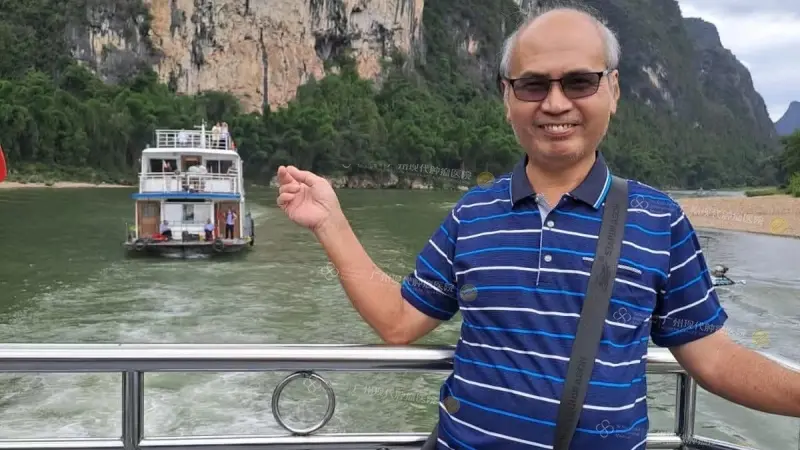
After careful deliberation, Anggles and his family reached a decision. In November 2017, approximately 16 months after his initial diagnosis, he traveled to Guangzhou to seek treatment at the hospital. Upon comprehensive evaluation, the medical team confirmed the presence of a substantial tumor measuring approximately 8 by 10 centimeters within the rectum—a significant and challenging lesion in an advanced-stage malignancy.
A Customized Treatment Strategy
Rather than pursuing single-modality therapy, the hospital’s multidisciplinary team formulated an integrated treatment protocol specifically designed for Anggles’s unique presentation: interventional vascular therapy combined with particle implantation and supplemented by targeted pharmaceutical intervention.
Interventional Therapy: The primary approach utilized vascular intervention techniques. By accessing the blood vessels supplying the tumor, physicians delivered chemotherapeutic agents directly into the malignant tissue. This technique concentrates medication precisely where needed, maximizing effectiveness while substantially reducing systemic side effects compared to traditional intravenous chemotherapy.
Particle Implantation: For the surrounding tissues affected by tumor infiltration, the team employed radioactive iodine-125 particle implantation. Precisely calibrated quantities of particles were positioned within the targeted zone, where they continuously emit gamma radiation to systematically eliminate cancer cells within a defined radius. This approach offers exceptional precision and safety, limiting damage to healthy tissue while delivering concentrated destructive energy to malignant cells.
Targeted Molecular Therapy: Complementing these interventions, pharmaceutical agents designed to interfere with the specific molecular mechanisms driving cancer cell proliferation were administered. This three-pronged strategy created a comprehensive assault on the malignancy from multiple biological angles.
A Journey of Commitment and Remarkable Progress
Between 2017 and 2020, Anggles demonstrated remarkable dedication to his treatment regimen. Making multiple journeys between Indonesia and China, he consistently appeared for scheduled procedures and follow-up evaluations, working collaboratively with the medical team to manage his condition systematically.
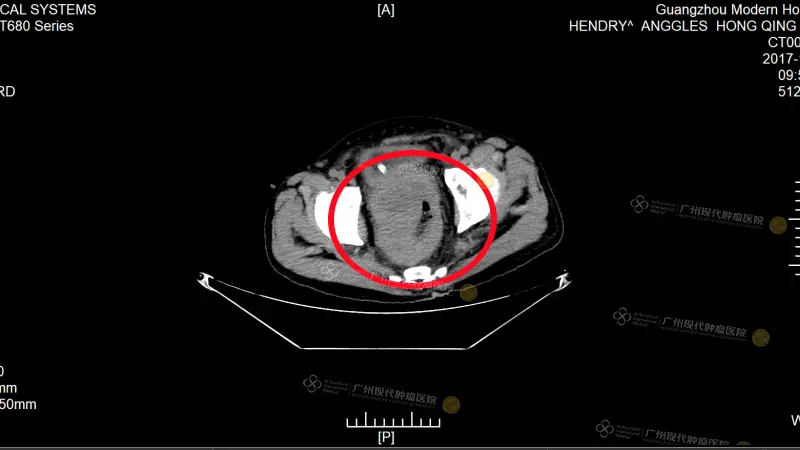
The results spoke eloquently. By the time of his final imaging study in 2020, the tumor had undergone a dramatic transformation. The lesion that had initially measured approximately 10 centimeters had contracted to merely 2 centimeters—a reduction representing approximately 8 centimeters of regression. This exceptional shrinkage indicated that the minimally invasive integrated approach had proven extraordinarily effective.
For Anggles, this 8-centimeter reduction symbolized far more than radiographic data. It represented renewed hope, vindication of his decision to pursue an alternative path, and tangible proof that advancing technology and comprehensive treatment strategies could yield outcomes that even major surgery might not guarantee. His three-year journey had reached a pivotal milestone, with disease now brought under exceptional control.
Life Between Illness and Wellness
With his condition stabilized and tumor burden dramatically reduced, Anggles returned to his homeland to pursue recuperation and prepare for ongoing monitoring. However, an unexpected development intervened: the global pandemic created barriers to international travel and medical consultation. The communication channels between countries became disrupted, complicating his ability to return for scheduled follow-up imaging and assessment.
Rather than surrendering to inactivity, Anggles implemented a personal wellness strategy. Though he remained without pharmaceutical intervention during this extended interval, he became highly deliberate about his dietary choices. He minimized oils and fatty substances, emphasized nutritional discipline, and committed to regular physical activity. Frequent exposure to sunlight featured prominently in his daily routine. Underlying these concrete behavioral modifications lay a deeper understanding: he recognized that cancer treatment is not solely the province of physicians and technology.
“I realized that overcoming cancer requires more than just doctors and medical devices,” Anggles reflected. “One’s personal habits and nutritional choices must shift as well. These lifestyle modifications work alongside medical treatment to optimize results.”
An Unexpected Gift: The Four-Year Follow-Up
On June 22, 2023, after an interval of approximately four years since his last comprehensive evaluation, Anggles made the journey back to Guangzhou. His motivation was straightforward yet profound: while his condition at home remained excellent—he functioned essentially as a healthy individual in his work and daily activities—he sought definitive confirmation of his disease status.
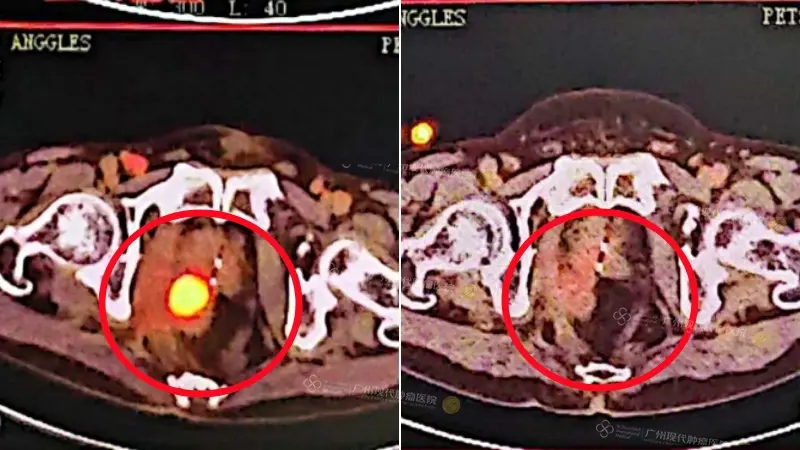
Following imaging and careful examination, the hospital delivered extraordinary news: the tumor had not merely shrunk further—it had vanished entirely. The rectum that once harbored a life-threatening malignancy now showed no trace of disease. The emotional impact proved overwhelming.
“During my initial diagnosis and treatment, I was too frightened to hear the results directly—I had my family inquire on my behalf,” Anggles recounted. “But this time, I found the courage to face the findings myself. When Dr. Hu presented the results, I could hardly contain my emotions. Complete remission! Dr. Hu is extraordinary. I must also express profound gratitude to my wife and children—they have stood by me throughout these years, providing unwavering support during the most challenging period of my life.”
The joy radiating from Anggles when discussing his complete recovery underscored the magnitude of his transformation. The man who once could not lie flat, who suffered constant bleeding and pain, who initially faced only the surgical option, had now achieved freedom from detectable disease through an innovative, integrated therapeutic approach.
A Message of Hope to Others
Deeply moved by his own remarkable outcome, Anggles felt compelled to express gratitude and encouragement to the medical team and to share his experience with others facing similar diagnoses.
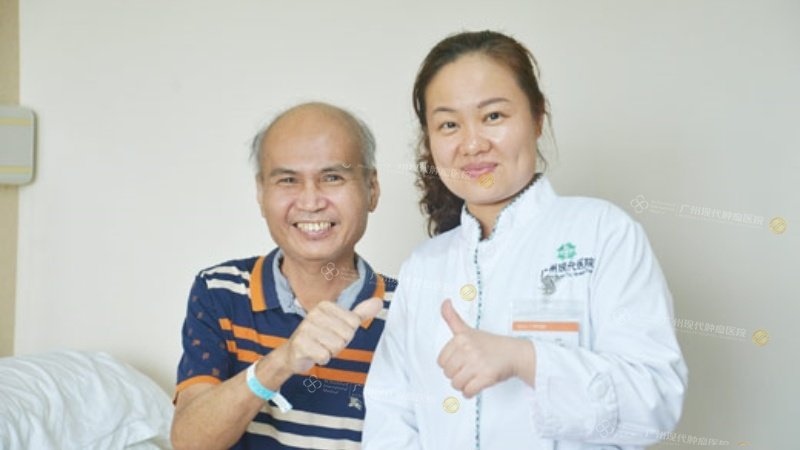
“I want to extend special thanks to Dr. Hu and the entire medical staff on the eighth floor, as well as all other personnel at the hospital,” he stated. “The technological capabilities and patient services provided are genuinely exceptional. The impact of interventional therapy was particularly striking during my initial phase of treatment.”
More broadly, he offered words of encouragement to patients confronting their own cancer diagnoses: “To anyone facing a diagnosis similar to mine, I want to say: you can absolutely place your confidence in Modern Cancer Hospital Guangzhou. Contact them through your local representatives and pursue treatment there. Additionally, for all patients battling cancer, please cultivate patience. Face your disease with calm determination and bravery. You must understand that you are never truly alone. Your family members, your friends, the physicians and nursing staff—all stand alongside you in this struggle.”
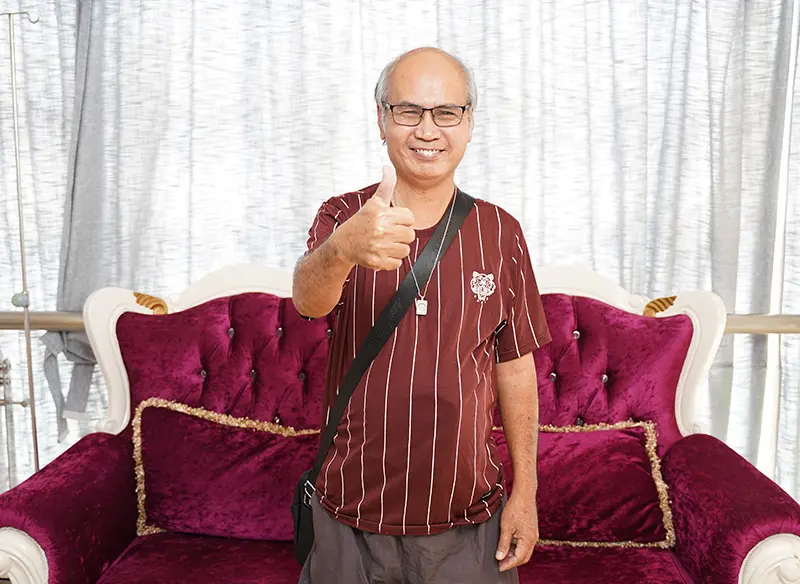
His enthusiastic thumbs-up gesture to the camera captured the essence of his transformation—from a patient paralyzed by advanced malignancy to a man celebrating complete remission and the second life that innovative medicine had granted him.