

Parotid Gland Cancer: Saving Sight Through Minimally Invasive Treatment
A Journey From Fear to Hope
In 2015, Ms. Chen from Malaysia discovered a mass behind her right ear measuring approximately 2 by 3 centimeters. A local medical examination confirmed the diagnosis of parotid gland cancer. Between February and August 2016, she underwent surgical removal of the parotid gland followed by 33 rounds of external beam radiation therapy in her home country. Despite these aggressive interventions, the disease progressed unexpectedly.
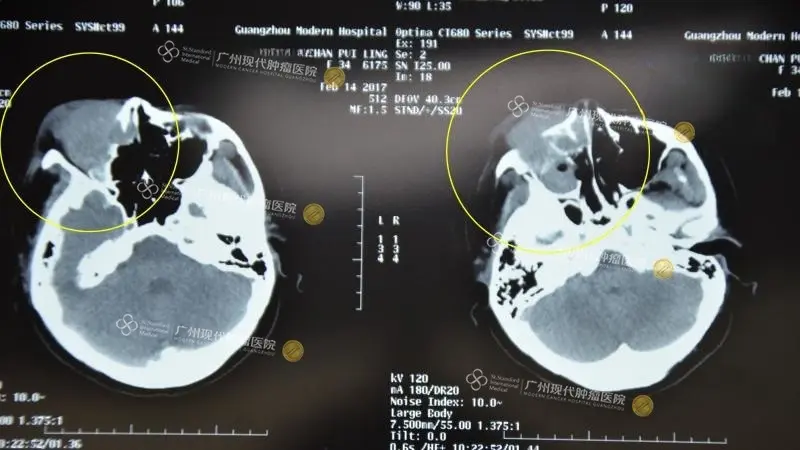
By October 2016, metastatic disease was detected, with cancer cells invading the tissues surrounding her right eye. Her local physicians recommended surgical removal of the affected eye as the only viable treatment option. This devastating recommendation prompted Ms. Chen to explore alternative approaches, and after researching treatment possibilities online, she learned about advanced minimally invasive therapies available at a specialized oncology center in Guangzhou.
The Previous Treatment Challenge
Prior to seeking alternative treatment, Ms. Chen had carried the burden of her illness largely alone, reluctant to trouble her family with the details of her condition. However, the progression of her cancer and the threat to her vision finally compelled her to share the truth with her loved ones. The previous treatments left visible reminders of her struggle, including scarring on her body and facial swelling on the right side of her face from the intensive radiation therapy. Confronted with the possibility of blindness and determined to preserve her sight, Ms. Chen, with her family’s support, made the difficult decision to travel abroad for specialized care.
Embracing Minimally Invasive Treatment
In early 2017, the multidisciplinary medical team at the specialized center evaluated Ms. Chen comprehensively and recommended a combined approach utilizing Interventional Therapy and Particle Implantation Therapy. The attending physician explained the mechanism of action to address her concerns:
Interventional Therapy involves using advanced imaging guidance and precision instruments to deliver high-concentration anti-tumor medications directly into the tumor blood vessels. Simultaneously, the blood supply feeding the tumor is intentionally blocked, causing the malignant growth to shrink or disappear entirely. This approach offers minimal tissue trauma, reduced complications, and rapid recovery compared to conventional surgical techniques.
Particle Implantation Therapy, commonly referred to as “Particle Knife,” involves surgically placing radioactive iodine-125 seeds directly within the tumor or infiltrated tissues. The radiation emitted by these particles delivers targeted internal radiation therapy with the precision equivalent to surgical scalpel removal, making it ideal for metastatic lesions in sensitive anatomical locations.
Remarkable Treatment Response
The results of Ms. Chen’s treatment exceeded all expectations. Within just three days following her first interventional procedure, the tumor mass beneath her right eye demonstrated significant reduction in size. After completing four interventional therapy sessions, the visible abnormalities affecting her facial appearance had essentially resolved.
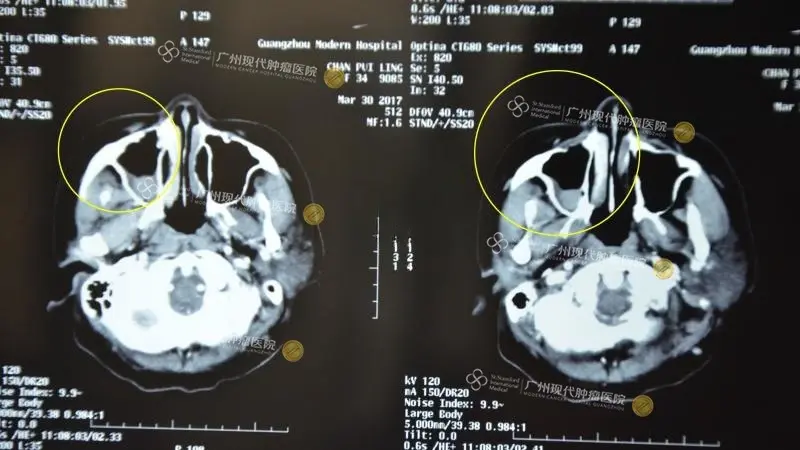
Her attending physician, Dr. Lin, documented the impressive clinical response: “Ms. Chen received a total of four interventional treatment sessions combined with radioactive seed implantation. Symptom improvement was evident following the second procedure, and following the complete treatment protocol, the tumor growth has been effectively controlled and suppressed.”
Treatment Philosophy and Quality of Life
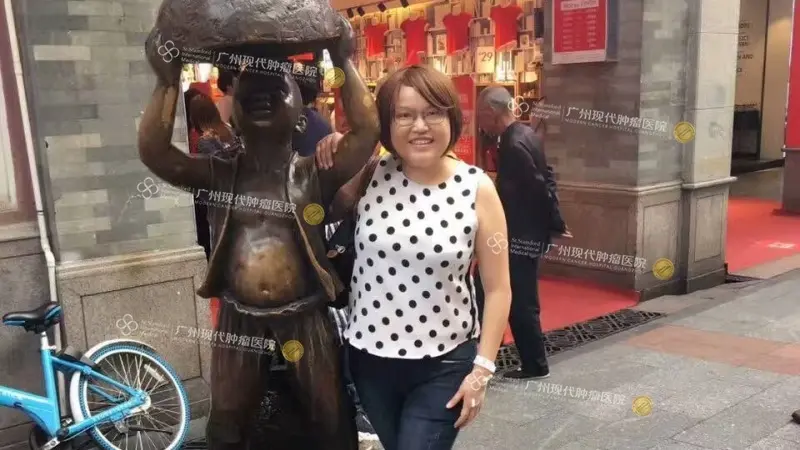
Reflecting on her experience, Ms. Chen highlighted the crucial difference between the treatment approaches offered in her home country versus the specialized center. She emphasized: “The treatment recommendation in Malaysia was traditional surgery combined with chemotherapy. Because my tumor was positioned directly adjacent to my eye, proceeding with surgery carried the real risk of losing my eye. However, the minimally invasive approach available here allowed me to preserve my vision. The entire treatment experience was remarkably efficient—I simply took time off, received treatment, and returned home with no one knowing I had traveled for medical care.”
The supportive medical environment proved equally therapeutic. “The hospital staff prepared everything for me,” Ms. Chen recalls. “The doctors conducted daily rounds to check on my wellbeing, making me feel genuinely relaxed throughout my stay. This experience was fundamentally different from what I had encountered previously.”
Six Years of Health and Advocacy
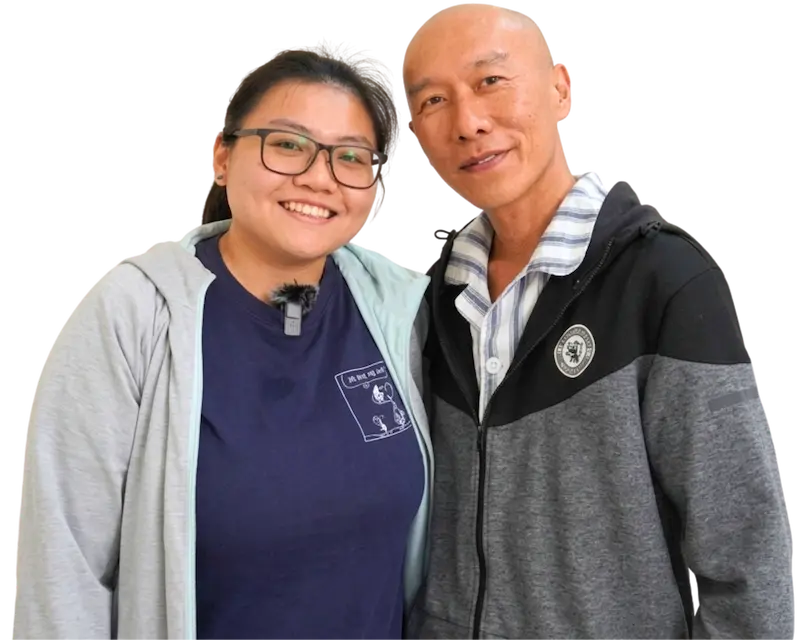
Now, more than six years have passed since Ms. Chen’s treatment in 2017. Her vision remains intact, her disease remains suppressed, and follow-up evaluations show no signs of cancer recurrence. The transformation observed by her medical team was striking: a patient who arrived appearing weak and unwell, with her right eye visibly protruding and compromising daily function, evolved into someone appearing completely normal with no evident treatment side effects.
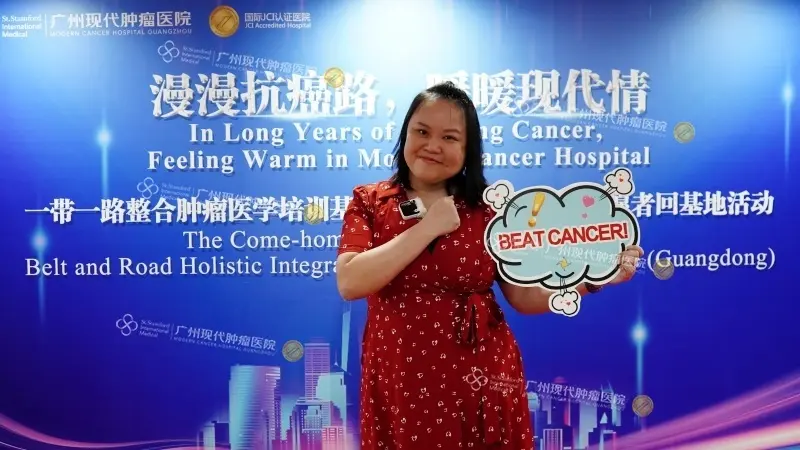
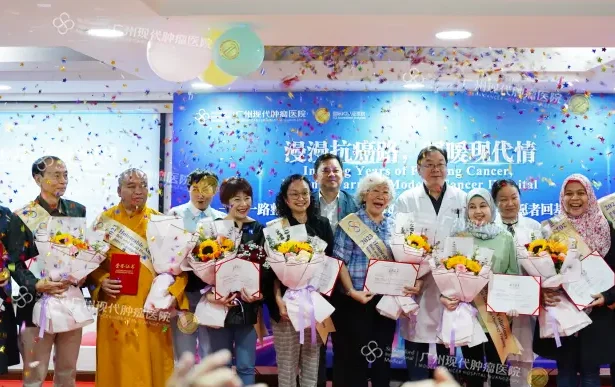
Ms. Chen’s experience has inspired her to become an advocate for cancer patients. During her hospitalization, she actively engaged with other international patients undergoing treatment, using her natural warmth and positive outlook to provide emotional support and encouragement. When she learned that another patient with nasopharyngeal cancer had traveled alone for treatment, Ms. Chen offered to share her hospital room, recognizing the isolation that international patients often experience.
She reflects on her advocacy: “Some patients may be experiencing difficult emotions during their treatment journey, but I maintain an optimistic perspective. I believe that sharing conversations and providing encouragement helps everyone feel more relaxed. When I support others, my own mindset improves as well.”
Message of Hope
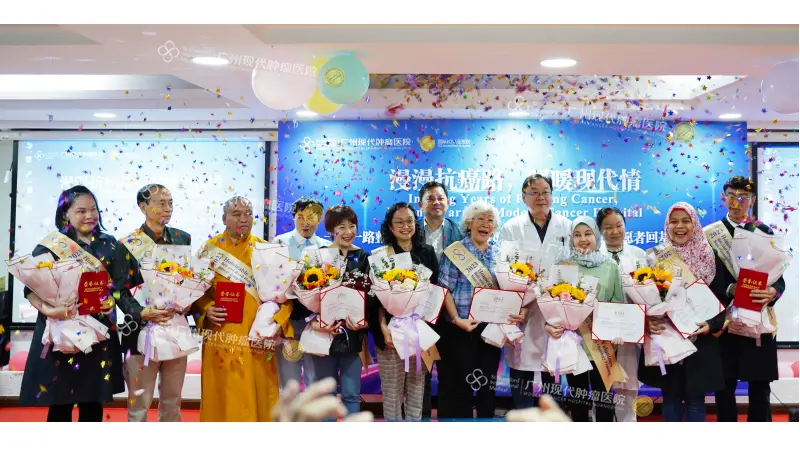
In addressing other cancer patients, Ms. Chen’s message carries the weight of lived experience: “Cancer itself is not what should frighten us. The most important factor is maintaining a positive mental perspective and accepting yourself in the present moment. With this foundation, you can build a bright future. I feel fortunate to return here as a cancer survivor after so many years, and I want others fighting this disease to know that recovery and renewed life are possible.”
Understanding the Treatment Technologies
Interventional Therapy
This advanced technique employs medical imaging guidance combined with specialized instruments to directly deliver concentrated anti-tumor medications into tumor blood vessels at concentrations 2 to 8 times higher than conventional intravenous administration. Simultaneously, the major arteries supplying blood to the tumor are occluded, effectively starving the tumor while achieving direct cytotoxic effects. The procedure is characterized by minimal surgical trauma, reduced complication rates, improved safety profile, and significantly faster recovery periods compared to conventional approaches. It is particularly valuable for patients whose tumors have proven resistant to traditional chemotherapy and radiation therapy, those unwilling or medically unsuitable for surgical intervention, or those seeking less invasive alternatives.
Particle Implantation Therapy (Particle Knife)
This treatment modality involves the precise surgical placement of radioactive iodine-125 seeds directly within tumor tissue or areas infiltrated by malignant disease. The gamma radiation continuously emitted by these implanted seeds delivers internal radiation therapy with exceptional precision, achieving tumor destruction equivalent to surgical resection. The technique is especially suited for patients with metastatic disease spread, those medically unsuitable for surgical intervention, individuals experiencing recurrence following prior surgery, and patients unable to tolerate standard chemotherapy or radiation regimens. The implanted seeds remain in place permanently, providing sustained tumor control over extended periods.