


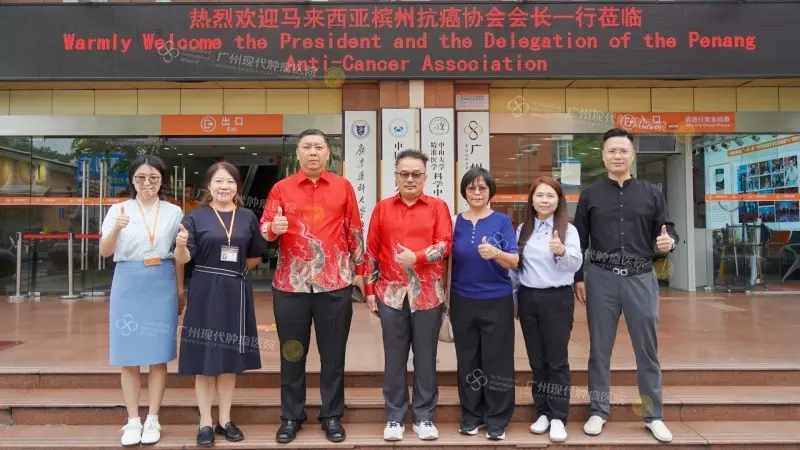
Penang Anti-Cancer Society Visits Modern Cancer Hospital Guangzhou
On June 8, a delegation from the Penang Anti-Cancer Society — including its President, Deputy Secretary-General, and several committee members — traveled to Guangzhou for an official exchange visit to Modern Cancer Hospital. The hospital’s Deputy Director and International Affairs Director, Mr. He Langbing, together with International Network Director Mr. Qiu Chang and Assistant to the International Affairs Director Ms. Liu Yansheng, hosted the group. Discussions during the visit covered oncology treatment technologies, patient service models, and possibilities for expanding collaboration to benefit more patients in Malaysia.
Opening Remarks: Highlighting Shared Progress in Cancer Care
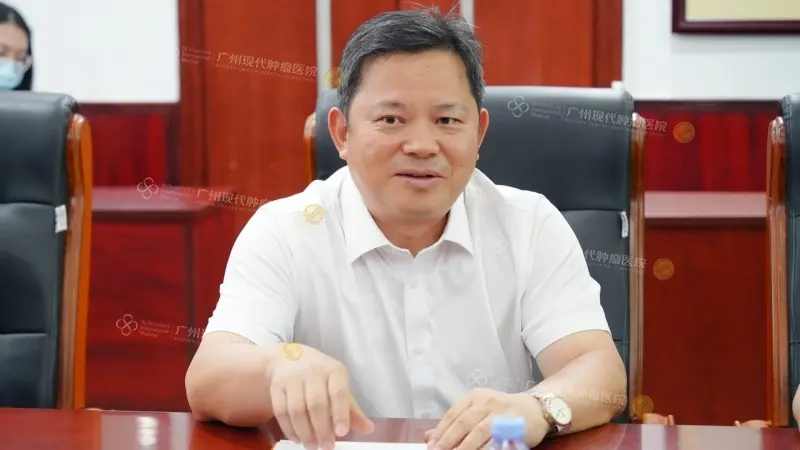
At the welcome session, Mr. He Langbing, the hospital’s Vice President and Director of International Affairs, opened with a welcome address to the visiting delegation. He looked back on the years-long relationship between the two organizations, built through joint efforts to serve Malaysian cancer patients, and noted that ongoing technical exchange and public cancer-education initiatives had helped raise awareness in local communities while directly benefiting many patients.
What Sets the Hospital’s Cancer Treatment Approach Apart
Mr. He also outlined the hospital’s core clinical strengths. As an early adopter of integrative minimally invasive cancer care, the hospital currently applies 18 different minimally invasive techniques and has organized dedicated specialty units for breast, lung, and digestive tract cancers. Plans are underway to add liver and biliary tumor subspecialties, moving the hospital toward a fully integrated, specialty-driven treatment model.
He emphasized that the hospital’s clinical focus has centered on managing intermediate- and advanced-stage cancer cases, shifting away from single-modality treatment toward individualized, multi-pronged care plans. Alongside this, the hospital has built out a complete patient-service pathway spanning arrival, admission, treatment, discharge, and post-treatment recovery. Refined over roughly two decades, this end-to-end model is intended to protect both treatment outcomes and patients’ overall quality of life, and has contributed to the hospital’s clinical reputation.
A Decade-Long Partnership, From the Penang Side
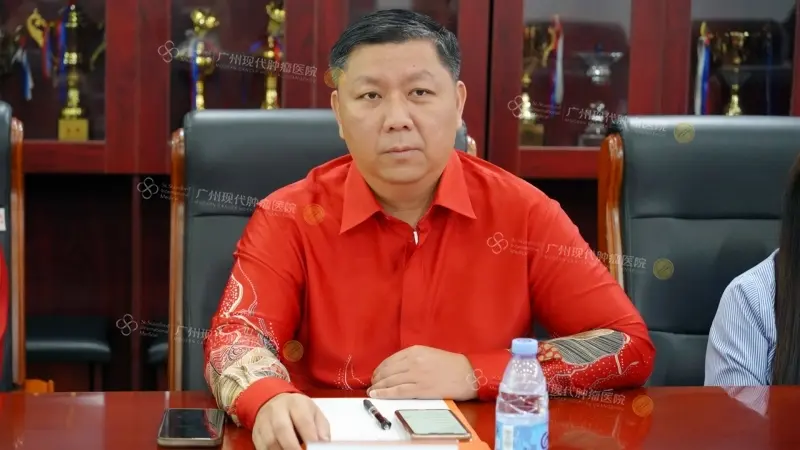
The President of the Penang Anti-Cancer Society reflected on more than ten years of cooperation dating back to 2014. Over the years he has returned to the hospital several times, including as a guest at international oncology conferences hosted there, giving him a close view of the institution’s development.
He spoke highly of the hospital’s multidisciplinary team (MDT) approach, drawing a contrast with the more fragmented, department-by-department model typically found in Malaysia. In his view, the hospital’s coordinated, one-stop treatment system — which manages both therapy and side effects under one roof — has meaningfully improved patients’ quality of life. He added that a number of Malaysian patients unable to tolerate standard chemotherapy or surgery have sought treatment at the hospital after learning about its minimally invasive techniques and targeted therapy options, with encouraging results.
Touring the Facilities
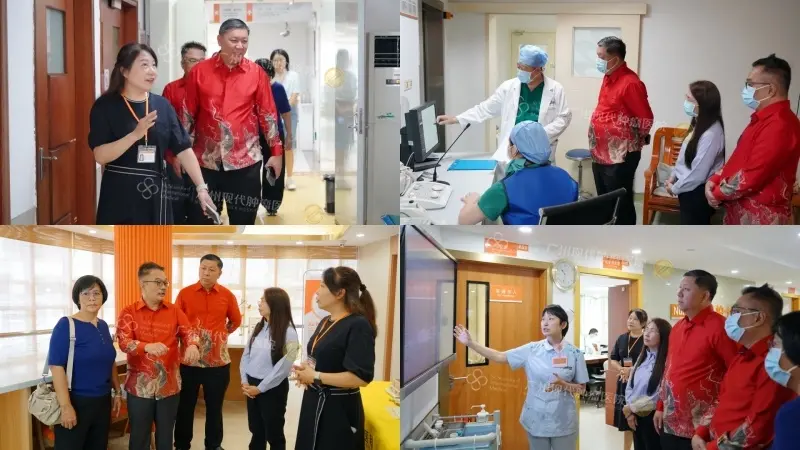
Guided by Ms. Liu Yansheng, the delegation walked through several key areas of the hospital, including:
- The outpatient clinic
- Smart hospital wards
- Telemedicine consultation rooms
- Minimally invasive treatment rooms
- The Traditional Chinese Medicine department
The group also made a point of visiting Malaysian patients currently receiving treatment at the hospital, asking about their progress and recovery. The tour gave the delegation direct, first-hand exposure to the hospital’s treatment environment and day-to-day clinical operations, reinforcing the groundwork for continued collaboration.
Looking Ahead: Building on a Decade of Cooperation
The visit strengthened the existing relationship between the two organizations. Going forward, the hospital said it intends to keep working closely with the Penang Anti-Cancer Society on technical exchange, public cancer education, and patient support services. Drawing on its integrative minimally invasive treatment model and full-cycle service system, the hospital aims to serve as a bridge for cross-border oncology care and to contribute, alongside its Malaysian partner, to broader regional efforts in cancer prevention and treatment.