

Canadian Mother Fights Stage IV Breast Cancer with Minimally Invasive Care
A Difficult Diagnosis and a Decision to Avoid Chemoradiation
Michelle Elsien van Veen, a 36-year-old mother of four from Winnipeg, Canada, had built a full and happy life with her family when a lump in her left breast changed everything. In 2013, doctors confirmed she had stage II breast cancer and recommended radiation to shrink the tumor before further treatment. Michelle turned the option down. She had heard that chemoradiation often brings harsh, draining side effects, and with young children depending on her, she felt she couldn’t afford to lose her strength and energy. Instead, she opted for a mastectomy.
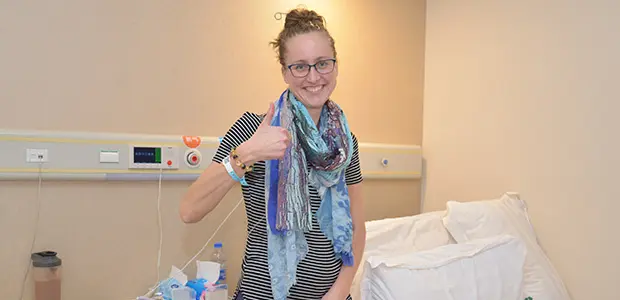
Following her surgery, Michelle pursued a natural healing approach at a clinic near her home. Her regimen included vitamin injections and a rigorous anti-cancer diet aimed at keeping the disease in check. For a while, this seemed to work. But in 2016, the cancer resurfaced in the lymph nodes under her left arm. She underwent surgery to remove the affected nodes and once again declined chemotherapy or radiation.
Warning Signs Return and the Disease Advances
By the middle of 2017, Michelle began experiencing an unsettling burning sensation and sharp, stabbing pain in her left index and middle fingers. The discomfort spread, bringing numbness and abnormal sensations to the inside of her forearm and palm. Eventually, the symptoms became so severe that she was confined to bed and unable to manage even basic daily tasks.
That November, scans revealed new tumor growth beneath her left collarbone, in her left armpit, and along the front wall of her chest, with the disease pressing into the nerve and blood vessel network of her left arm. Doctors delivered a grim diagnosis: stage IV breast cancer. She was told there was little more conventional medicine could offer, with survival estimated at only one to two more years, and palliative care was raised as the primary path forward.
Determined not to give up, Michelle learned about St. Stamford Modern Cancer Hospital Guangzhou through a friend’s recommendation. Stories of other patients who had beaten the odds there gave her renewed hope, and she made the decision to travel to China for treatment.
Combining Interventional Therapy and Particle Implantation
Michelle arrived at the hospital in January 2018 in significant pain, struggling even to get out of bed on her own. Her medical team, led by attending physician Dr. Pan Xin, reviewed her case through a Multidisciplinary Team (MDT) discussion and designed a treatment plan that paired interventional therapy with particle seed implantation.
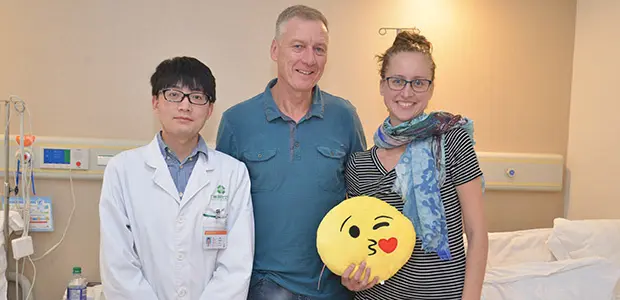
Dr. Pan explained that the plan targeted all three of Michelle’s tumor sites. Particle implantation was used on two of the tumors to destroy cancer cells directly and limit the risk of further spread, while interventional therapy—delivering medication straight into the tumor beneath the clavicle—was chosen to reduce the broader side effects that come with systemic treatment.
Key elements of Michelle’s treatment plan included:
- Interventional therapy targeting the tumor near the left clavicle, delivering medication directly to the site
- Particle (seed) implantation to destroy cancer cells in two additional tumor locations and help prevent metastasis
- A total of three interventional therapy sessions and two particle implantation procedures
Michelle noticed relief from her pain soon after her very first treatment session. Reflecting on the difference from her care in Canada, she noted that chemotherapy there had affected her whole body and brought toxic side effects, whereas the minimally invasive approach in Guangzhou targeted her tumors specifically, with fewer side effects and less disruption to her daily life.
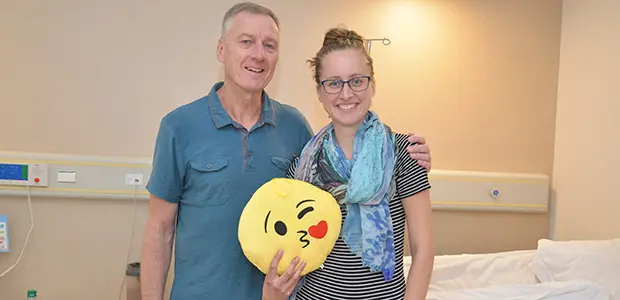
Her father, who accompanied her throughout the journey, admitted that choosing an unfamiliar hospital in a country where they didn’t speak the language felt like a life-or-death gamble. Early doubts gave way to relief and gratitude as they saw the treatment take effect.
Tumors Shrink and Michelle’s Condition Improves
After completing three rounds of interventional therapy and two rounds of particle implantation, follow-up CT scans confirmed that Michelle’s tumors had shrunk considerably, and her overall physical condition steadily improved.
A Message of Hope for Other Patients
Before returning home, Michelle shared words of encouragement for others facing a cancer diagnosis. She described the hospital as a place worth considering for anyone seeking treatments with fewer side effects that can help preserve quality of life. During the more than a month she and her father spent there, they met numerous patients battling lung cancer, breast cancer, and colorectal cancer who saw meaningful improvement through minimally invasive therapies. Witnessing these outcomes firsthand, Michelle and her father came away believing that the hospital offers patients genuine hope and encouragement in their fight against cancer.