


Defeating Lung Cancer Through Microwave Heat Ablation
A Sudden Discovery Changes Everything
During a vacation in New Zealand in May 2015, Angelo, a 50-year-old patient from the Philippines, felt an unusual swelling in his neck. Initially, both he and his physician dismissed it as an enlarged lymph node that would resolve on its own. However, within a week, the swelling not only persisted but worsened, accompanied by pain and continued enlargement. Concerned, Angelo returned for additional evaluation and underwent a biopsy. The results delivered devastating news: he had a malignant tumor.
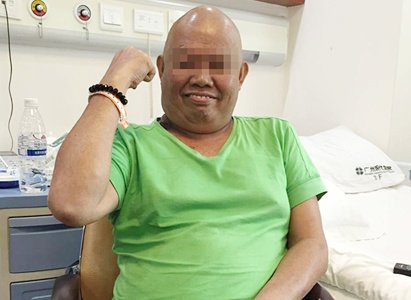
The diagnosis struck Angelo and his family deeply. His emotional response—a mixture of despair, confusion, and fear—reflected what many patients experience upon learning they have cancer. His wife, son, and daughter struggled with the weight of the news as well. In this moment of darkness, Angelo’s older sister remembered a colleague who had successfully overcome liver cancer through treatment at Modern Cancer Hospital Guangzhou. This story of hope inspired Angelo and his family to seek care at the facility.
Understanding the Full Extent of Cancer
After undergoing comprehensive diagnostic testing at Modern Cancer Hospital Guangzhou, physicians made a critical discovery: the tumor in Angelo’s neck was not the primary cancer but rather a metastatic lesion. The original cancer originated in his right lung. This revelation indicated that Angelo’s condition had progressed to Stage 3B—a middle to advanced stage of lung cancer with regional spread to lymphical tissues in the neck. Notably, the metastatic tumor in his neck had grown more aggressively and was larger than the primary lesion in his right lung.

Harnessing Microwave Technology for Treatment
After evaluating Angelo’s specific clinical situation, the medical team developed a tailored treatment strategy combining three minimally invasive approaches: cryotherapy, interventional therapy, and microwave ablation. The microwave ablation component proved particularly effective in targeting and eliminating the cancer cells.
Microwave ablation functions as a thermal destruction technique. During the procedure, clinicians insert a needle approximately 2mm in diameter directly into the tumor under real-time imaging guidance. This needle acts as a miniature microwave emitter, continuously transmitting microwave energy into the surrounding tissue. The electromagnetic energy causes polar molecules within the tumor to move at high speed, generating intense heat. When temperatures exceed 60 degrees Celsius, the proteins in cancer cells undergo denaturation and coagulation, leading to irreversible cell death and tumor tissue destruction.
The technology incorporates an innovative safety feature: a water circulation system within the needle core maintains the central needle temperature within a safe range, dramatically reducing trauma to the skin and surrounding organs while preserving the treatment’s powerful anti-cancer effectiveness.
The Added Benefit of Immune Activation
Beyond direct tumor destruction through heating, microwave ablation triggers an additional therapeutic mechanism. When tumor cells are killed by the intense heat, they release heat shock proteins that stimulate and strengthen the patient’s immune system. This enhanced immune response helps suppress the growth and proliferation of remaining cancer cells, providing a complementary benefit to the direct ablation process.
Results and Patient Experience
Angelo received the complete integrated treatment plan combining microwave ablation with the other two minimally invasive modalities. During the procedures, only the interventional therapy component produced mild discomfort; the other treatments caused no significant pain or distress. The combined approach delivered remarkable results: the tumors in both his neck and right lung showed substantial reduction in size. Throughout his treatment course, Angelo experienced minimal side effects and no major complications.
Today, Angelo stands as a testament to the power of modern minimally invasive cancer therapy. His journey from initial despair to tumor control and symptom relief exemplifies how technological innovation and individualized treatment planning can offer genuine hope to patients facing advanced malignancies.
Key Takeaway
Angelo’s story reinforces an essential message for cancer patients: do not surrender to despair. With advances in targeted, minimally invasive treatments like microwave ablation, patients facing lung cancer can achieve meaningful clinical responses and improved quality of life. Modern cancer care offers multiple pathways to treatment success beyond traditional surgery and chemotherapy.