

From Despair to Hope: How Minimally Invasive Treatment Changed a Lung Cancer Patient’s Life
A Housewife’s Unexpected Diagnosis
Ong Choon Moy led an ordinary yet fulfilling life as a devoted housewife in Malaysia, managing her household while her husband worked to provide for the family. Although their financial resources were limited, they cherished the stability and happiness their modest home afforded them. Beginning in 2014, Ong began experiencing persistent respiratory symptoms alongside gastrointestinal discomfort. Initially dismissing these complaints as routine stomach-related issues, she continued with her daily responsibilities. However, as the pain intensified beyond what she could tolerate, she made the decision to seek professional medical evaluation at a local healthcare facility.
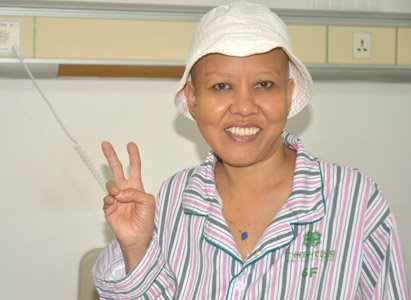
The examination results delivered devastating news—Ong had been diagnosed with lung cancer. Like many individuals confronting such a diagnosis, she found the reality difficult to process. The emotional weight of learning about her condition felt overwhelming, yet she made a conscious choice not to succumb to despair. Instead of allowing fear and grief to paralyze her decision-making, she resolved to approach her illness with determination and strength.
The Grueling Years of Conventional Treatment
Ong pursued conventional treatment options available in her home country, undergoing multiple sessions of chemotherapy and radiotherapy at Malaysian medical facilities. However, these standard therapeutic approaches came with a significant cost to her physical wellbeing. The treatment regimens introduced severe complications that profoundly affected her quality of life. She experienced intense pain, persistent nausea and vomiting, progressive hair loss, and general physical deterioration. The cumulative toll of these adverse effects left her exhausted and emotionally drained.
Most troublingly, despite completing approximately a dozen rounds of both chemotherapy and radiotherapy, her condition showed minimal improvement. The malignancy demonstrated remarkable resistance to these conventional modalities, with imaging studies indicating only marginal tumor shrinkage of approximately one percent. This disappointingly slow response shattered her hopes for recovery and depleted her financial reserves entirely, as the costs of repeated treatment cycles exhausted her family’s savings.
A Turning Point and a Difficult Decision
The accumulation of ineffective treatments and mounting hardship pushed Ong to the brink of giving up. The physical and emotional burden seemed almost insurmountable. A pivotal moment came when she witnessed a friend’s death from cancer after that person had abandoned treatment. This tragic experience crystallized Ong’s resolve—she refused to accept the same fate. She thought of her thirteen-year-old son, who had just begun junior high school, and recognized that she needed to continue fighting for the opportunity to watch him grow and mature.
Motivated by this maternal determination, Ong conducted extensive research online, searching for alternative therapeutic approaches that might offer greater promise than the treatments she had already exhausted. Her internet search led her to discover Modern Cancer Hospital Guangzhou and their innovative minimally invasive treatment options. Serendipitously, the hospital was conducting a series of cancer education seminars throughout Malaysia at that precise time. She enrolled in one of these symposiums held in Melaka, where she met directly with Professor Peng Xiaochi, the institution’s chief oncology expert, who offered her personalized treatment recommendations.
Despite the encouraging recommendations, Ong hesitated about traveling to China for treatment due to her financial limitations and other practical considerations. Several months elapsed before circumstances changed. Through the generosity and assistance of supportive individuals in her community, Ong was able to gather sufficient financial resources to pursue overseas treatment. Her husband stood firmly by her decision, though her mother and sister harbored significant reservations, fearing both her health status and harboring doubts about Chinese medical technology. Ultimately, Ong and her spouse’s unwavering conviction overcame these objections, and she embarked on her medical journey to Guangzhou.
Advanced Treatment and Remarkable Results
Upon hospitalization at Modern Cancer Hospital Guangzhou, comprehensive evaluation confirmed that Ong’s malignancy had progressed to stage four. Her clinical presentation indicated that the tumor had metastasized beyond the lung tissue into the pleural membrane surrounding the lungs. The hospital’s Multidisciplinary Team assembled a personalized therapeutic strategy tailored to her specific pathology: a combination of interventional therapy and cryotherapy.
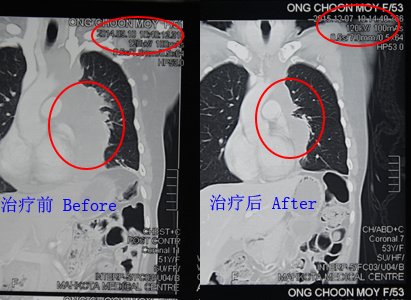
The response to this integrated treatment approach exceeded expectations. Following the completion of interventional therapy and cryotherapy procedures, imaging studies demonstrated substantial reduction in the volume of her primary lung tumor. Equally significant, the excruciating pain that had plagued her for months gradually resolved. According to Dr. Wang Zenghai, her attending physician, computerized tomography scans revealed dramatic regression of both the primary malignancy and the cancer cells that had spread to the pleural tissue.
A Changed Perspective and Gratitude
As Ong’s medical condition improved measurably, her family members’ skepticism gradually transformed into confidence and support. Her sister and mother, witnessing the tangible clinical improvements, began to acknowledge the advanced capabilities of Chinese medical technology. Ong observed that the therapeutic arsenal available in China substantially surpasses what her home country offered. In Malaysia, the treatment landscape for lung cancer remained limited to conventional approaches—namely chemotherapy and radiotherapy—with no access to minimally invasive techniques or cryotherapy. Beyond the medical advantages, she was profoundly moved by the humanistic approach to patient care demonstrated by the hospital staff. Physicians and nursing personnel provided compassionate, attentive care throughout her hospitalization. On her birthday, the medical team surprised her with a celebratory cake, an unexpected gesture that touched her deeply and demonstrated a level of caring she had never previously experienced in a healthcare setting.
A Message of Hope and Resilience
One year following her treatment, Ong’s psychological transformation proved as remarkable as her physical recovery. The woman who had once struggled to accept her diagnosis and nearly surrendered to despair had evolved into an optimistic and emotionally resilient individual. Her family’s unwavering support played a crucial role in sustaining her through the most challenging periods. She expresses heartfelt gratitude not only to her relatives but also to the strangers who assisted her financially and emotionally, understanding that their kindness made her journey possible.
Now possessing the wisdom earned through her experience, Ong shares her message with others currently battling malignancy: “Regardless of your specific cancer diagnosis, maintain inner strength and confidence in your recovery. Face your disease with equanimity, endure the pain with courage, and commit yourself to overcoming it.” Her journey exemplifies the transformative power of refusing to surrender and the life-changing potential of accessing advanced therapeutic options. The medical community and cancer support community extend their heartfelt wishes for Ong’s continued recovery and ongoing good health.