

Faith and Determination in Her Cancer Recovery Journey
A Patient Who Refused to Accept Limitations
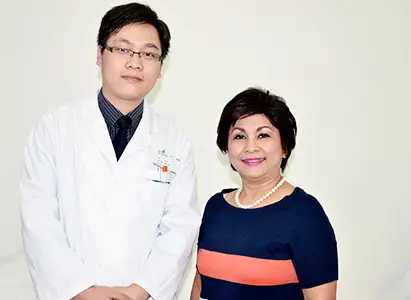
At forty-eight years of age, Risma Idawaty Saragih maintains a vibrant and youthful appearance that belies her diagnosis. During our encounter with her, she presented herself immaculately groomed and fashionably dressed, embodying a deliberate choice to maintain her identity beyond her illness. Her approach—selecting stylish clothing and meticulous grooming—served as a personal statement that she would not allow her medical condition to define her outward presentation or inner spirit.
The Long Road to Diagnosis and Multiple Treatments
The journey toward discovering her malignancy commenced in 2000 during a routine health screening at a Singapore medical facility. At that point, Risma experienced no physical discomfort or noticeable symptoms, leading her to make the decision to forego immediate treatment options. This choice to delay would later impact her treatment trajectory significantly.
A decade later, in 2010, her condition made itself known through unmistakable warning signals. Intense discomfort in the abdominal region accompanied irregular bowel patterns, compelling Risma to return to her Singapore healthcare provider. Medical evaluation confirmed the presence of Stage 2 endometrial malignancy, necessitating surgical intervention. This marked the beginning of her surgical journey in Singapore.
Between 2010 and 2012, Risma underwent a total of three surgical procedures across Singapore’s medical institutions. The subsequent operation, performed in October 2012, was prompted by abdominal discomfort requiring exploration of the abdomen and lysis of adhesive tissue. During this intervention, physicians identified neoplastic growths within the left abdominal cavity but opted not to remove them at that time. Following her surgical recovery, Risma completed six rounds of chemotherapy treatment, though the results proved disappointing—the tumors demonstrated only modest shrinkage.
In February 2014, she underwent a third procedure to address intestinal adhesions that had formed, which was essential to restore normal bowel function and enable proper elimination. Only after this operation could she resume typical digestive processes without significant impediment.
Chemotherapy’s Devastating Toll and the Search for Alternatives
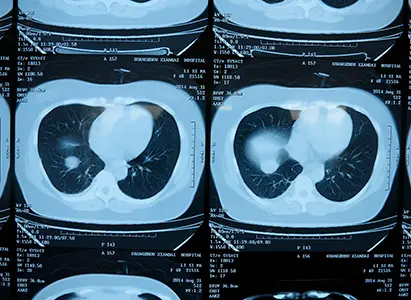
Despite undergoing aggressive chemotherapeutic treatments, Risma’s condition deteriorated. By April 2014, imaging studies revealed a troubling development: her cancer had returned and had already metastasized to both hepatic and pulmonary tissue. The recommendation from her Singapore physicians was to pursue additional chemotherapy cycles.
However, Risma made a pivotal decision to decline further conventional chemotherapy. The systemic effects she had endured during previous cycles were simply unbearable. She described the experience with striking clarity: “Following each chemotherapy session, my entire body would experience intense pain that persisted continuously for three consecutive days. There was a sensation comparable to objects piercing through my feet, creating unrelenting agony. Hair loss and chronic sleep disturbance compounded the physical suffering.”
The emotional weight of these side effects—combined with her existing hair loss, which had prompted her oncologist to recommend cutting it short—left her searching for a different path forward. The chemotherapy regimen was creating a quality of life so diminished that Risma could not reconcile continuing this approach.
A Turning Point: Discovery of Minimally Invasive Options
As the months progressed into summer, the disease-related discomfort became increasingly unbearable. By August 2014, Risma found herself dependent on analgesic medications simply to manage the escalating pain. Observing his wife’s suffering, Risma’s husband made a decisive move: despite the late hour, he conducted an extensive internet search for alternative cancer treatment facilities offering approaches beyond conventional chemotherapy.
His search led him to Modern Cancer Hospital Guangzhou, an institution specializing in minimally invasive therapeutic methodologies. Learning that this facility offered treatment protocols without reliance on harsh chemotherapy, Risma’s interest was immediately piqued. Her husband promptly contacted the Jakarta branch office, and a responsive dialogue quickly ensued.
Through consultations with the facility’s oncology specialists, Risma discovered a fundamentally different therapeutic paradigm. Modern Cancer Hospital Guangzhou had developed expertise in interventional approaches and supportive natural therapies—treatment modalities that produced minimal collateral damage compared to conventional chemotherapy. The prospect of receiving cancer treatment without enduring the severe adverse effects she had previously experienced became the decisive factor. Risma made the commitment to pursue treatment in China.
Treatment Experience and Remarkable Results
During her treatment course at Modern Cancer Hospital Guangzhou, Risma received four interventional therapy sessions, one chemotherapy treatment, and one natural therapy protocol. Significantly, she experienced virtually none of the debilitating side effects that had characterized her previous treatment episodes.
“My hair remained intact, and I experienced no episodes of vomiting,” Risma reported with evident relief. “My appetite remained robust throughout the treatment period, and remarkably, I gained approximately three kilograms during my course of care.” This represented a stark contrast to her previous experience when weight loss accompanied the devastating side effects of conventional chemotherapy.
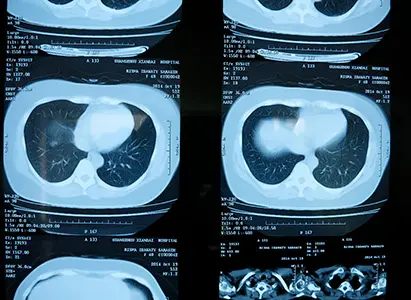
CT Imaging After Treatment Completion (October 19, 2014)
The therapeutic outcomes exceeded Risma’s expectations. Upon admission to the facility, she carried diagnoses of both recurrent ovarian cancer and metastatic involvement of the liver and pulmonary tissue. Yet the results achieved were remarkable: “The tumors that previously existed throughout my liver have completely resolved. While some lesions persist within my lungs, they have been substantially diminished.” Equally significant, the cancer-related pain that had dominated her daily existence entirely disappeared. Her bowel function normalized, and the sleep disturbances that had plagued her for years resolved completely.
Maintaining Hope Through Faith and Family Support
Despite the considerable suffering that malignancy has introduced into her life, Risma’s personal faith provides an anchoring foundation. As a Christian believer, she maintains confidence that divine guidance and support will sustain her journey. The unwavering encouragement from her family has been equally vital—a consistent source of hope that reinforces her determination to recover fully.
Risma’s daily practice involves positive affirmation and mental discipline: “Each morning, I speak these words to myself: I will achieve complete healing, and I must place faith in my own recovery.” She has come to understand that emotional negativity undermines the healing process, while maintaining an optimistic disposition serves as medicine for the body. This philosophy—combining spiritual faith, family connection, intentional optimism, and medical treatment—forms the foundation of her recovery strategy.
“I am convinced that I will achieve complete recovery,” she concludes with quiet determination. Her story exemplifies how individuals facing life-threatening illness can navigate treatment decisions thoughtfully, prioritize quality of life, and maintain hope through the most challenging circumstances.