


3D Printing Template Assisted Seed Implantation: Advanced Precision Cancer Treatment
Understanding 3D Printing Template Guided Seed Implantation
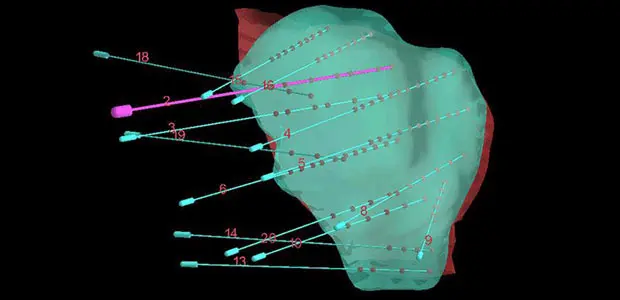
Before the treatment procedure begins, a comprehensive seed implantation strategy is developed according to the therapeutic radiation dose requirement for each specific tumor. During this planning phase, an individualized guiding template is manufactured using advanced 3D printing technology. This custom-made template serves as a precision tool for conducting a thorough simulation of the 125I seed placement process. The template ensures accuracy in the target location, insertion depth, and proper distribution of radioactive seeds throughout the treatment area. In contrast to earlier manual puncture techniques where accuracy was limited, this template-guided approach effectively minimizes treatment blind spots. The method demands greater precision in execution and significantly elevates the overall effectiveness of the therapeutic intervention.
Who Can Benefit From This Treatment Technology
The 3D printing template-guided seed implantation technique demonstrates particularly strong results for managing multiple cancer types and complex tumor presentations. This advanced approach proves especially valuable for patients who have not responded adequately to conventional methods or who have specific anatomical considerations that limit other treatment approaches.
- Prostate cancer
- Cervical cancer
- Breast cancer
- Liver cancer
- Lung cancer
- Difficult and complex solid tumors requiring specialized approaches
- Solid tumors with extensive metastases involving the retroperitoneum, pelvis, and vertebral structures
Key Advantages Over Traditional Treatment Methods
Director Bai Haishan of the minimally invasive treatment department explains that 125I seed implantation represents a transformative advancement in oncological care. Because this technology demands very precise dosing requirements, both the quantity and distribution of implanted radioactive seeds directly influence treatment success. Achieving an accurate treatment plan stands as the foundation for successful execution. To attain precise calculation and distribution of radiation dosage, modern medical facilities employ scientifically rigorous protocols based on 3D printing innovations.
The 3D printing template-assisted approach delivers six critical advantages in comparison to conventional surgical methods:
- Enhanced Flexibility – The insertion probe can be positioned at any angle necessary, providing unrestricted visualization of critical structures including blood vessels, intestinal anatomy, and bone formations
- Complete Tumor Coverage – Because the puncture location and angle can be adjusted with precision, the operation achieves comprehensive treatment of every portion of the targeted tumor without missing any affected areas
- Significantly Reduced Treatment Duration – The streamlined and targeted methodology greatly minimizes the time required for imaging procedures and needle placements
- Substantially Improved Precision – Punctures follow the predetermined pathway mapped on the template, resulting in dramatically higher accuracy of needle placement
- Minimized Procedural Risk – Because operational precision is substantially enhanced, multiple probes can be inserted simultaneously, eliminating the need for repeated repositioning, lowering complications, reducing the total number of imaging scans needed, and decreasing overall radiation exposure to the patient
- Scientifically Validated Methodology – Seeds are placed exactly according to the established plan, with both location and dose precisely controlled
Step-by-Step Treatment Procedure
Pre-Treatment Planning Phase
Step 1: Imaging and Dosage Calculation
During the week preceding the actual procedure, computed tomography scanning is performed to map out the exact puncture pathway and calculate the appropriate quantity of seeds necessary for each insertion point based on the prescribed therapeutic dosage. Once these measurements are determined, the directing template is produced using 3D printing machinery.
Operative Procedure
Step 2: Template Positioning
During the intervention, the sterilized 3D printed guiding template is carefully positioned on the patient’s body, directly above the tumor site and under radiological guidance.
Step 3: Template Verification and Needle Insertion
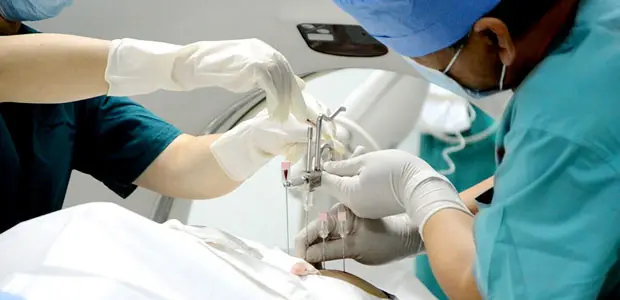
After confirming proper positioning of the template using imaging verification, the physician performs the needle insertion through the pre-established pathways marked on the template.
Step 4: Seed Loading and Implantation
The radioactive seeds are then carefully channeled through the needle pathway, with the precise number of seeds for each individual needle pathway calculated according to the established treatment protocol and implanted into the designated locations within the patient’s body.
Step 5: Post-Treatment Verification
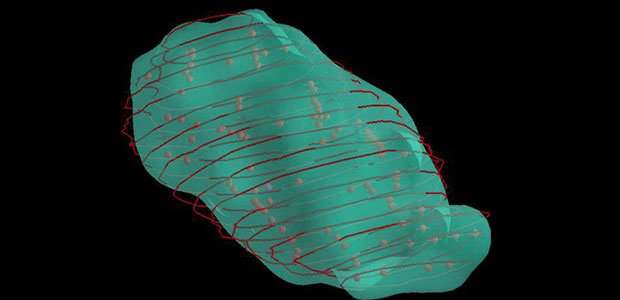
Following the completion of seed implantation, a comprehensive dosage verification procedure is conducted to confirm that all seeds have been properly positioned and that the radiation distribution matches the treatment plan.
Why 3D Printing Template Guided Seed Implantation Was Developed
Conventional external beam radiotherapy represents a long-established component of comprehensive cancer management. However, this traditional approach delivers radiation from outside the body and carries significant risks because high radiation doses necessarily impact surrounding healthy organs, resulting in considerable toxicity and severe adverse effects to normal tissues.
The 125I seed implantation method represents a revolutionary paradigm shift in cancer treatment technology, often referred to as internal radiation therapy. This innovative technique operates on a fundamentally different principle: seeds containing radioactive iodine-125 are precisely positioned within the tumor using CT guidance combined with ultrasound imaging. Using image-guided needle insertion technology, these seeds are placed directly into the malignant growth, where they deliver continuous, focused radiation at close range. This localized delivery mechanism progressively reduces tumor volume and ultimately achieves complete tumor elimination.
However, the earlier generation of 125I seed implantation techniques presented several limitations. These included difficulty in achieving reproducible results across different procedures, inconsistencies in seed placement accuracy, and limitations in treating anatomically challenging or complicated cases. The integration of 3D printing technology with seed implantation methodology effectively addresses these historical shortcomings. By substantially reducing operative time and minimizing patient discomfort, this advancement also provides the critical benefit of strict dose control while simultaneously enhancing overall quality of life outcomes for cancer patients undergoing this treatment.
Clinical Significance of 3D Template Guided Seed Implantation
This advanced therapeutic approach emphasizes three fundamental principles: precision in execution, customization for individual patient anatomy, and individualized treatment planning. In the current medical landscape, the technique has obtained approval from major regulatory authorities and represents the only seed implantation technology to integrate specialized template guidance with comprehensive dosimetry planning protocols. This dual certification reflects the advancement and clinical validation of the methodology in modern oncological practice.