


Cryotherapy: Advanced Minimally Invasive Cancer Treatment Technology
Cryotherapy, also referred to as cryosurgery or cryoablation, represents a therapeutic approach with deep historical roots that has been modernized through cutting-edge technology. The ancient practice of using extreme cold to manage infection and trauma has evolved into what is now known as the argon-helium knife—a precision-guided instrument authorized by the FDA for targeted destruction of malignant cells. This system harnesses aerospace-guided precision combined with the complementary effects of profound hypothermia and subsequent thermal therapy to address solid tumor malignancies.
How Cryotherapy Works
The cryotherapy procedure operates on a principle often described as “ultra-cold combined with ultra-heat” therapy, representing a sophisticated tumor ablation methodology. The argon-helium system functions by first utilizing argon gas to decrease tumor tissue temperature to between 120 and 180 degrees Celsius below zero. This extreme cooling induces cellular coagulation and subsequent tissue death. Following this initial freezing phase, helium gas is deployed to rapidly increase temperatures to between 20 and 40 degrees Celsius, thawing the frozen mass and triggering violent cellular rupture. This freeze-thaw cycle causes severe cellular dehydration, membrane destruction, oxygen deprivation, and ultimately cancer cell death while simultaneously disintegrating malignant tissue structures. The apparatus enables precise calibration of both the temperature transition velocity and duration, as well as exact configuration of the cryogenic mass dimensions and geometry.
The Treatment Procedure
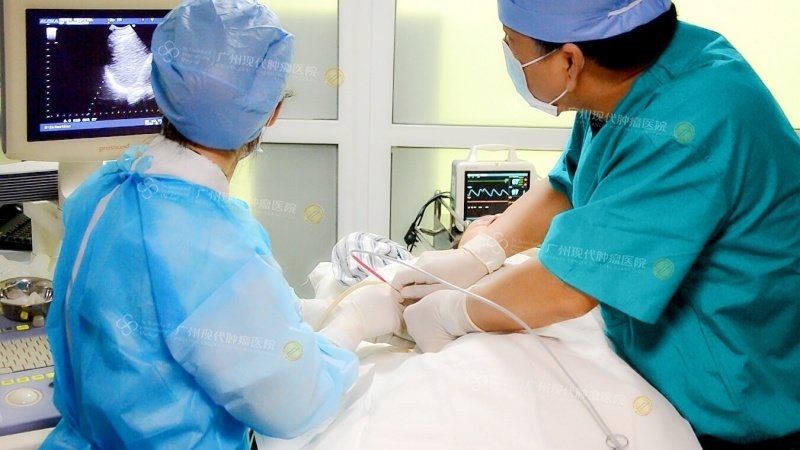
The percutaneous cryoablation technique represents the most frequently employed application of this technology. During the procedure, medical professionals insert a specialized cryoprobe directly into the tumor site under continuous ultrasound or CT imaging surveillance. Argon gas flows through the probe to produce rapid temperature reduction within the affected tissue, followed by helium gas introduction to initiate the rewarming phase. This sequence of freezing and reheating occurs through a minimum of two complete cycles. The treatment continues until the resulting ice formation encompasses the entire malignant lesion plus a protective margin of five to ten millimeters of adjacent normal tissue. For more extensive tumors, practitioners often deploy multiple probes simultaneously during treatment. Depending on clinical requirements, patients may require two to three distinct treatment sessions.
Procedural steps include:
- CT-guided percutaneous needle placement with argon-helium probe positioning
- Probe advancement into precise tumor location within the organ
- Initiation of freezing cycle within malignant tissue
- Continued argon-helium freezing application forming the characteristic ice sphere
- Completion of treatment protocol, followed by wound closure and dressing application; patient returns to recovery area independently
Revolutionary Treatment Advantages: Single Treatment, Dual Mechanism, Multiple Benefits
The argon-helium knife represents a paradigm shift in oncological treatment due to its distinctive dual-gas rapid-temperature-manipulation system. The argon component achieves profound cooling of tumor tissue into an ice mass within sixty seconds, thereby causing malignant cell death through extreme hypothermia, while simultaneously avoiding cryogenic injury to surrounding healthy tissue architecture.
Following the initial freezing phase, tissues are rewarmed to a determined temperature before undergoing another freeze cycle. This repetitive thermal cycling demonstrates exceptional effectiveness in destroying pathological tissue because it directly triggers cellular dehydration and rupture while simultaneously compromising the microscopic circulatory network supplying the tumor, leading to ischemic necrosis and cell death.
Additionally, the residual dead tumor mass remaining in situ after cryoablation functions as an immunological stimulus, modulating tumor-associated antigens and mobilizing the body’s anti-tumor immune defense mechanisms. Furthermore, malignant cells that survive the cryogenic process exhibit heightened responsiveness to subsequent chemotherapy or radiation therapy, thereby amplifying the effectiveness of these complementary treatments. This multifaceted approach—single intervention producing dual therapeutic actions with triple-level benefits—establishes cryotherapy as a remarkably efficacious treatment modality.
Who May Benefit from Cryotherapy
Cryotherapy represents an appropriate therapeutic option for diverse patient populations, including:
- Individuals deemed unsuitable for conventional surgical intervention or those who experience anxiety regarding operative procedures
- Patients who have experienced adverse reactions to chemotherapeutic agents or radiotherapy protocols
- Those whose conditions did not respond adequately to traditional approaches including surgery, chemotherapy, or radiotherapy
- Individuals in advanced disease stages presenting with recurrent or metastatic malignancy
Treatable Malignancies
Cryotherapy demonstrates clinical utility primarily in solid tumor malignancies. The technology has been successfully applied to breast cancer, hepatocellular carcinoma, pulmonary cancer, prostatic cancer, renal malignancy, dermatologic cancers, melanoma, osteosarcoma, cervical cancer, ovarian cancer, penile cancer, and oral malignancies, among other solid tumor varieties. The broad applicability across these diverse tumor types reflects the technique’s fundamental effectiveness against malignant cellular tissue.
Cryotherapy Versus Conventional Surgical Resection
Safety Profile
Cryotherapy: Demonstrates high safety standards with minimal procedural risk compared to open surgical approaches.
Conventional Surgical Resection: Carries substantial operative risk inherent to invasive surgical procedures.
Extent of Tissue Injury
Cryotherapy: Requires only minimal incision, preserves normal tissue architecture, and permits repeated applications without cumulative damage.
Conventional Surgical Resection: Necessitates substantial incisions, results in significant hemorrhage, generates considerable postoperative pain, and carries elevated risk for recurrence and metastatic progression.
Treatment Characteristics
Cryotherapy: Achieves therapeutic outcomes comparable to surgical resection without requiring extensive operative intervention. The extreme thermal modulation process—combining profound cold with subsequent heating—thoroughly eradicates tumor tissue while minimizing bleeding and facilitating rapid recuperation.
Conventional Surgical Resection: Inflicts substantial trauma to bodily systems, predisposes patients to postoperative infections and secondary complications, and necessitates extended recovery periods.
Key Treatment Advantages
Minimal Trauma with Expedited Recovery
While open surgical approaches produce substantial tissue damage, infection risk, and complicated recovery courses, cryotherapy requires only a two to four millimeter needle insertion. This limited tissue disruption enables patients to experience significantly faster recuperation with minimal localized morbidity.
Reduced Systemic Side Effects
Traditional approaches including operative intervention, radiotherapy, and systemic chemotherapy produce extensive physiological damage throughout the body. Cryotherapy functions as a targeted physical ablation methodology that selectively destroys malignant cells without simultaneously harming normal tissue. Consequently, compared to chemotherapy and radiotherapy protocols, cryotherapy produces substantially fewer toxic consequences and systemic complications.
Real-Time Visualization and Precision Control
The entire treatment sequence occurs under continuous radiographic monitoring and guidance. This enables clinicians to precisely establish and maintain specific temperatures, regulate treatment duration, and accurately define the dimensions and configuration of the cryogenic mass throughout the procedure, ensuring optimal therapeutic coverage.
Immune System Stimulation
The residual necrotic tumor tissue present after cryoablation functions to modulate and regulate tumor antigen expression, which in turn stimulates and activates the body’s endogenous anti-cancer immunity, enabling the immune system to address remaining malignant cells and eliminate necrotic debris.
Remarkable Therapeutic Efficacy
Cryotherapy produces thorough destruction of malignant tissue through profound hypothermia application. Beyond diminishing cancer-related suffering, this approach extends survival duration in affected patients.
Broad Clinical Applicability
Cryotherapy demonstrates effectiveness for both small and large lesions (including tumors exceeding five centimeters in diameter) and effectively removes residual malignancy remaining following operative procedures. This versatility makes the approach well-suited for geriatric and medically frail patients who would tolerate other interventions poorly.
Local Anesthetic Administration
Cryotherapy employs localized anesthesia exclusively, thereby eliminating the constraints and inherent hazards associated with general anesthetic techniques.
Treatment Repeatability
Cryotherapy can be performed multiple times in succession to optimize treatment results and maximize therapeutic benefit without inflicting additional damage to healthy tissue structures.
Applicable Diseases
Cryotherapy finds primary utility in addressing solid malignancies. The technique has demonstrated efficacy across multiple cancer categories:
- Hepatic malignancy
- Pulmonary cancer
- Mammary cancer
- Colorectal malignancy
- Cervical cancer
- Nasopharyngeal malignancy
- Thyroid cancer
- Prostatic malignancy
- Gastric cancer
- Additional solid tumor types