


Combined Knife Therapy for Cancer Treatment
What Is Combined Knife?
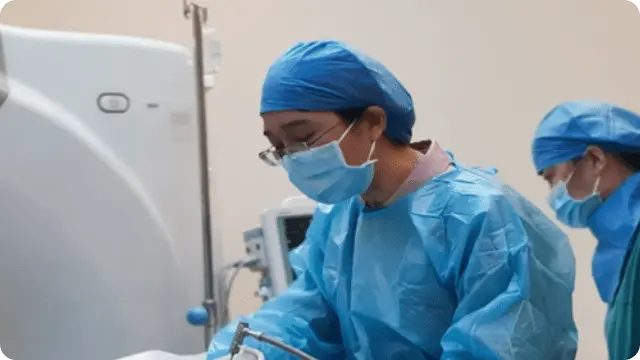
Despite its name, Combined Knife is not a literal surgical blade. It is a hybrid cryogenic ablation system that uses liquid nitrogen to deliver both freezing and heating effects to tumor tissue through one or several ablation needles. The “knife” designation reflects the procedure’s precision, since it can eliminate a tumor with the same accuracy as a scalpel — but without the need to physically excise tissue afterward, because the targeted tumor cells are deactivated and destroyed directly inside the body.
How Combined Knife Works
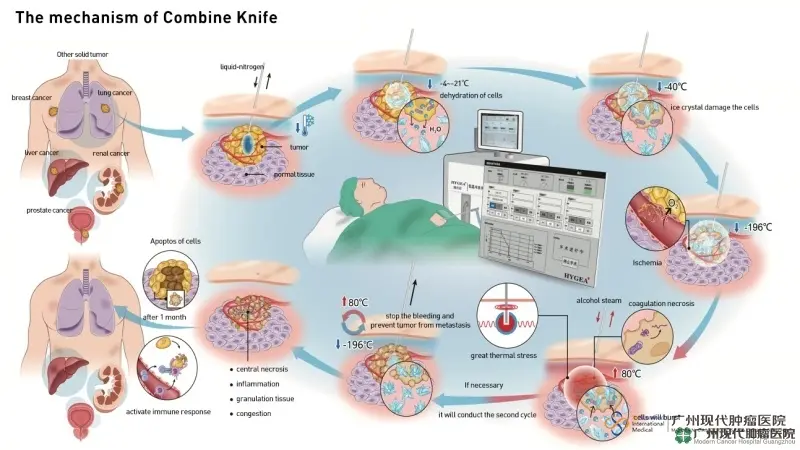
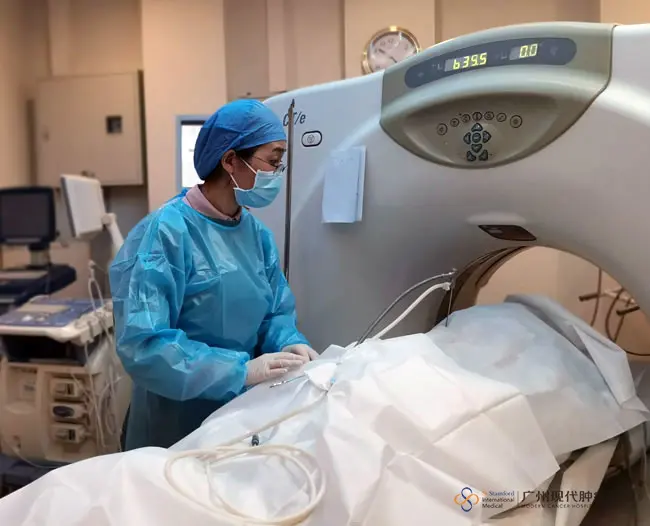
Guided in real time by CT scanning or ultrasound imaging, an extremely fine dual-action ablation probe — roughly 2mm in diameter — is inserted through the skin directly into the tumor site. The probe then subjects the tumor to two opposing physical stimuli: extreme cryoablation reaching temperatures as low as -196°C, and intense thermal ablation reaching up to 80°C. Cycling between these two extremes damages cancer cells through alternating cold and heat exposure.
This dual mechanism does more than destroy cells locally — it also triggers perfusion injury within the tumor, raises the permeability of blood vessels, and intensifies damage to the vascular lining. Together these effects speed up ischemic necrosis, the process by which the tumor’s blood supply is cut off and the tissue dies.
A single Combined Knife probe can treat an active surface area between 4.5cm and 6cm in diameter, and is capable of switching between its low- and high-temperature phases within a 20-minute window, allowing it to affect a broad zone of diseased tissue.
Who Can Be Treated With Combined Knife?
This technology is suitable for more than 80 percent of solid tumor types, including cancers of the liver, lung, pancreas, thyroid, and prostate, along with other primary and metastatic solid tumors affecting various organs. It is particularly valuable for elderly patients or those in poor physical condition, as well as for advanced-stage cancer patients who are not candidates for — or have not responded to — other treatment approaches.
Applicable Disease Stages
- Early-stage tumors: For small tumors measuring less than 2cm, Combined Knife ablation can serve as a substitute for conventional surgery, particularly when a patient’s health status or the tumor’s location makes surgical removal impractical.
- Advanced-stage tumors: The technology can be applied as a palliative measure to shrink tumor mass, relieve compression or irritation caused by the growth, and improve overall treatment outcomes.
Combined Knife Compared With Traditional Surgical Resection
Safety Profile
Combined Knife carries a high degree of safety, whereas conventional resection surgery involves considerably greater risk.
Degree of Tissue Damage
The Combined Knife procedure leaves a wound of only about 2mm, causes no harm to surrounding healthy tissue, and can be repeated as needed. Traditional resection surgery, by contrast, carries elevated risk and greater tissue trauma.
Treatment Characteristics
Combined Knife achieves outcomes comparable to surgery without requiring an operation. Its ability to alternate between extreme cold and heat within roughly 20 minutes allows it to destroy a wide area of tumor tissue. Traditional resection surgery, on the other hand, can only remove tumors through direct surgical cutting, which inevitably creates a significant wound and leaves patients more vulnerable to post-operative infection and complications.
A Representative Combined Knife Case
In one documented case, an 81-year-old patient’s tumor persisted even after five rounds of chemotherapy. The tumor was subsequently eliminated following treatment with Combined Knife.
Eight Key Benefits of Combined Knife Treatment
1. Minimal Trauma, Faster Recovery
Conventional surgery produces substantial trauma, and incisions carry a meaningful risk of infection and complications. Because the composite ablation probe used in Combined Knife is only about 2mm wide, the procedure involves minimal bleeding, a quicker recovery period, and requires no stitching.
2. Fewer Side Effects
Surgery, radiotherapy, and chemotherapy can all place significant strain on the body. Combined Knife, as a physical ablation method, destroys cancer cells while sparing healthy tissue, resulting in fewer side effects overall.
3. Real-Time Imaging Guidance
The entire procedure is carried out under continuous image monitoring, which ensures precise control over treatment parameters such as heating and cooling rates, duration, and the size and shape of the ice ball formed during cryoablation.
4. Strong Clinical Effectiveness
The extreme cold used in cryotherapy thoroughly destroys tumor tissue, while the subsequent heating phase helps limit bleeding along the needle track and reduces the risk of tumor cells seeding along the puncture path. The combined effect not only eases patients’ pain but can also extend survival time.
5. Broad Range of Application
Combined Knife is effective against both small tumors and larger ones exceeding 5cm in diameter, and can also be used to eliminate residual tumor tissue left after a prior operation. This makes it a suitable option for elderly or frail patients, as well as advanced-stage patients who cannot undergo or have not responded to other treatments. It is also notable as one of the few minimally invasive technologies that poses no conflict with implanted pacemaker devices.
6. Local Anesthesia Only
Because Combined Knife requires only local anesthesia, patients avoid the additional risks and limitations associated with general anesthesia.
7. Repeatable Treatment
The procedure can be performed multiple times to reinforce and strengthen its therapeutic effect, without causing damage to healthy tissue.
8. Supports Overall Health
Tumor tissue that remains after the combined hot-and-cold ablation process can help regulate tumor antigens, stimulating the body’s own functions and contributing to improved physical condition.