


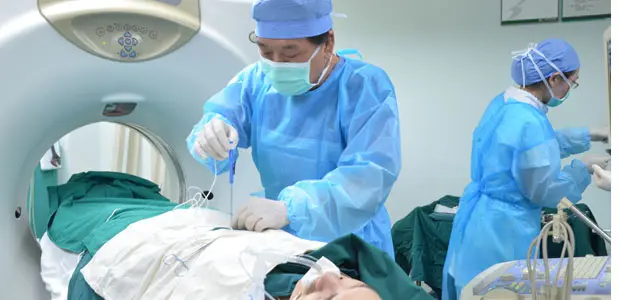
Nanoknife Technology
What Is Nanoknife?
Nanoknife represents an advanced form of tumor ablation built on the principle of Irreversible Electroporation (IRE). During the procedure, electrode probes deliver high-voltage electrical pulses directly into the tumor tissue, generating countless microscopic, permanent perforations in the membranes of cancer cells. This disruption unbalances the internal and external environment of the affected cells, pushing them toward accelerated cell death.
Clinical Recognition and Use
The technology has received clearance from the U.S. Food and Drug Administration (FDA) and carries European CE certification. It is now applied clinically in more than 100 leading oncology centers worldwide, including hospitals in China, where the National Health Commission formally authorized its clinical application in June 2015.
Key Benefits of Nanoknife Ablation
1. Rapid Procedure Time
Eliminating a 3-centimeter tumor typically requires no more than five minutes of active ablation. Each probe pair emits ultra-short pulses lasting only 90 microseconds, so the pulse delivery itself is completed in under a minute. Even when treatment involves 3-4 overlapping ablation zones, many patients are able to leave the hospital on the same day or the following day.
2. Preservation of Blood Vessels, Nerves, and Surrounding Structures
A defining strength of this method is that it avoids permanent injury to critical anatomical structures within the treatment zone, such as blood vessels, bile ducts, nerves, and the ureter. Vital hepatic structures, including arteries, veins, the portal vein, and bile ducts, remain intact following the procedure.
3. Non-Thermal Mechanism
Unlike conventional ablation methods that rely on temperature changes to denature proteins, Nanoknife destroys cell membranes primarily through electrical pulses, generating minimal heat. Traditional heat-based ablation can damage proteins and DNA in surrounding tissue, and when major blood vessels are nearby, circulating blood can carry away the thermal energy, weakening treatment effectiveness and raising the likelihood of tumor recurrence.
4. Complete Coverage With Defined Margins
Regardless of a tumor’s position, size, or shape, Nanoknife can achieve thorough ablation across its entirety. The boundary between treated and untreated tissue remains sharply defined afterward, reducing the chance that residual cancerous tissue is left behind and lowering recurrence risk.
5. Faster Functional Recovery of Normal Tissue
Heat-based ablation techniques cause coagulative necrosis, a process in which no cellular structures in the treated area survive. Nanoknife instead triggers programmed cell death in tumor cells, which the body’s immune system then clears away through phagocytosis, allowing healthy tissue to regenerate and restore normal function more readily.
6. Real-Time Imaging Guidance
The entire ablation process can be tracked using ultrasound, CT, or MRI imaging. These tools allow physicians to precisely position the probes and continuously observe the treatment zone as it develops, helping confirm both safety and effectiveness while supporting faster recovery afterward.
7. Suitable for Complex Cases
Conventional ablation is often unsuitable when tumors are located near major blood vessels, the bile duct, the pancreatic duct, or the portal vein, and carries elevated risk of nerve damage, paralysis, or loss of sexual function when treating prostate tumors or growths near the spine. Because Nanoknife spares ducts and nerves from damage, it can be used safely in these more complicated clinical situations, offering an option where other techniques fall short.
Cancers and Conditions Nanoknife Can Treat
This ablation method is used for tumors affecting the pancreas, liver, lungs, kidneys, and prostate, among other solid tumors. It offers particular value for tumors situated near the porta hepatis, gallbladder, bile duct, pancreas, and ureter.
Important Precautions
- The procedure requires general anesthesia along with tracheal intubation. Because the high-voltage millisecond pulses can trigger muscle twitching, muscle relaxants are administered as well.
- Nanoknife is not appropriate for patients with metal implants located near the tumor site—such as stents, radioactive seeds, or pacemakers—nor for those with arrhythmias or a recent history of myocardial infarction.