


Microwave Ablation (MWA)
What Is Microwave Ablation?
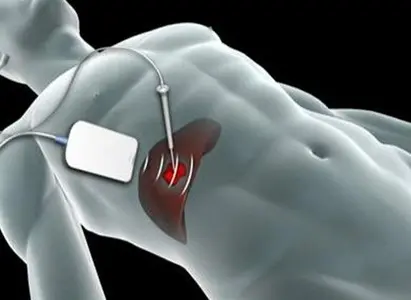
Microwave ablation, commonly abbreviated as MWA, is a minimally invasive physical treatment approach known for its strong tumor-inactivation capability. This technique has already been applied in liver cancer treatment for over three decades. In recent years its scope of use has broadened considerably, and it is now employed across a wide variety of cancer types with favorable clinical outcomes. During the procedure, a specialized probe is guided directly into the tumor mass, where it emits microwave energy that destroys and ablates the malignant tissue in place. Because the energy is delivered with precision and concentrated intensity onto the tumor itself, healthy surrounding tissue generally does not experience significant damage.
How Microwave Ablation Works
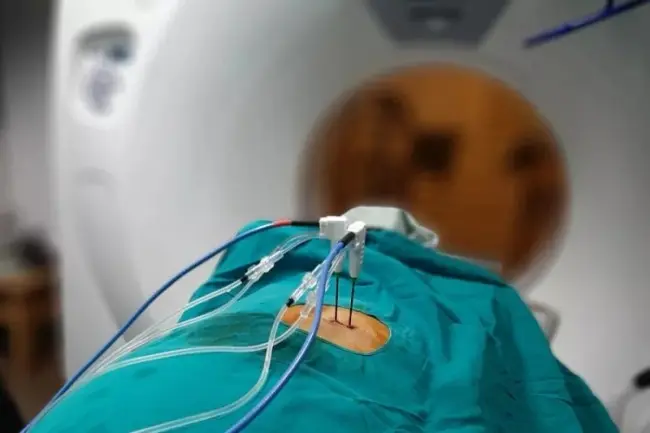
The procedure is carried out under real-time imaging guidance — typically type B ultrasound, CT, MRI, or comparable equipment — which allows the physician to accurately position a microwave thermal-coagulation needle inside the tumor. Once in place, the needle emits microwaves that cause polar molecules within the cancerous tissue to vibrate and generate heat. As the local temperature climbs past 60°C, proteins within the tumor cells denature and coagulate, resulting in irreversible cell death. Beyond its direct destructive effect, MWA is also thought to stimulate the patient’s immune response, enhancing immune function and helping to suppress the further spread of cancer cells.
Advantages of Microwave Ablation
- High efficiency, short procedure time: A tumor measuring around 6 cm in diameter can typically be ablated within about 10 minutes, which lowers surgical risk and reduces patient discomfort. Tumors smaller than 5 cm can often be eliminated completely in a single session, leaving no residual malignant cells.
- Controllable coagulation zone: The extent of the ablated area within the tumor can be precisely managed, which helps protect surrounding healthy tissue from significant harm.
- Minimal trauma: The procedure only requires inserting a needle under 2 mm in diameter under imaging guidance, so there is no surgical scarring, no sutures, and virtually no bodily trauma — the puncture site is typically less than 3 mm.
- Low side-effect profile: Unlike chemotherapy or radiotherapy, MWA does not produce the typical adverse effects associated with those treatments, and it is associated with a high safety margin and low recurrence rate.
- Broad range of applicability: MWA can be used for patients who are not candidates for surgery, who have not responded to transarterial embolization, or who have compromised liver function. In such cases, it can serve as a palliative option — shrinking tumors, easing pain, extending survival, and improving overall quality of life.
Clinical Applications
Microwave ablation is used in treating a range of solid tumors, including liver cancer, lung cancer, thyroid cancer, breast cancer, bone cancer, uterine fibroids (hysteromyoma), pancreatic cancer, kidney cancer, and other solid malignancies. It is particularly suited for the following patient groups:
- Patients who cannot undergo surgery due to advanced age, poor physical condition, coexisting medical complications, or unfavorable tumor location.
- Patients who prefer to avoid conventional thoracotomy or other open surgical procedures.
- Patients who, during intraoperative exploration, are found to be unsuitable candidates for surgical resection after all.
- Patients dealing with metastatic disease or tumor recurrence.