

Tongue Preservation Through Minimally Invasive Treatment
The Beginning of a Challenging Journey
In August 2015, an unusual bump began to develop on Loh Jui Tong’s tongue, accompanied by a surface ulcer. Concerned about the growth, he visited a local hospital for a biopsy. To his initial relief, the results appeared benign. However, this reassurance was short-lived.
By December of that year, the situation had deteriorated significantly. Pain developed in the affected area, and his ability to eat comfortably became increasingly compromised. Sensing that something serious was occurring, he sought another medical opinion and underwent a second biopsy. This time, the diagnosis was devastating: tongue cancer, already progressed to stage III. Despite the severity of the findings, he postponed treatment until after the New Year period, a decision that would prove consequential for his health trajectory.
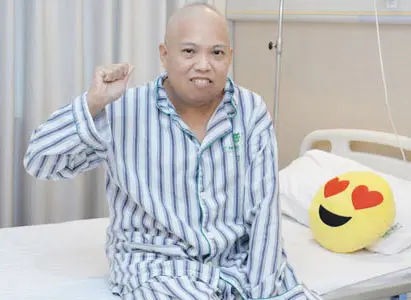
As weeks passed without treatment, the condition worsened rapidly. Ulceration of the tongue tissue intensified, accompanied by escalating pain. His body weight declined sharply, and basic functions became severely impaired. Speaking became difficult, eating was painful, and sleep was disrupted by discomfort. The cancer’s aggressive nature was becoming unmistakably clear.
Traditional Treatment Approaches and Their Limitations
In March 2016, Loh Jui Tong made the decision to pursue treatment through conventional therapies available in Malaysia. He underwent a combined course of radiotherapy and chemotherapy, treatments designed to target and eliminate cancer cells throughout the body.
While radiotherapy and chemotherapy are systemic treatments with proven efficacy against malignant tumors, they carry significant costs to the patient’s overall health. These therapies cannot distinguish between cancerous cells and healthy cells, resulting in considerable collateral damage to normal tissues. During his treatment regimen, Loh Jui Tong experienced substantial side effects: his hair fell out, and most troublingly, his sense of taste was completely lost.
After completing the radiotherapy and chemotherapy course, the tumor did shrink in size. However, his treating physicians recommended surgical intervention to achieve complete tumor removal. This would have required removing approximately half of his tongue tissue. When presented with this option, Loh Jui Tong was faced with an agonizing choice: submit to surgery that would permanently alter his ability to speak clearly and enjoy food normally, or seek an alternative approach to his disease.
Discovering Minimally Invasive Treatment Solutions
Refusing surgical resection, Loh Jui Tong began searching for alternative treatment options that might spare his tongue while still effectively treating the cancer. This search led him to St. Stamford Modern Cancer Hospital in Guangzhou. In July 2016, he travelled to the facility for comprehensive evaluation and treatment planning.
Upon arrival, Loh Jui Tong underwent thorough diagnostic assessment, including blood testing and CT imaging. After careful analysis of his condition, the hospital’s multidisciplinary team formulated a personalized treatment strategy combining interventional therapy with natural therapy approaches.
Understanding Interventional Therapy
Interventional therapy represents a revolutionary advancement in cancer treatment technology, standing apart from traditional surgery through its minimally invasive approach. Rather than making large surgical incisions, doctors using this technique require only a 1-2 millimeter opening through which they can work.
The procedure involves several carefully orchestrated steps. First, using advanced medical imaging devices such as CT guidance, physicians precisely locate the tumor lesion and determine its exact boundaries. Once positioned, anti-cancer medications are injected directly into the tumor tissue itself. This targeted delivery method is remarkably effective: the concentration of chemotherapeutic agents reaching the tumor site is approximately eight times higher than when the same drugs are administered through intravenous injection into the bloodstream. Consequently, the therapeutic efficacy is also roughly eight times greater.
Because the medication is delivered directly to the cancer cells rather than circulated throughout the entire body, the treatment causes minimal damage to surrounding healthy tissues and organs. The procedure is performed entirely without surgical cutting, involves only minimal trauma to the body, and patients typically experience rapid recovery with substantial treatment benefits.
Treatment Progress and Complications Overcome
Loh Jui Tong began his first session of interventional therapy at the hospital. The treatment proceeded favorably, and he experienced its benefits without developing numbness, swelling, or other common side effects associated with conventional therapy.
However, during his hospital stay, an unexpected complication emerged. He developed an unexplained bacterial blood infection (bacteremia) accompanied by persistent fever that lasted approximately two weeks. Investigation revealed the cause: a venous access port that had been previously implanted during treatment at another facility was the source of the infection. Once the medical team identified this problem, they removed the contaminated port, and his fever resolved promptly.
Remarkable Recovery and Return to Normal Life
Following the initial complication’s resolution, Loh Jui Tong continued with his planned treatment course. He completed two full sessions of interventional therapy combined with natural therapy approaches. The results were profound and measurable.
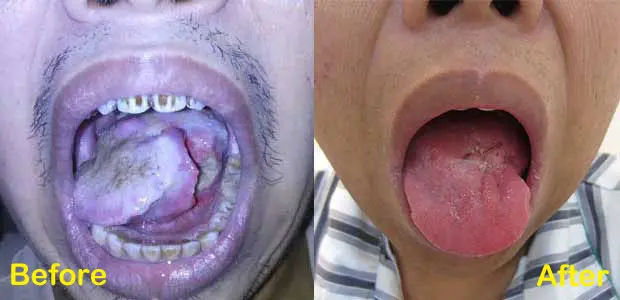
The ulceration that had plagued his tongue entirely disappeared. Imaging studies confirmed that the tumor had vanished completely. More importantly, the physical structure and function of his tongue remained intact. He regained his ability to speak without difficulty, and his sense of taste gradually returned, allowing him to enjoy food once again.
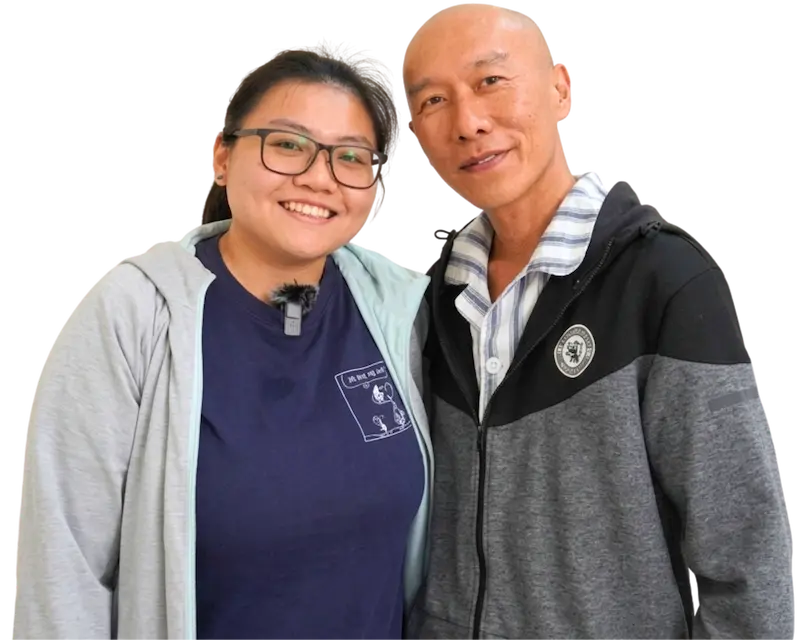
Today, Loh Jui Tong lives a completely normal life with all bodily functions restored. He describes himself as a food enthusiast, and he expresses profound gratitude for the minimally invasive treatment approach that preserved his tongue while successfully eliminating his cancer. He now freely enjoys his favorite foods without restriction or discomfort—something that would have been impossible had he undergone surgical tongue resection.
Understanding Tongue Cancer: Clinical Perspectives
Tongue cancer is classified into two main anatomical categories based on the location of the tumor. Anterior tongue carcinoma affects approximately two-thirds of the tongue at the front, while base-of-tongue carcinoma involves the posterior one-third. Malignancies most commonly arise from the tongue margins, though they can also develop on the apex, undersurface, or dorsal surface of the tongue.
Clinically, tongue cancer presents in two primary forms. The ulcerative type features a central area of tissue death surrounded by raised, indurated borders. The infiltrative type lacks a clear ulcer but involves spreading of cancer cells deep into surrounding tissues. Both presentations are characterized by rapid progression, severe pain, and high rates of spread to lymph nodes and distant organs.
Treatment Options for Tongue Cancer
The appropriate treatment strategy for tongue cancer depends on the stage at presentation and the patient’s medical condition. For early-stage disease limited to the tongue surface, radiotherapy alone can often achieve excellent outcomes. For patients with tumors confined to the tongue, comprehensive treatment that combines surgery with adjunctive radiotherapy and chemotherapy has demonstrated effectiveness, though such approaches carry the morbidity associated with surgical tissue removal.
However, for patients diagnosed with middle-stage or advanced-stage disease, or for those whose medical condition precludes surgery, overall minimally invasive treatment approaches offer compelling advantages. These multimodal strategies may include interventional therapy for targeted drug delivery, cryotherapy to freeze and destroy cancer tissue, biological therapies to enhance the immune system’s cancer-fighting capabilities, traditional Chinese medicine approaches, and molecularly targeted therapies designed to interfere with the specific genetic mutations driving individual tumors.
The case of Loh Jui Tong exemplifies how thoughtfully selected minimally invasive approaches can achieve excellent cancer control while preserving both the structural integrity and physiological function of critical anatomical structures.