

Vietnamese Patient Finds Hope Through Minimally Invasive Bile Duct Cancer Care
An Unexpected Diagnosis
Dang Thi Len, a 48-year-old woman from Vietnam, never imagined a routine health concern would turn into a battle with bile duct cancer. In early 2018, she was diagnosed with a tumor located in the bile duct within her liver. Doctors at her local hospital performed a bile duct drainage procedure, which brought temporary relief from jaundice, but no further treatment was offered. The tumor’s location made surgery an unusually high-risk option, effectively ruling it out as a viable path forward.
Turning to St. Stamford Modern Cancer Hospital Guangzhou
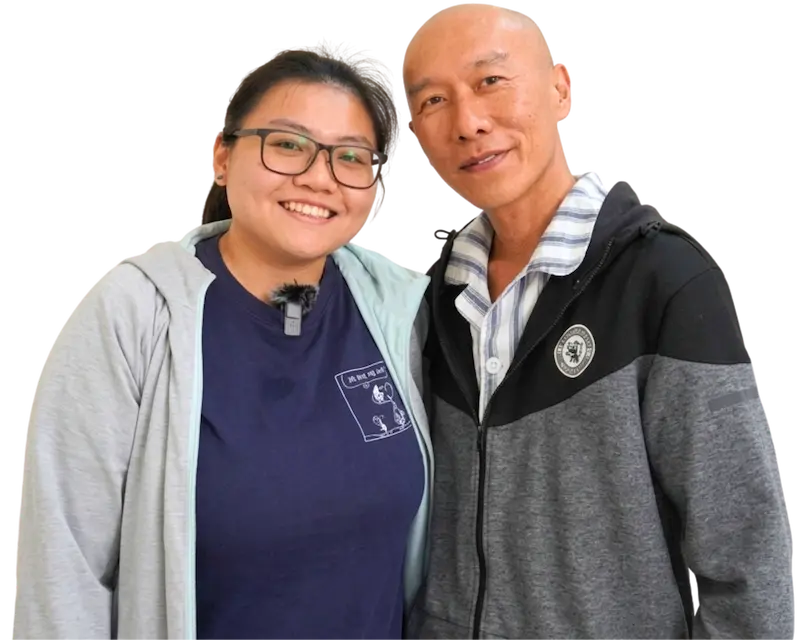
Not long after her diagnosis, a family friend connected Dang and her relatives with Bui Nguyen Kiem, a cancer specialist based at the Hanoi representative office of St. Stamford Modern Cancer Hospital Guangzhou. During their visit, they discussed her case in detail. Encouraged by positive accounts from former patients, Dang felt it was an option worth pursuing.
A remote online consultation followed, during which Dr. Pang Xiaochi, an oncologist at the hospital, reviewed her medical records and proposed a treatment approach centered on minimally invasive therapy. The thorough, careful assessment gave Dang and her family renewed confidence, and after talking it over together, they decided to move forward with treatment in Guangzhou.
A Difficult Start, Supported by Family
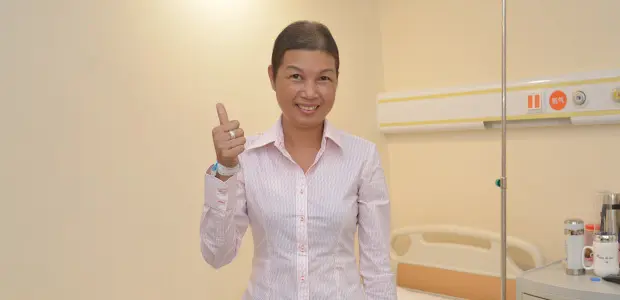
Dang arrived at the hospital in February 2018 in noticeably poor health. Jaundice had left her skin itchy and uncomfortable, abdominal pain disturbed her sleep, and persistent nausea had reduced her appetite to almost nothing.
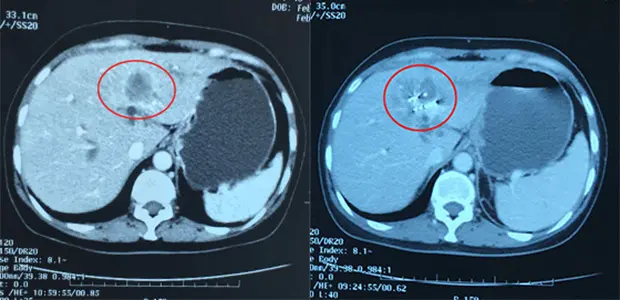
Looking back on her admission, Dang described a thorough diagnostic workup, including CT imaging, blood and urine analysis, and an electrocardiogram. Her care team explained that controlling the jaundice was the necessary first step before any further treatment could begin. Within about two weeks, she underwent bile duct drainage with stent placement, which brought noticeable relief within days — the itching and yellowing of her skin subsided, her appetite returned, and she was finally able to sleep soundly.
She then began interventional therapy, a minimally invasive technique in which anticancer medication is delivered directly into the tumor through the artery that feeds it. The procedure required only local anesthesia, caused minimal trauma, and took roughly thirty minutes to complete. After a single day of observation in the ICU, Dang was cleared to return to a regular ward and was walking comfortably without pain.
Her first hospital stay coincided with the Vietnamese Lunar New Year. Her sister and brother-in-law stayed by her side throughout, offering encouragement that helped strengthen her resolve to keep fighting.
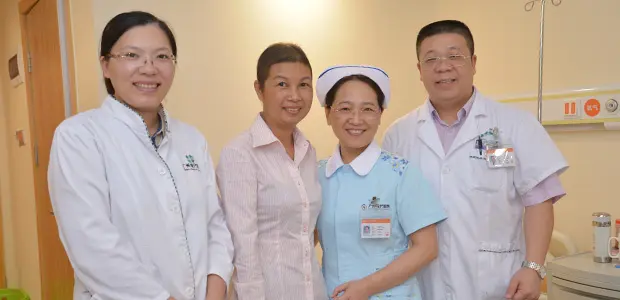
Steady Progress Across Multiple Treatment Cycles
By the time of her sixth hospital admission, Dang reported feeling significantly stronger. Her treatment plan combined several techniques, including:
- Bile duct drainage with stent support
- Interventional therapy (repeated across sessions)
- Cryotherapy
- Particle implantation (iodine-125 seeds)
- Supportive natural therapy
After four rounds of interventional therapy by her second admission, Dang already noticed a marked improvement. Her medical team eventually confirmed that the tumor within her intrahepatic bile duct had disappeared entirely, and metastatic spread in her liver had also decreased in size. She continued follow-up treatment to maintain this progress.
A Message of Hope for Other Patients
Dang credits much of her recovery to the care and attentiveness of the hospital’s staff, describing the interpreters, nurses, and physicians as warm and patient throughout her treatment journey. Reflecting on her experience, she shared a message for others facing a cancer diagnosis: finding the right treatment approach can make all the difference, and a diagnosis does not have to mean the end of hope.