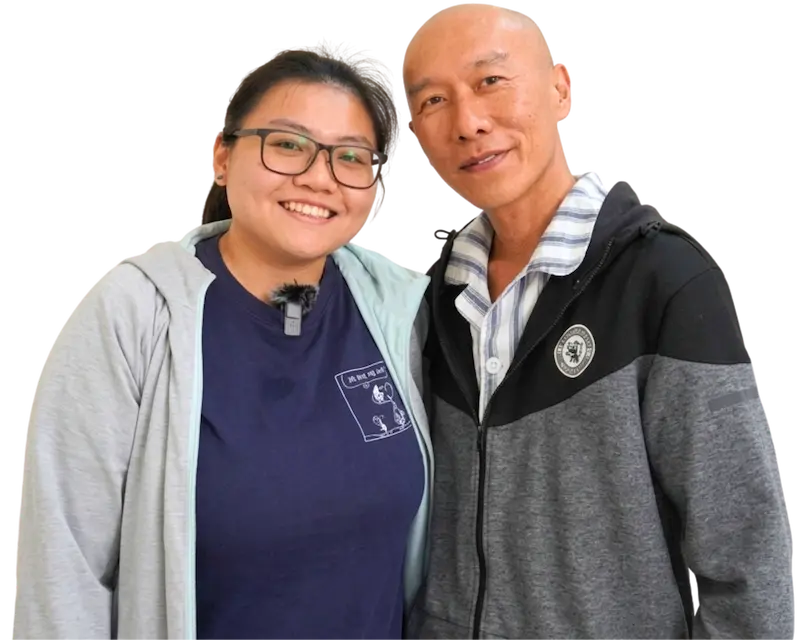


My Journey Through Stage 4 Nasopharyngeal Cancer
An Unexpected Turn of Events
Victor Hugo’s ordinary day became the foundation of an extraordinary medical journey. While preparing to recount his treatment experience for an upcoming interview, he continued with his regularly scheduled medical appointments. During a brief moment with lunch completed, he found himself video-chatting with his daughter across the distance separating them in the Philippines. The connection was filled with anticipation as he shared details about the interview scheduled for that afternoon.
“Following my initial treatment session, my daughter and I discussed how meaningful it would be to let our friends back home learn about this experience through media coverage,” Hugo reflected. “I truly want them to understand the remarkable nature of what I’ve undergone and how fortunate I’ve been to access such an excellent treatment program.”
The Warning Signs That Changed Everything
Initial Symptoms and Deterioration
The painful experience that began in June 2012 remains vivid in Hugo’s memory. What initially presented as nasal congestion evolved into something far more concerning. “The problem started with my nose feeling blocked,” Hugo explained. “When it worsened, I found breathing became increasingly difficult. My right nostril began bleeding spontaneously without any apparent reason. At that point, I recognized these weren’t normal symptoms.”
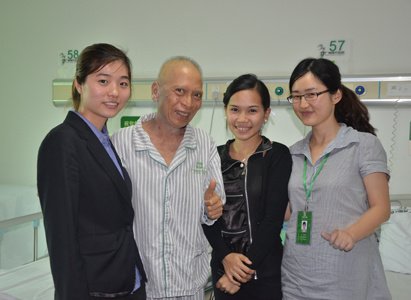
Those living alongside Hugo witnessed the progressive nature of his decline. His daughter-in-law, who provided daily care and support, observed additional troubling developments: “Starting in July, I noticed his hearing was becoming impaired. Even when we spoke at elevated volumes, he struggled to comprehend our words. His overall health deteriorated noticeably. He became susceptible to frequent fevers, common colds, and sore throats with minimal provocation. Swallowing became increasingly painful for him, leading to a significant loss of appetite and substantial weight reduction—approximately 8 kilograms disappeared over several months, leaving him visibly gaunt.”
The Diagnostic Confirmation
Despite receiving anti-inflammatory treatments, Hugo’s health showed no signs of improvement. Matters became considerably more alarming when medical imaging revealed concerning findings. Multiple masses of varying dimensions were identified throughout his nasal passages, the region behind his right ear, his pharyngeal lymph nodes, and the tissue of his soft palate. Drawing upon his personal medical background spanning more than two decades, Hugo recognized these growths represented something serious. The word that entered his thoughts—cancer—carried with it a weight of fear and uncertainty.
Accompanied by his son and daughter, Hugo underwent evaluation at his region’s premier medical facility. The results delivered a diagnosis that would reshape his entire existence: stage 4 nasopharyngeal cancer with extension into the soft palate tissue and metastatic involvement of neck lymph nodes.
“The news was deeply frightening,” Hugo admitted, reflecting on that difficult period. “Despite my medical background providing me with understanding of the condition, I couldn’t escape the overwhelming sense of fear and disappointment that the diagnosis brought.”
Seeking Solutions Beyond Traditional Approaches
Why He Looked Overseas for Treatment
Following his stage 4 diagnosis, Hugo’s local medical team in the Philippines presented conventional recommendations: chemotherapy combined with radiation therapy. Hugo, however, possessed informed perspective on these traditional approaches. “Most hospitals in my country offer limited alternatives when it comes to cancer care,” he noted. “Given my professional background, I’m acutely aware of the severe side effects and physical suffering associated with standard chemotherapy and radiation regimens alone. I made the decision to decline that path.”
This refusal to accept the conventional route led Hugo to explore alternative treatment centers with more innovative approaches. His research ultimately directed him toward a facility specializing in minimally invasive therapeutic techniques.
A Comprehensive Treatment Strategy
Designing a Personalized Approach
The medical team responsible for Hugo’s care developed a carefully calibrated treatment strategy. “Our approach for this patient centered on interventional therapy as the primary intervention,” explained Chief Surgeon Peng Xiaochi, Hugo’s attending physician. “This was complemented by natural therapy modalities and targeted radiation treatment. The complete therapeutic course required an extended timeline. Taking into account his age and current physical state, we ensured that each treatment session involved drug dosing that remained within his body’s capacity to tolerate while minimizing adverse effects.”
The Treatment Experience
The interventional therapy component represented an innovation in Hugo’s cancer management. “This technique delivers powerful anti-cancer medications directly to malignant tissue through arterial pathways,” Hugo explained, having become knowledgeable about his own treatment. “I completed two separate interventional therapy sessions, yet experienced virtually no discomfort throughout the process. It’s genuinely remarkable.”
This direct targeting mechanism stood in stark contrast to the systemic toxicity Hugo had feared from traditional chemotherapy. The precision approach allowed therapeutic agents to concentrate where needed most while sparing healthy tissue.
Results That Restored Hope
Clinical Improvements and Recovery Milestones
The impact of Hugo’s treatment regimen became evident relatively quickly. The substantial tumor mass—previously comparable in size to a child’s closed fist—demonstrated significant shrinkage. Post-treatment imaging revealed that this once-formidable growth had reduced to approximately 1 centimeter. Beyond the tumor reduction, other health parameters showed remarkable restoration.
The hearing loss that had plagued him throughout his illness made a welcome return. His previously compromised auditory function in the right ear recovered substantially. Respiratory function normalized as the soft palate invasion resolved, eliminating the breathing difficulties he had endured. Similarly, the swallowing dysfunction that had caused his dramatic weight loss reversed itself, allowing him to resume normal nutritional intake.
Looking Forward with Optimism
Currently in the midst of his second treatment cycle, Hugo’s physical condition continues improving steadily. His experience has cultivated a deep appreciation for the medical facility that treated him. “I feel extraordinarily fortunate in my selection of Modern Cancer Hospital Guangzhou for my care,” Hugo stated with genuine conviction. “Having resided in America for more than two decades, I’m well-positioned to make such comparisons. The quality of their medical treatment and the caliber of their patient services rival anything available in the United States. This facility truly represents excellence.”
Hugo’s journey illustrates how advanced medical innovation, combined with personalized treatment design, can offer hope to those facing advanced malignancies. His willingness to pursue alternatives to conventional therapy, coupled with access to state-of-the-art minimally invasive techniques, transformed what initially seemed like a devastating diagnosis into a story of recovery and renewed vitality.