

Advanced Lung Cancer Recurrence Reversed Through Minimally Invasive Treatment
When Hope Seemed Lost: A Mother’s Cancer Returns
As the daughter of a lung cancer patient, I never anticipated facing such heartbreak twice. During a routine medical examination in October 2022, we discovered that my mother’s lungs had become enlarged. To establish a definitive diagnosis, I immediately arranged for her to travel to a Singapore hospital for a biopsy, which confirmed the presence of malignant lung disease.

Concerned about my mother’s advanced age and overall wellbeing, I chose to pursue treatment in Singapore. Over the following period, she underwent five courses of chemotherapy, thirty-three sessions of radiotherapy, and twelve rounds of maintenance treatment. These intensive therapies brought relief, and her condition eventually stabilized, requiring only periodic follow-up evaluations.
Regrettably, life rarely follows the path we hope for. During a follow-up consultation in March, the physician assured me that my mother’s status remained stable, temporarily alleviating my anxieties. Tragically, this relief was fleeting. When she returned for a reassessment examination in August, the devastating truth emerged—the cancer had returned. The tumor had come back to its original location, spreading to multiple surrounding lymph nodes. The prognosis was grim: her physicians indicated there were no viable treatment options remaining, and she was given only a handful of months to live. I felt completely overwhelmed, unsure of how to proceed or where to turn for answers.
A Glimmer of Hope in the Darkness
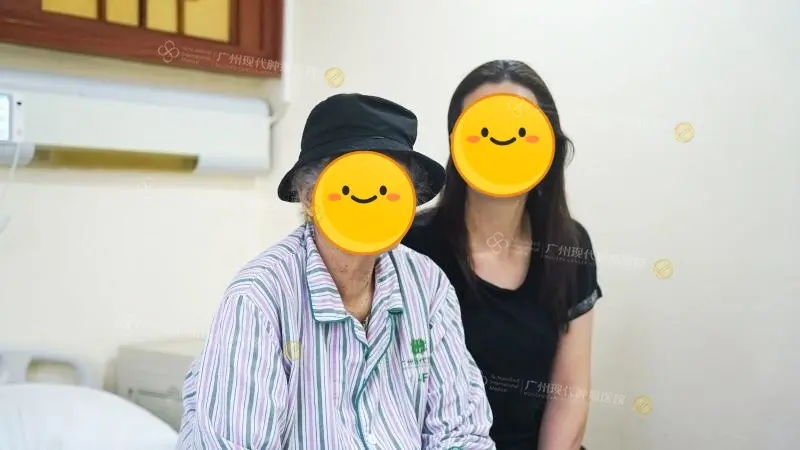
When facing such overwhelming despair, I questioned whether continuing to pursue treatment made any sense. I could not bear the thought of losing my mother without exhausting every possible avenue. During this dark period, relatives suggested I consider St. Stamford Modern Cancer Hospital Guangzhou, emphasizing that their advanced minimally invasive treatment methodologies might offer a new path forward. Armed with this sliver of hope, I made the decision to bring my mother to Guangzhou, China for evaluation and potential intervention.
Selecting a Tailored Treatment Approach
Upon comprehensive evaluation at St. Stamford Modern Cancer Hospital Guangzhou, the medical team confirmed that my mother’s lung cancer had recurred at the original site, accompanied by metastatic involvement of multiple lymph nodes. Given her age of seventy-nine years, the presence of several existing medical conditions, and her overall physical capacity, the multidisciplinary treatment team developed a personalized regimen centered on cryoablation combined with interventional therapy. This approach was specifically chosen because it proves far more suitable for elderly populations, patients experiencing recurrence, and those whose bodies cannot endure the severe systemic effects of traditional whole-body chemotherapy.
The cryoablation procedure operates through a highly precise mechanism. A specialized probe is inserted directly into the malignant tissue under continuous guidance from ultrasound or CT imaging. The probe then initiates a rapid freezing cycle, reducing tissue temperature to below negative one-hundred-sixty degrees Celsius. Following the freezing phase, a controlled rewarming process occurs. These temperature extremes cause malignant cells to lose their internal moisture and rupture at the cellular level. Simultaneously, the extreme cold destroys the delicate blood vessels contained within the tumor, starving cancer cells of oxygen and triggering cellular death. Interventional therapy functions through a complementary mechanism, utilizing advanced imaging guidance to deliver anti-tumor medications with pinpoint accuracy directly to the malignant tissue while minimizing exposure to healthy neighboring structures and significantly reducing collateral tissue harm.
Results That Exceeded Expectations
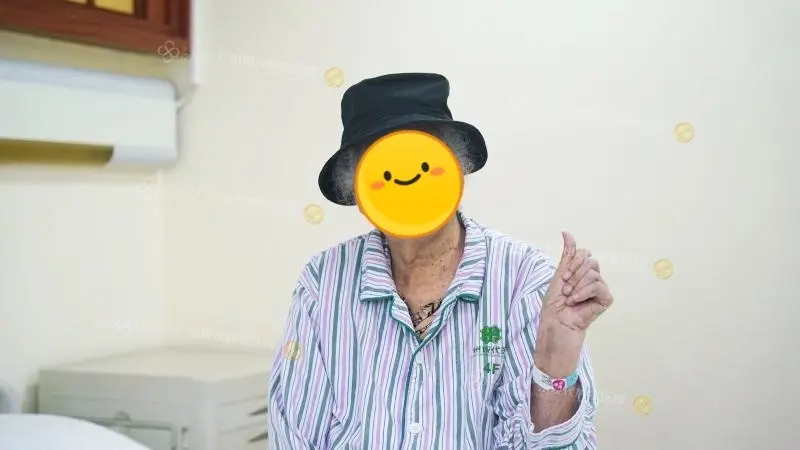
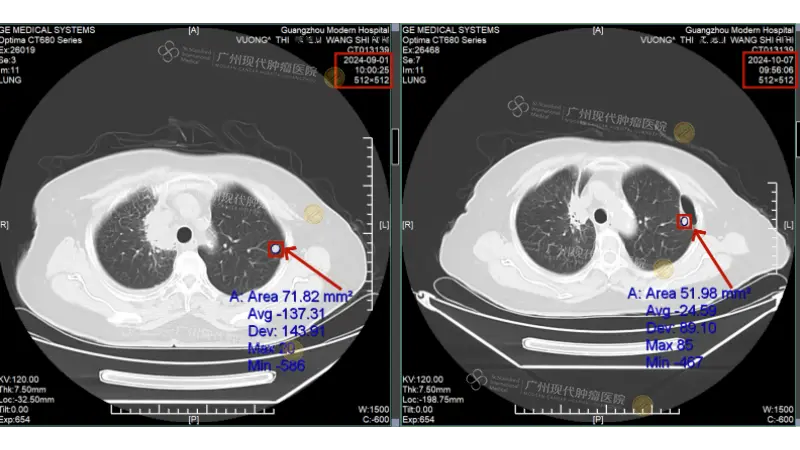
On September fourth, two thousand twenty-four, my mother underwent the cryoablation procedure. Following the intervention, she experienced no discomfort or adverse effects. Wanting to maximize her chances of recovery, I requested that her physicians proceed with the interventional therapy procedure, which was performed on September tenth. This second treatment also proceeded without complications or notable side reactions. During a follow-up imaging evaluation conducted on October sixth, CT scans revealed remarkable progress—the tumor occupying her lung tissue had diminished by roughly fifty percent in volume. Witnessing my mother’s gradual physical improvement and observing the substantial enhancement in her emotional well-being and outlook has made every challenge worthwhile. I remain profoundly grateful to the clinical team at St. Stamford Modern Cancer Hospital Guangzhou for restoring my mother’s sense of hope and enabling her to smile again.
A Hospital Worth Trusting With Your Care
Having supported my mother throughout her battle against malignancy and having witnessed firsthand the challenges cancer patients and their families face, I enthusiastically recommend St. Stamford Modern Cancer Hospital in Guangzhou to others who find themselves confronting a cancer diagnosis. The institution provides access to cutting-edge minimally invasive treatment modalities, delivered alongside compassionate medical care and modern patient accommodations. This comprehensive approach ensures that patients and their families can pursue treatment with peace of mind and the confidence that they are receiving exceptional care.
Reflecting on the entire journey of supporting my mother—spanning from initial treatment in Singapore through her recovery journey in Guangzhou—I have encountered numerous cancer patients who have shared their experiences and struggles. Despite the diversity of individual situations and geographic origins, I have consistently observed that when patients select an appropriate medical facility, commit to following an evidence-based treatment strategy, adhere to their physicians’ guidance, and maintain a positive psychological approach, they possess the capacity to overcome cancer and transition into a meaningful new chapter of their lives.