

Malaysian Patient Finds Relief Through Minimally Invasive Treatment Options
Initial Diagnosis and Search for Alternatives
In early 2018, Mr. Ong Lee Sing, a 72-year-old from Malaysia, began experiencing discomfort in his upper abdominal region. Initially believing it to be a common stomach issue, he underwent gastric endoscopy at a local medical facility. The examination suggested chronic gastritis, prompting his doctors to recommend additional diagnostic testing. However, imaging studies including computed tomography revealed a concerning finding: a mass had developed in his gallbladder, with cancer cells having spread to his liver as well.
The diagnosis was sobering—advanced gallbladder adenocarcinoma with hepatic metastasis. At the local hospital, physicians indicated that surgical intervention was not feasible given the extent of his disease. Instead, they recommended traditional chemotherapy as the primary treatment option. Having witnessed the toll that conventional chemotherapy takes on patients—hair loss, weight reduction, severe nausea, and overall physical deterioration—Mr. Ong was reluctant to proceed with this conventional approach.
Recognizing his concerns, Mr. Ong’s family began researching alternative cancer treatment centers. Through their investigation, they discovered St. Stamford Modern Cancer Hospital Guangzhou, which offered minimally invasive therapeutic approaches. After consulting with specialists at the hospital’s Kuala Lumpur office, Mr. Ong made the decision to travel to Guangzhou for comprehensive treatment.
Comprehensive Medical Evaluation and Treatment Planning
Upon arrival at St. Stamford Modern Cancer Hospital in December 2018, Mr. Ong underwent detailed diagnostic assessment. The comprehensive evaluation confirmed his condition as well-differentiated adenocarcinoma of the gallbladder at stage IV with suspected liver metastasis. Additional findings included the presence of gallstones, lymphadenopathy in the liver hilum region, a simple cyst in the right kidney, and a small nodule in the left adrenal gland.
Given the complexity of his presentation, the hospital’s multidisciplinary team convened to develop a personalized treatment strategy. After careful consideration of his overall health status and cancer characteristics, the medical team recommended a combined therapeutic approach utilizing two complementary minimally invasive techniques: interventional therapy and cryotherapy.
Treatment Experience and Clinical Outcomes
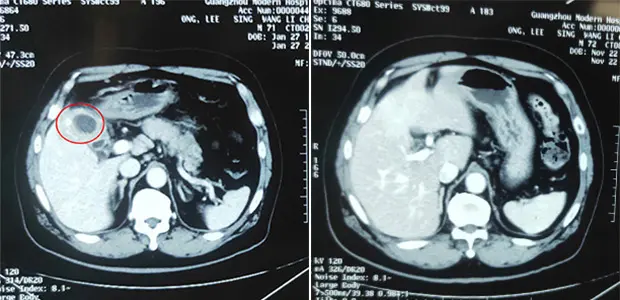
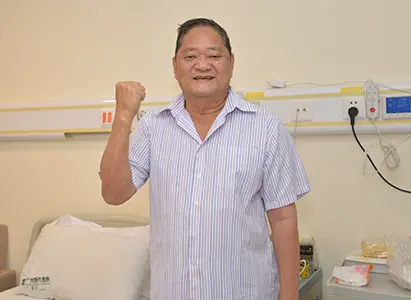
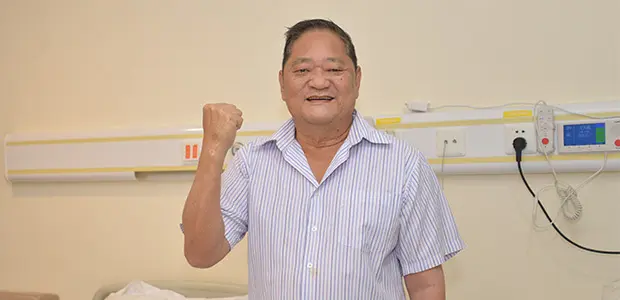
Over the course of his treatment, Mr. Ong completed six treatment cycles combining interventional and cryotherapy interventions. Remarkably, throughout this entire treatment period, he did not experience the typical debilitating side effects commonly associated with traditional chemotherapy. As his medical team observed, the gallbladder wall thickening gradually resolved, and the tumor that had infiltrated surrounding liver tissue responded well to the minimally invasive approach. Most impressively, the scattered metastatic lesions throughout his liver showed substantial reduction in size and activity.
The improvements in Mr. Ong’s clinical status were not limited to radiological findings. His appetite returned to normal levels, his sleep quality improved significantly, and his energy levels increased noticeably. His attending physician noted that these positive changes reflected not only the physical benefits of the treatment but also the psychological relief of avoiding the harsh side effects of chemotherapy.
Patient Perspective and Family Support
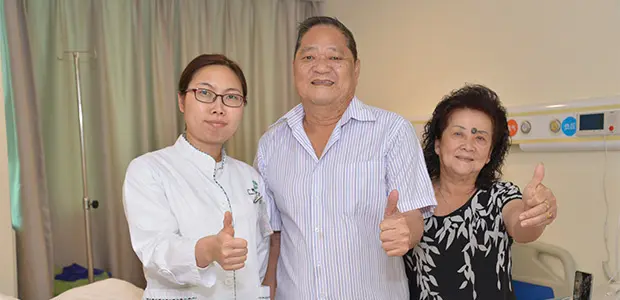
Reflecting on his cancer journey, Mr. Ong expressed profound gratitude for discovering an alternative treatment pathway. He shared his perspective on the differences between his experience and what he had observed with chemotherapy patients: “In Malaysia, despite our family’s extensive efforts to locate suitable treatment, chemotherapy remained the standard recommendation from local oncologists. I witnessed many patients undergoing chemotherapy suffer tremendously during their treatment cycles. Beyond the immediate discomfort during procedures, they endured significant collateral damage including hair loss, severe weight loss, persistent physical malaise, and intractable nausea. Additionally, chemotherapy cannot discriminate between cancer cells and healthy cells, destroying both indiscriminately.”
His spouse was equally positive about the overall treatment experience. She noted that throughout the entire hospitalization period, her husband was spared the debilitating toxicities typically associated with chemotherapy. She particularly praised the hospital staff for their compassionate care, clinical attentiveness, and the creation of a supportive healing environment. “During the whole treatment, my husband was prevented from suffering side effects of traditional chemotherapy. All medical staff was considerate and caring. The hospital provided such a comfortable environment for patients.”
Clinical Team Recognition and Future Outlook
During their hospital stay, Mr. Ong and his family also encountered other cancer patients from Malaysia who were undergoing treatment at the same facility. These encounters reinforced their belief in the quality of care being provided. Mr. Ong was particularly appreciative of his primary physician, Dr. Zhai, noting her exceptional clinical skills and bedside manner. Even after returning to Malaysia, he continued to reach out with questions and concerns, and Dr. Zhai consistently provided prompt, thoughtful responses.
With successful treatment outcomes achieved and his medical condition stabilized, Mr. Ong and his wife are now focusing on enjoying their later years together. They have begun planning leisurely travel experiences and looking forward to a quality of life that seemed uncertain at the time of his diagnosis.