

Bypassing Surgery: Advanced Prostate Cancer Managed with Minimally Invasive Methods
A 60-Year-Old Faces Progressive Prostate Disease
A 60-year-old gentleman from Malaysia noticed increasingly frequent urination related to his demanding work schedule, which required lengthy hours in meetings. What began as urinary frequency escalated rapidly—within a single month, he found himself needing to urinate every five minutes, accompanied by significant discomfort during these episodes. Concerned by these symptoms, he consulted medical professionals for proper evaluation and diagnosis.
Diagnosis of Advanced Disease with Metastatic Involvement
In mid-June 2018, diagnostic investigations including ultrasound imaging and tissue sampling were performed at a private Malaysian cancer facility. The findings revealed a serious diagnosis: advanced-stage prostate cancer that had already spread to the bone. The medical team expressed pessimism about his prognosis, citing his age as a limiting factor for conventional interventions.
Refusing to accept this discouraging assessment, he sought a second medical opinion at another hospital. The medical team there recommended surgical resection followed by chemotherapy. However, he declined both recommendations. His reasoning was straightforward: based on his knowledge of Malaysian cancer care, the only available options were surgery, chemotherapy, and radiation. He was concerned about tolerating the substantial physical trauma and systemic side effects these approaches would impose, particularly at his stage of life. The aggressive nature of systemic chemotherapy—which damages both cancerous and healthy cells—made him reluctant to proceed despite medical advice.
Discovering Minimally Invasive Treatment Options
Facing this impasse, his executive assistant identified St. Stamford Modern Cancer Hospital Guangzhou and their approach to minimally invasive cancer therapy. This methodology represents an advancement in cancer treatment, offering precision targeting of malignant tissue while minimizing trauma to surrounding structures and reducing systemic complications.

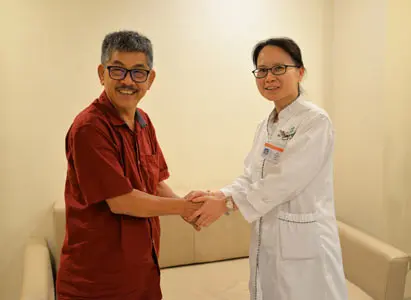
Alan Yang, the general manager of the hospital’s Penang office, initiated contact and provided detailed explanations of how minimally invasive techniques operate. Following an assessment of his specific medical condition, a treatment strategy was proposed combining particle seed implantation with integrative natural therapy protocols.
He explained his perspective on the opportunity: “I learned that minimally invasive therapy fundamentally differs from conventional surgery and systemic chemotherapy. Instead of systemic drug administration, therapeutic agents are delivered directly into the tumor tissue, where they target malignant cells with precision while preserving surrounding normal structures and minimizing physical complications. After hearing a personal testimony from a breast cancer patient who had received treatment at this facility and achieved positive results, I felt motivated to pursue this approach. Despite my family’s preference for treatment in Singapore or the United States, I made the decision to come here.”
Treatment Initiation and Early Response
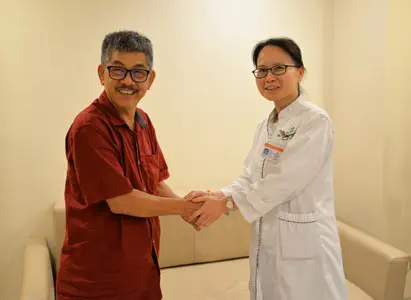
In early July 2018, he arrived at the hospital accompanied by family members. Upon admission, the multidisciplinary medical team conducted comprehensive evaluations and held an integrated case consultation. Based on his tumor characteristics, metastatic status, and overall physical capacity, they formulated a personalized treatment plan involving particle implantation combined with natural therapy support.
Prior to treatment, imaging and laboratory tests documented the extent of disease. The tumor mass, measuring approximately 8 centimeters, was compressing and partially obstructing the urethra, making urination extremely difficult and painful. His prostate-specific antigen (PSA) marker was elevated to 25.6 ng/ml, compared to the normal reference range of 4 ng/ml. While in Malaysia, he had required urinary catheterization and wore a collection bag to manage urination. Additionally, he developed a complicating herpes infection as a side effect of the diuretic medications he had been taking.
Dramatic Improvement Following Minimally Invasive Intervention
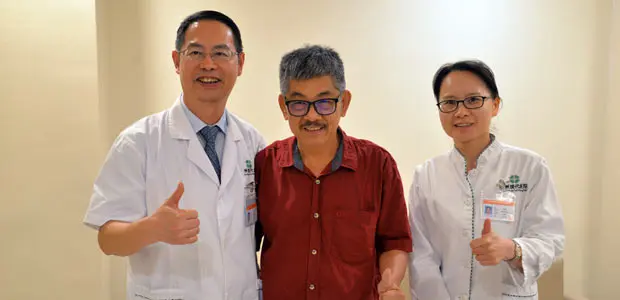
After completing his initial course of particle implantation and natural therapy, he experienced remarkable clinical improvement. The tumor dimensions decreased substantially, urinary obstruction resolved, and he no longer experienced pain during urination. Most significantly, his urinary catheter and collection system were removed, restoring his independence. The secondary herpes infection cleared as well. One month after completing treatment, his PSA level had normalized to 0.2 ng/ml—a dramatic reduction from the pretreatment elevation.
Reflecting on his treatment experience, he noted that despite feeling considerable anxiety before the procedure, his concerns proved unfounded. He remained conscious throughout the implantation procedure and described the physical sensation as minimal—comparable only to a slight insect bite. Immediately following the procedure, he walked off the treatment table without assistance and experienced no post-procedure discomfort.
Patient Advocacy and Reflection on Treatment Decision
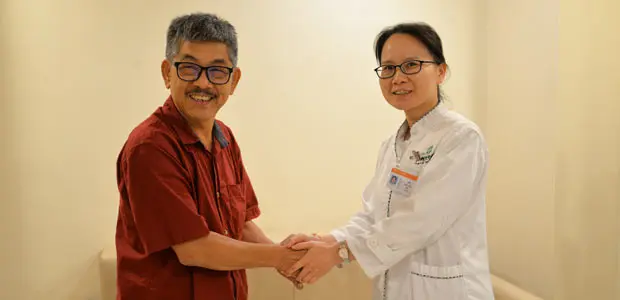
He acknowledged that when he initially decided to pursue treatment at this facility, he lacked substantial support from his extended family and social circle. However, after meeting and conversing with multiple patients who had undergone treatment there and hearing their endorsements of the hospital’s capabilities and compassionate care, his confidence solidified. He articulated his reasoning: “If the technology and treatment outcomes at this hospital were not truly effective, patients would not recommend it so enthusiastically. The fact that they do recommend it speaks to their advanced technological capabilities and quality of patient care.”
He consented to share his medical journey publicly, stating: “Throughout my treatment, I was surrounded by highly skilled physicians and compassionate nursing staff. I have agreed to participate in this interview hoping to reach other individuals facing cancer diagnoses and help them understand that effective minimally invasive treatment options exist—treatments that can genuinely improve quality of life and outcomes. This represents my first experience speaking publicly about my medical experience. I hope my account can provide meaningful guidance to others facing similar circumstances.”