

Recovery Without Remorse: Advanced Therapy Transforms Stage IV Breast Cancer
Finding Strength Beyond Fear
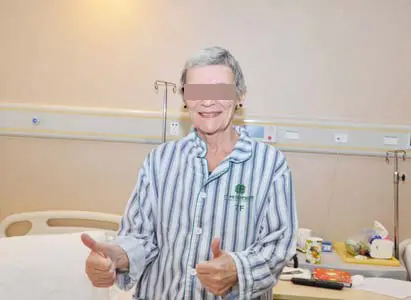
At 69 years old, Cheryl Diane Carl faced a diagnosis that could have ended her story. Instead, she chose to rewrite it. “There is no reason to give up,” she reflects now. “There’s plenty of things that can help you. Sometimes disappointment comes, but you must learn to handle it and move forward. It will work. I think it’s unfortunate that many people today still carry enormous fear about cancer. Yes, it is a serious challenge, but it is not the end of the world.”
The Discovery and Early Diagnosis
Cheryl’s journey began quietly in the summer months. A routine mammogram identified a small mass in her right breast, but initial reassurance suggested it posed no immediate concern. By October, the situation had shifted dramatically—the lump had doubled in size without causing pain or obvious symptoms. Concerned, Cheryl sought evaluation at a facility in Singapore alongside her supportive husband. The medical team there delivered difficult news: she had been diagnosed with stage II breast cancer.
The doctors recommended aggressive conventional approaches: chemotherapy, radiation therapy, and surgical removal of breast tissue. Cheryl listened carefully to their recommendations but hesitated. At her age, the prospect of severe side effects—weakness, nausea, chronic pain—felt overwhelming. She wanted another path, something less toxic to her body yet equally effective.
A Chance Encounter Changes Everything
During a medical appointment in her adopted home of Indonesia, where she worked as an educator at an international school, Cheryl encountered another patient in a waiting room. This woman had battled liver cancer and undergone minimally invasive treatments at St. Stamford Modern Cancer Hospital Guangzhou with remarkable success—her tumor had significantly shrunk. The conversation planted a seed of possibility.
Curious and hopeful, Cheryl and her husband researched the facility online, learning about its approach to cancer care. They contacted the hospital’s Jakarta office for a preliminary consultation. The physicians there confirmed they could help her. “It felt like fate brought us together,” Cheryl later reflected. “Had I not met that woman, I would never have discovered this hospital.”
Arrival and Diagnosis Reassessment
When Cheryl arrived at the hospital in January 2016 for comprehensive evaluation, the medical picture proved more complex than initially believed. Advanced imaging revealed her cancer had progressed from stage II to stage IV during the months since her Singapore diagnosis. The primary tumor now measured approximately 5 by 6 centimeters, and it had spread systemically: metastatic disease was present in both lungs, the liver, and lymph nodes in her right armpit.
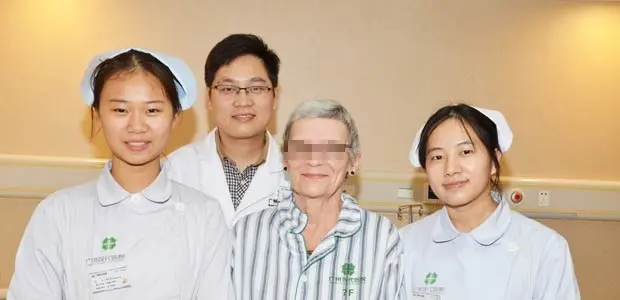
Given the advanced nature and aggressive behavior of her malignancy, the hospital’s Multidisciplinary Team (composed of specialists in oncology, surgery, and interventional radiology) rapidly formulated a comprehensive strategy. Rather than relying on any single intervention, they designed a sequential combination: interventional therapy to address metastatic disease, microwave ablation and cryotherapy to attack the primary tumor, followed by surgical removal when optimal timing could be established.
A Team Approach to Complex Disease
What impressed Cheryl most was not just the treatment plan itself, but how it was developed and refined. “One doctor is assigned to you, but you are really being cared for by an entire team,” she explained. “These physicians communicate constantly, comparing their observations and debating the best approach. After each treatment session, they review your real response and adjust the plan accordingly. That level of coordinated attention was remarkable.”
This collaborative model stood in sharp contrast to her prior experience with traditional oncology settings, where treatment often felt standardized rather than personalized. Every aspect of Cheryl’s care was tailored to her individual physiology and response patterns.
Treating the Metastatic Disease
Cheryl’s initial therapy focused on the cancer cells that had traveled beyond her breast. Interventional therapy was employed to target and destroy these metastatic deposits throughout her body. To her astonishment, this phase of treatment proved remarkably effective—the metastatic cancer cells were eliminated.
The primary breast tumor presented a different challenge. Because of its size and the position in which it was embedded within breast tissue, traditional chemotherapy drugs could not adequately penetrate all areas of the malignancy despite being administered at full therapeutic doses. The team recognized that additional intervention would eventually be necessary.
Microwave Ablation and Cryotherapy
Alongside the interventional approach, Cheryl underwent microwave ablation and cryotherapy to generate localized destruction of the primary tumor’s cells. These minimally invasive techniques use heat and extreme cold, respectively, to kill cancer tissue directly rather than flooding the entire body with chemotherapy drugs. The combination showed promise, causing measurable shrinkage of the tumor.
The Surgical Decision
By June 2016, the multidisciplinary team recommended mastectomy—surgical removal of the affected breast—to completely eliminate the remaining primary tumor and optimize overall treatment outcomes. Cheryl was understandably hesitant about surgery at first, having experienced its risks and complications in other contexts. She waited two additional months, continuing her nonsurgical therapies, before consenting to the procedure in August 2016.
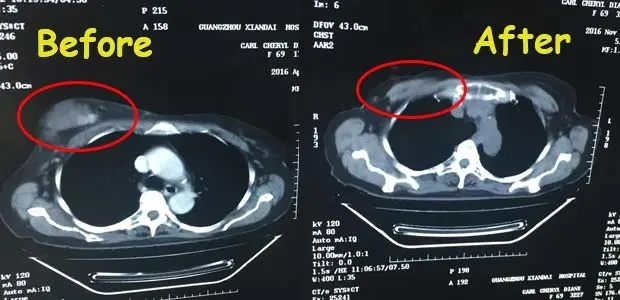
What happened next surprised her completely. Rather than declining after surgery, her health improved dramatically. “Probably this is the best thing that has ever happened,” she shared. “After the procedure, I could not believe the difference it made. My immune system had been completely focused on fighting the cancer throughout my body, but once they removed the primary tumor, something shifted. My body felt completely different. I began healing, and I felt genuinely well.”
She elaborated on the timing: “I asked the doctor whether I should have had the surgery back in January. He explained that delaying was actually the correct strategy—they needed time to shrink the metastatic cancers in my lungs and liver with minimally invasive approaches first. The primary tumor was the biggest obstacle, and surgery was perfectly timed once we had addressed the cancer elsewhere. It was really helpful and, frankly, amazing. The thoroughness of the entire approach was remarkable.”
Complete Response and Recovery
Following multiple sessions of combined minimally invasive therapy and ultimately surgery, imaging and pathological analysis revealed extraordinary results: no living cancer cells remained in Cheryl’s body. The disease that had spread through her organs appeared to have been completely eradicated.
Her satisfaction with the treatment outcomes was evident. Beyond her own recovery, Cheryl remained engaged with her medical team. Her younger sister, who works as a physician in the United States, reviewed Cheryl’s latest medical records with colleagues at an American clinic. The American physicians confirmed the remarkable improvement documented in the imaging and laboratory findings, validating the treatment’s success from an international medical perspective.
Patient Experience and Supportive Care
Beyond clinical outcomes, Cheryl praised the hospital’s commitment to patient comfort and clear communication. “When you’re in the treatment room during a procedure, there is constantly a translator checking in, asking whether you experience any discomfort. As soon as you mention something, they address it immediately. Coming to a Chinese hospital without speaking the language could be very challenging, but the translation services—even during procedures—have been excellent. It has been genuinely easy, which amazed me.”
This attention to the patient experience extended beyond language support. The entire environment was designed to minimize anxiety and maximize comfort during intensive medical interventions.
A Message of Hope
Now healthy and free of cancer, Cheryl has become an advocate for other patients navigating similar diagnoses. Her message is direct and grounded in hard-won experience: “There is no reason to give up. There are many options available to help you. Yes, you will face disappointments along the way, but you must learn to process them and continue forward—and it will work. It bothers me that cancer still generates such overwhelming fear in so many people today. Cancer is absolutely a serious problem and a real challenge, but it should not be viewed as an ending. With proper treatment and the right medical team, recovery is possible.”
For Cheryl, the combination of minimally invasive technology, multidisciplinary expertise, and a patient-centered approach transformed a potentially devastating diagnosis into a survivorship story.