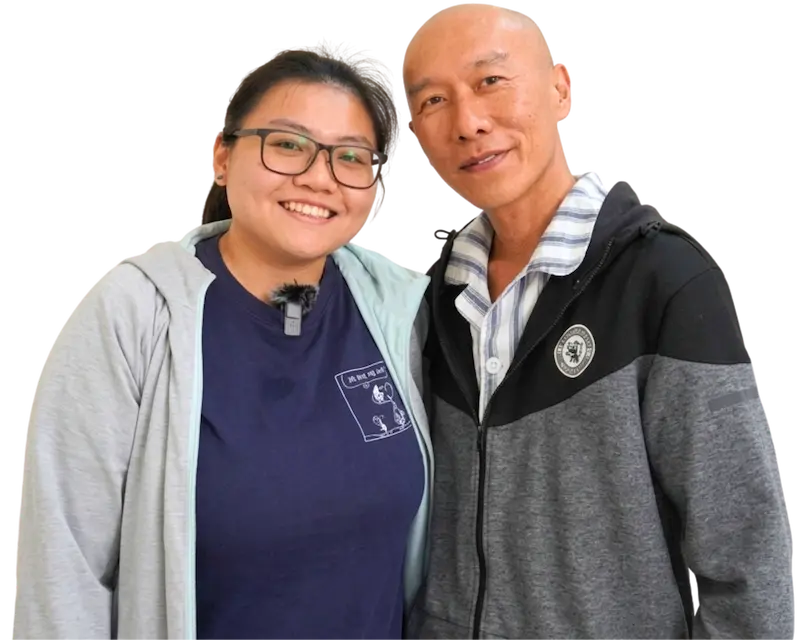


Vietnamese Esophageal Cancer Patient Gains Confidence Through Minimally Invasive Treatment
Initial Symptoms and Delayed Diagnosis
Beginning in September 2018, a 56-year-old resident of Hanoi experienced progressive difficulty during meals, noting that food appeared to remain lodged in his throat. Initially dismissing these symptoms as minor, he did not seek medical evaluation. However, by November of that year, his swallowing difficulties intensified substantially, making it impossible to consume larger portions of solid foods. This escalation prompted him to visit a local hospital where medical professionals performed an esophagoscopy. The imaging revealed thickening in the middle segment of the esophageal wall, and pathological examination confirmed the presence of squamous cell carcinoma.
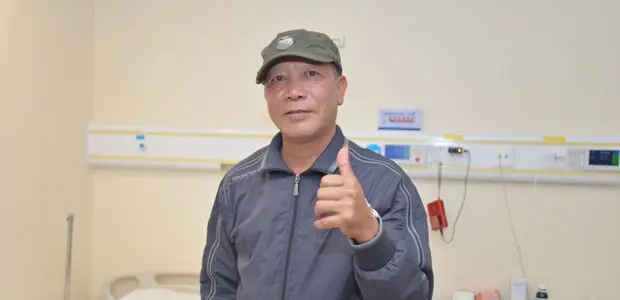
The medical team recommended immediate hospitalization for treatment. However, the patient harbored significant reservations about conventional approaches. Having observed poor treatment responses and substantial side effects in cancer patients undergoing radiotherapy and chemotherapy, he actively sought alternative therapeutic options that might yield better outcomes with fewer complications.
Discovery of Minimally Invasive Treatment Options
Through a friend who had undergone minimally invasive therapy at St. Stamford Modern Cancer Hospital Guangzhou and experienced remarkable recovery, the patient learned about an alternative approach to cancer management. This method differs fundamentally from traditional interventions in that it targets tumors with significantly reduced tissue trauma and substantially lower adverse effects. Impressed by his friend’s successful outcomes, he made the decision to pursue this treatment path. By late November 2018, he traveled to Guangzhou to initiate minimally invasive therapy.
Comprehensive Assessment and Treatment Planning
Upon admission to the facility, clinical evaluation revealed a considerably more advanced disease state than initially suspected. Advanced imaging and laboratory studies disclosed stage IV squamous cell carcinoma affecting the middle esophagus with extensive dissemination to the hepatic parenchyma, mediastinal structures, and regional cervical lymph nodes. Additionally, the patient presented with bilateral renal cystic disease and benign prostatic hyperplasia accompanied by calcification. Medical professionals assembled a multidisciplinary team that formulated an individualized treatment protocol combining interventional therapy with photodynamic therapy to address his specific clinical presentation.
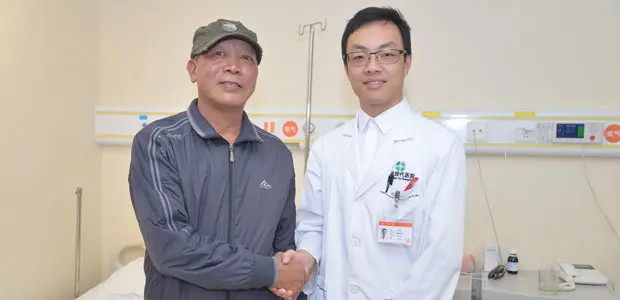
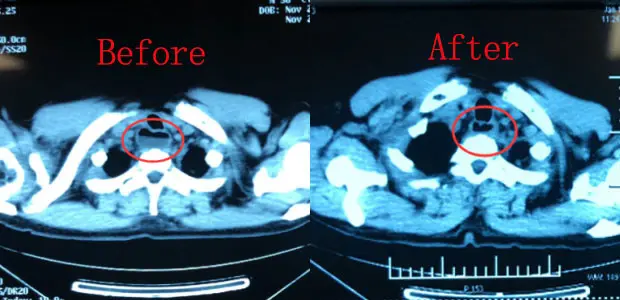
During his initial two-week hospital stay, the patient underwent a combined regimen of interventional therapy and photodynamic therapy. Following discharge, his condition demonstrated marked improvement, and he regained limited oral intake capacity, progressing to consuming porridge. Subsequent admission periods focused primarily on interventional therapy sessions. His clinical trajectory continued its positive trend, with progressive functional recovery and symptom resolution. By January 15, 2019, during his third treatment course, computed tomography imaging demonstrated substantial tumor regression, with the esophageal focus reducing in dimension by 2 centimeters. His swallowing function improved considerably, and he achieved the ability to consume soft food without significant difficulty.
Progressive Recovery and Improved Independence
In February 2019, reflecting his substantially improved medical status and physical resilience, the patient traveled independently by aircraft to Guangzhou for his fourth treatment session—a notable contrast to his initial journey accompanied by family. His recovered functional capacity enabled independent self-care without assistance. The complimentary hospital transportation services provided reassurance to both the patient and his family members. His nutritional intake normalized, and his regular diet resumed without significant restrictions.
The cumulative months of minimally invasive intervention resulted in minimal systemic consequences, limited primarily to modest alopecia without other notable adverse effects. His psychological state remained robust and optimistic, and he demonstrated considerable confidence in pursuing continued therapeutic management.
Emotional Journey and Family Impact
Reflecting on his cancer diagnosis experience, the patient acknowledges that the initial revelation generated profound emotional distress and existential fear, compounded by his family’s concerns regarding his health prospects. Upon deciding to seek treatment at St. Stamford Modern Cancer Hospital Guangzhou, he experienced some apprehension about achieving comparable therapeutic results to those observed in his friend. Observing numerous patients with similar malignancies within the hospital environment fostered a sense of community and mutual understanding. As his clinical improvement progressed and treatment results surpassed initial expectations, his anxiety diminished considerably, and his family experienced corresponding relief and satisfaction.
He expressed profound gratitude toward the clinical staff at St. Stamford Modern Cancer Hospital Guangzhou, commending their exceptional medical competence and comprehensive patient-centered care approach.
Life Modifications and Future Outlook
The cancer diagnosis prompted meaningful lifestyle modifications, prompting him to discontinue both tobacco and alcohol consumption entirely. His current aspiration centers on achieving complete disease control and reclaiming full health. Based on his personal treatment experience, he conveyed an encouraging message to fellow cancer patients, emphasizing the critical importance of maintaining optimistic perspectives regarding therapeutic interventions and cultivating robust confidence in effective disease management. He advocates that individuals facing malignancy will experience substantially improved quality of life and superior outcomes through such psychological resilience and therapeutic commitment.