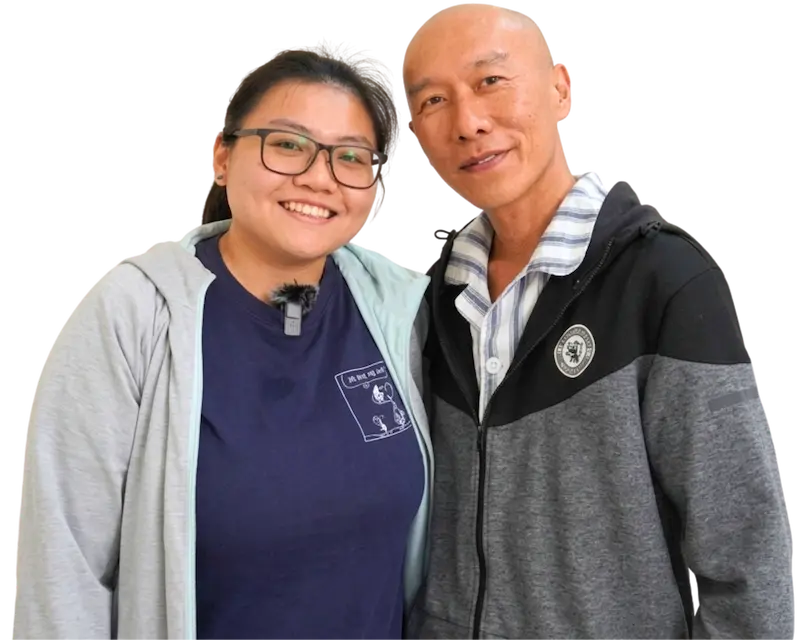


Five-Year Cancer Survivor Rediscovers Life’s Beauty
A Return to Hope After Three Years of Uncertainty
“I am the first Southeast Asian patient to seek treatment here after the global pandemic closure,” Mr. Xie declared with visible pride in his voice. This Malaysian resident’s journey with hepatocellular carcinoma spans more than five years, marked by periods of triumph, uncertainty, and ultimately, renewed optimism.
Mr. Xie’s relationship with St. Stamford Modern Cancer Hospital Guangzhou began in 2019, when his condition had reached a critical juncture. A massive tumor measuring approximately 10 centimeters had developed in his left leg, severely compromising his mobility and independence. Medical professionals in Malaysia had delivered a devastating prognosis: survival prospects of merely three to six months. Faced with this dire assessment, Mr. Xie refused to surrender to despair. Instead, he embarked on an intensive search for alternative therapeutic options.
Through recommendations from friends, Mr. Xie learned of advanced minimally invasive treatment methods available at the hospital in Guangzhou. He conducted thorough research into interventional therapy, radiofrequency particle technology, and other cutting-edge approaches. Convinced by the potential benefits and technical capabilities, he arranged his travel documentation and made the journey to China for treatment.
Transformation Through Advanced Intervention
Upon arrival, the multidisciplinary team at the hospital designed a comprehensive treatment strategy specifically tailored to Mr. Xie’s condition. The therapeutic approach combined three complementary modalities: interventional embolization therapy, cryotherapy, and microwave ablation.
The treatment sequence worked synergistically. Through interventional embolization, anti-cancer medications were delivered directly to the tumor site via the vasculature, while simultaneously occluding blood vessels that nourished the malignant tissue. This dual mechanism effectively “starved” the tumor of its blood supply. Following this initial phase, cryotherapy and microwave ablation were applied to destroy tumor cells through freeze-thaw cycles and thermal ablation, resulting in cellular rupture and tissue death.
The results exceeded expectations. The 10-centimeter lesion in Mr. Xie’s leg progressively diminished. His physical comfort improved dramatically, and his emotional demeanor transformed—colleagues and medical staff began seeing genuine smiles rather than expressions of pain and suffering. By his final admission in 2019, imaging studies revealed complete necrosis of tumors throughout his body with no evidence of recurrent disease. Laboratory markers, specifically the alpha-fetoprotein (AFP) index, normalized to healthy ranges.
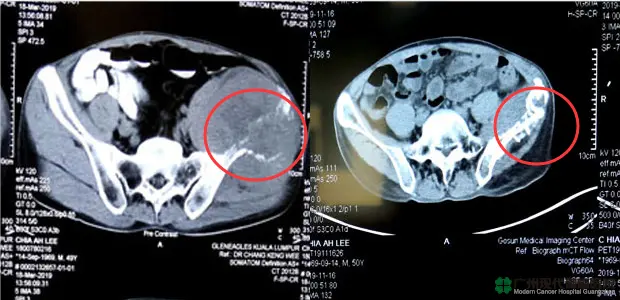
His attending physicians informed Mr. Xie that future care would require only periodic follow-up examinations, with the enormous burden of active tumor disease now lifted from his life.
Pandemic Interruption and Recurrence
The unpredictability of life became evident when the global coronavirus pandemic disrupted Mr. Xie’s planned follow-up schedule. Three years elapsed without his scheduled visits to Guangzhou. As 2022 drew to a close, troubling physical signs emerged. His weight increased unexpectedly to approximately 60 kilograms, accompanied by intermittent discomfort localized to his liver region. Although he had not yet undergone formal medical evaluation, Mr. Xie intuitively sensed that something had changed within his body.
When Malaysian healthcare providers completed their diagnostic assessments, the findings confirmed his worst suspicions: the cancer had returned. The constraints of continued pandemic restrictions prevented him from immediately returning to his trusted medical team in Guangzhou, leaving him in a state of considerable anxiety and helplessness.
Fortunately, when China announced its reopening to international visitors in December 2022, Mr. Xie seized the opportunity. He promptly applied for travel documentation while the local office staff mobilized resources to facilitate his visa processing and medical arrangements. After a three-year hiatus, he prepared to return for treatment once again.
Reunion and Renewed Treatment
Upon his arrival in January 2023, Mr. Xie observed substantial improvements to the hospital’s physical environment. The facility had undergone extensive renovation and modernization, creating a more welcoming and comfortable atmosphere. More significantly, the clinical team remained unchanged—the same physicians and nursing staff he had come to know and trust were present to greet him.
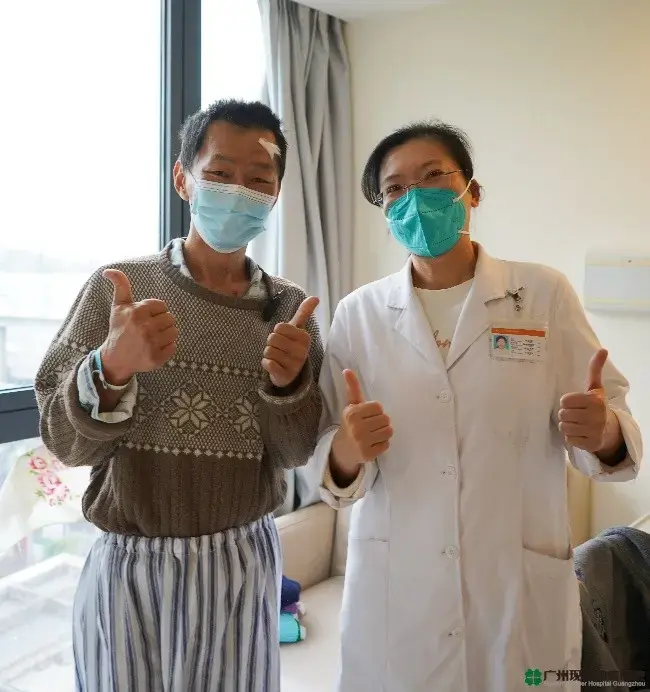
“The three-year pandemic feels like merely a number now,” Mr. Xie reflected. “Seeing familiar faces makes time seem irrelevant.” When he was admitted to his hospital room, Doctors Ma and Lin, along with nursing colleagues, visited to engage in personal conversation. Mr. Xie emphasized that among the countless benefits of his multi-year treatment journey, the relationships he had developed with medical professionals ranked equally with clinical outcomes. Despite three years of separation, he had maintained regular communication with doctors and staff members, sustaining those professional friendships.
During his January follow-up evaluation, advanced imaging via positron-emission tomography (PET) scanning revealed extensive metastatic spread throughout the liver region. The disease burden had progressed significantly—this finding explained the rapid weight gain that had preceded his return. The situation was clinically challenging, yet Mr. Xie’s confidence in the medical team and institutional capabilities remained unshaken.
The hospital’s multidisciplinary expert committee conducted a comprehensive case analysis and formulated an individualized treatment protocol combining interventional embolization therapy, microwave ablation, radiofrequency particle ablation, and gene-targeted therapy. This multimodal approach was designed to address the full scope of his metastatic disease.
Reclaimed Quality of Life
Despite the aggressive nature of his recurrent disease, Mr. Xie maintained a fundamentally optimistic outlook, anchored by his confidence in the medical personnel and sophisticated technological infrastructure that had previously delivered him from his life-threatening condition. After completing two systematic treatment courses, his symptomatic burden substantially decreased. The nocturnal breathlessness and hepatic pain that had troubled him subsided noticeably. His psychological state and sleep quality experienced marked improvement.
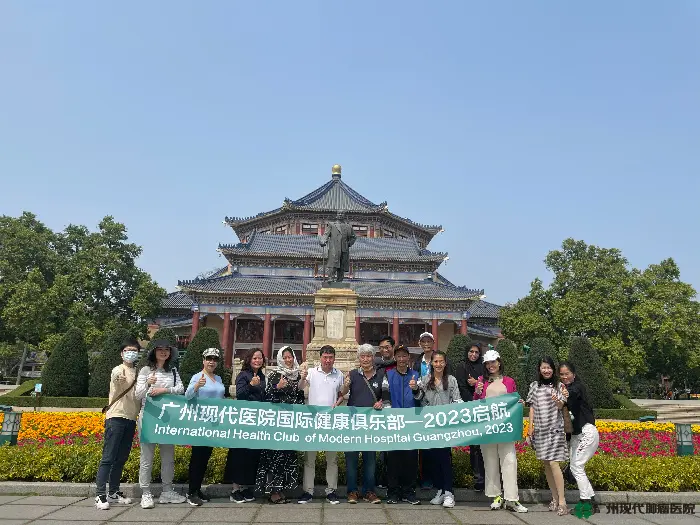
Mr. Xie expressed profound gratitude toward the hospital, describing it as “a beacon of light during the darkest moments of my life.” During his month-long hospitalization, he experienced genuine human connection—medical staff and fellow patients regularly visited to converse with him, sharing meals and mutual support. On one occasion, hospital staff arranged a recreational excursion to Guangzhou Zhujiang New Town, where Mr. Xie dining with friends and strolled through the illuminated evening landscape. In another organized community activity, the hospital facilitated visits to historically significant sites including the Guangzhou Uprising Martyr Cemetery, the iconic Five Goats Statue, and the bustling Shangxiajiu Pedestrian Street.
As spring flowers bloomed throughout Guangzhou, Mr. Xie experienced an emotional awakening. “Although my treatment will continue, I feel substantially improved,” he shared with evident happiness. “I have rediscovered the beauty and hope that life offers. The kindness of everyone surrounding me—the medical team, nursing staff, and other patients—has restored my faith in human compassion.”