

Stage IV Lung Cancer with Brain Spread: Choosing Minimally Invasive Care
A Second Battle After Beating Cancer Once Before
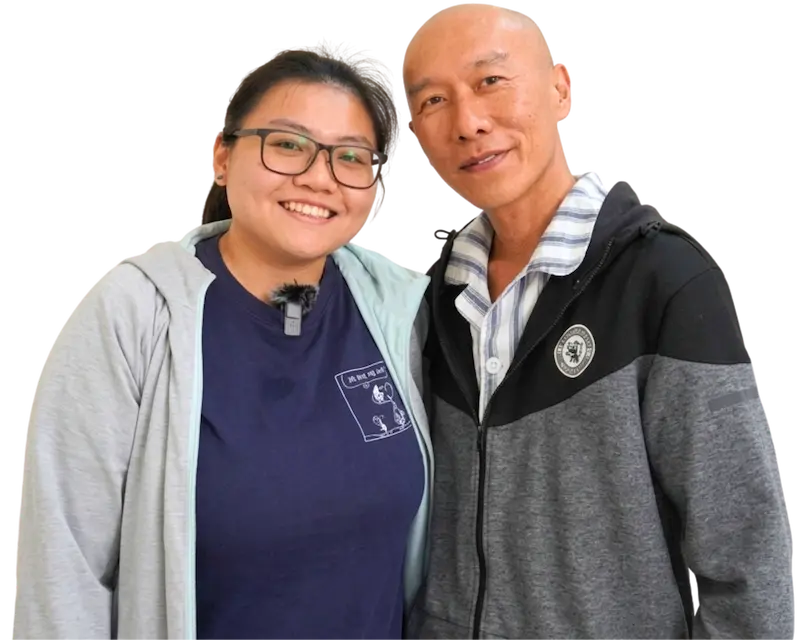
Ms Toh, a 55-year-old woman from Johor Bahru, Malaysia, had already faced cancer once in her life. Five years before her lung cancer diagnosis, she had been treated for lymphoma, enduring six rounds of chemotherapy at a local hospital in Malaysia. The treatment took a visible toll — nausea, vomiting, and hair loss were constant companions during that period — but she pulled through and reached the five-year survival milestone that doctors often consider a turning point.
Yet cancer had other plans. When it returned, this time in her lungs, Ms Toh refused to let fear take over. “I have made through the five-year survival period, but I know people always face cancer recurrence, when it comes back, we treat it,” she said, reflecting the same resilience that had carried her through her first diagnosis.

A Difficult Diagnosis Emerges
In September 2017, Ms Toh began experiencing breathing difficulties that led her to seek medical attention. Scans revealed fluid buildup in her lung along with tumors spread across her left lung, the largest measuring roughly 2 cm. She was diagnosed with stage IV lung cancer.
Doctors in Malaysia worked to manage the pleural effusion and prescribed medication to keep it under control. However, after more than a month on the medication, Ms Toh began experiencing troubling side effects — cracked and bleeding fingers, chapped lips, and a persistently dry nose. The worsening symptoms prompted her and her family to explore other treatment paths.
Finding Hope Through a Cancer Symposium
The turning point came in October 2017, when Ms Toh’s son came across information about a cancer symposium being held in Johor Bahru, discovered through an online search and a local newspaper listing. The family decided to attend together, and there Ms Toh met Prof. Xu Haitao, a consultant physician from the Kuala Lumpur office of St. Stamford Modern Cancer Hospital Guangzhou.
During their consultation, Ms Toh learned about minimally invasive cancer treatment approaches — techniques known for causing less trauma to the body, delivering strong therapeutic results, and producing fewer side effects than conventional options. This gave her renewed hope, and she became convinced that this path could offer a real chance at managing her condition effectively.
Traveling to Guangzhou for Treatment
With help from the hospital’s Kuala Lumpur office team, Ms Toh’s visa arrangements were completed, clearing the way for treatment abroad. She and her son arrived at St. Stamford Modern Cancer Hospital Guangzhou on November 9, 2017.
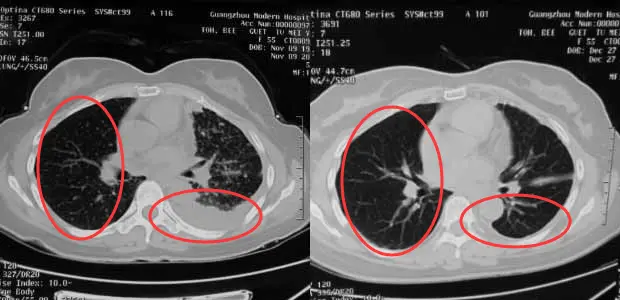
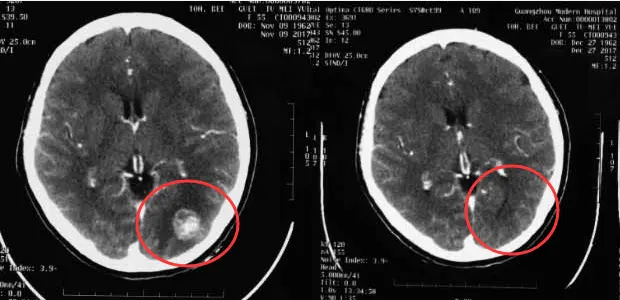
Upon admission, she underwent a full physical evaluation along with an additional brain CT scan to check for possible metastasis. The results were sobering: cancer had spread from her left lung to the lung hilum, both lung lobes, and the left pleura. More concerning still, the largest lung tumor had grown from 2 cm to 4 cm, and a new tumor measuring about 2 cm had appeared in her brain.
Faced with this progression, the hospital’s Multidisciplinary Team (MDT) quickly designed a treatment plan combining three rounds of interventional therapy with chemotherapy, tailored to her specific condition.
Why Interventional Therapy Was the Chosen Approach
According to Dr. Ma Xiaoying, Ms Toh’s attending physician, the decision to use interventional therapy was made specifically to reduce the harsh side effects typically associated with standard chemotherapy.
Dr. Ma explained the mechanism behind the treatment:
- Anticancer drugs are delivered directly to the tumor site through the arteries, rather than circulating through the entire body
- This targeted delivery allows for a higher drug concentration exactly where it’s needed most
- Cancer cells are destroyed more effectively while healthy organs remain largely unaffected
- Patients generally experience a smoother, more tolerable treatment process overall
Remarkable Results After Treatment
The outcome of the three-session interventional therapy protocol exceeded expectations. The fluid that had accumulated in Ms Toh’s lung cleared completely, and the primary tumor shrank dramatically — from close to 4 cm down to approximately 1 cm.
Perhaps most striking was the outcome for the brain metastasis: the tumor that had spread to her brain disappeared entirely following treatment.
A Spirit of Optimism Throughout
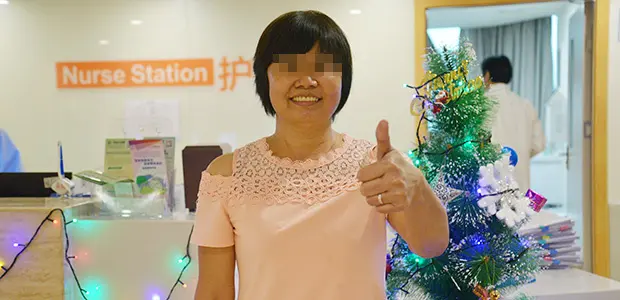
Those who met Ms Toh during her hospital stay often remarked on her cheerful demeanor. Her laughter was a regular sound throughout the ward, and her positive outlook left a lasting impression on the medical staff caring for her.
She recalled how she handled her first cancer battle years earlier: “I wasn’t depressed and stay home all day long even during the period I lost all my hair after chemotherapy five years ago. I did grocery shopping as usual and had fun with my friends.” Her advice to fellow patients was simple — stay calm, don’t overthink, and trust the treatment process. “Confronting cancer, one should be positive and stop overthinking. Just take it easy and treat it as cold and follow doctor’s guidance.”
Today, Ms Toh remains in stable condition, her journey standing as a reminder that even advanced-stage diagnoses can respond well to the right combination of targeted treatment and a resilient mindset.