

From Diagnosis to Recovery: Targeted Therapy Reverses Advanced Thymic Malignancy in Four Months
An Unexpected Diagnosis Changes Everything
In September 2018, Taruma Tribudiman’s life took an unexpected turn when physicians in Indonesia identified a diagnosis of thymic malignancy. Despite maintaining a disciplined approach to wellness through consistent physical activity and mindful nutrition, Taruma found himself facing one of medicine’s most challenging conditions. The diagnosis came as a shock—he had done everything right, yet cancer had emerged.
Seeking guidance, Taruma’s family connected him with Jakarta’s representative office of a specialized cancer treatment facility. During an initial consultation, medical professionals provided him with detailed information about advanced treatment options. Among these options were minimally invasive approaches that stood in sharp contrast to traditional surgical intervention. This discovery sparked hope, particularly when Taruma recalled that a cherished family member had undergone similar treatment in China years earlier and remained in excellent health.
Arriving for Specialized Treatment
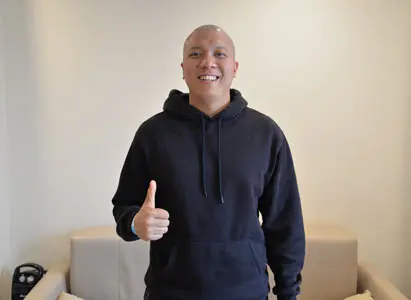
On September 17, 2018, Taruma arrived at the specialized cancer treatment center in Guangzhou, accompanied by his parents. Comprehensive diagnostic evaluation, including tissue sampling, confirmed his condition: stage 3B thymic cancer with a substantial tumor mass measuring 5 centimeters in diameter. This finding presented a medical dilemma, as the tumor’s location adjacent to critical cardiac structures and major blood vessels placed traditional surgical approaches at considerable risk.
The attending physician, a senior oncologist with extensive experience in mediastinal malignancies, explained the situation clearly: “Thymic tumors develop in the anterior mediastinum, positioned directly beside the heart and major vascular structures. Attempting surgical removal carries substantial risk of cardiac damage, vascular injury, and uncontrolled bleeding. In contrast, targeted minimally invasive therapies bypass these dangers entirely. These approaches concentrate their therapeutic effect directly on the cancerous tissue without requiring extensive surgical removal, resulting in minimal trauma and dramatically fewer complications.”
After thorough discussion with the medical team, a comprehensive treatment strategy was developed: a combination of particle implantation and interventional chemotherapy.
Beginning the Minimally Invasive Treatment Path
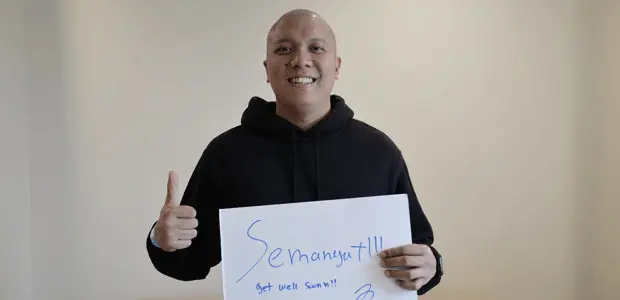
Prior to hospitalization, Taruma had struggled with persistent headaches and compression sensations in his neck region. He recalled his initial anxiety about undergoing a procedure he had never encountered before: “I had never heard of particle implantation therapy, so naturally I felt apprehensive about the procedure. However, immediately following the treatment, I experienced remarkable relief—my headaches disappeared and the neck compression sensations subsided. The results surprised me in the best possible way.”
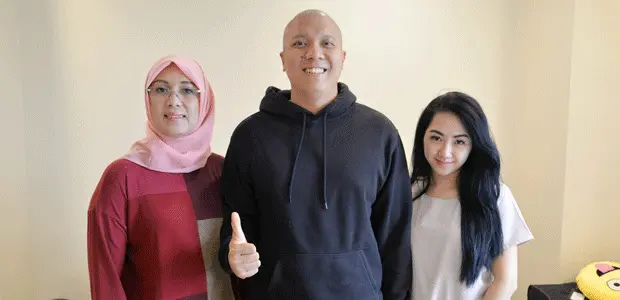
On October 8, 2018, Taruma underwent his first particle implantation procedure. This technique involves introducing radioactive particles directly into the tumor under precise imaging guidance. The number of particles deployed depends on tumor volume; larger masses require increased particle distribution. In Taruma’s situation, physicians implanted twenty particles throughout the malignant tissue. Rather than requiring surgical removal of cancerous cells, these particles functioned similar to targeted detonation, concentrating destructive energy within the tumor while preserving surrounding healthy tissue.
Interventional Chemotherapy: Precision Medicine at Work
Five days following particle implantation, Taruma received his initial interventional chemotherapy session. By this point, his confidence had increased substantially. He described the experience: “During interventional therapy, I learned that the oncologist inserted a specialized catheter through my femoral artery into the blood vessel directly supplying the tumor. This allowed chemotherapy medications to be delivered with exceptional precision directly into the lesion. Compared with intravenous chemotherapy administered throughout the entire body, this approach proved far less uncomfortable and considerably more targeted. I was particularly impressed that the following day, I felt well enough to walk independently from my hospital bed.”
The intervention worked through a straightforward yet elegant principle: instead of flooding the entire body with anticancer drugs, interventional therapy channels these powerful medications through vascular pathways that feed the tumor itself. This concentrates therapeutic benefit precisely where needed while dramatically reducing systemic exposure and associated side effects.
Treatment progression during his hospital stay:
- October 8: First particle implantation procedure completed
- October 13: Initial interventional chemotherapy session administered
- October 21: First complete treatment course concluded
- Post-discharge evaluation (November 3): Tumor reduction to 2.4 centimeters documented
Remarkable Recovery and Ongoing Stability
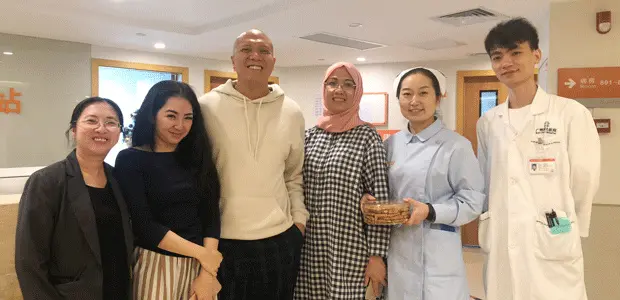
By the time Taruma returned to Indonesia in early November, imaging studies revealed significant tumor shrinkage—the mass had been reduced from the original 5 centimeters to 2.4 centimeters, representing a reduction of more than half its initial volume. Encouraged by this progress, he continued with additional treatment sessions during subsequent visits.
Following three complete interventional therapy courses and a total of one particle implantation procedure, Taruma’s tumor further diminished to just 1.2 centimeters. More significantly, the troublesome symptoms that had plagued him—including neck compression, persistent fatigue, and dizziness—had completely resolved. His condition stabilized, and imaging surveillance showed no evidence of progression.
Reflecting on his journey, Taruma became an advocate for other cancer patients facing similar diagnoses. During each hospital visit before discharge, he made a point to encourage fellow patients: “Cancer is no longer the death sentence it once was. My own relative has now thrived for eight years following minimally invasive therapy here, living a completely normal and healthy life. We too can achieve this outcome—if we follow our physicians’ guidance carefully and commit to our treatment plan, we can overcome this challenge. Never lose hope!”
His story stands as powerful testament to how precision medicine, combined with patient determination and family support, can transform the trajectory of a serious malignancy into a success story.