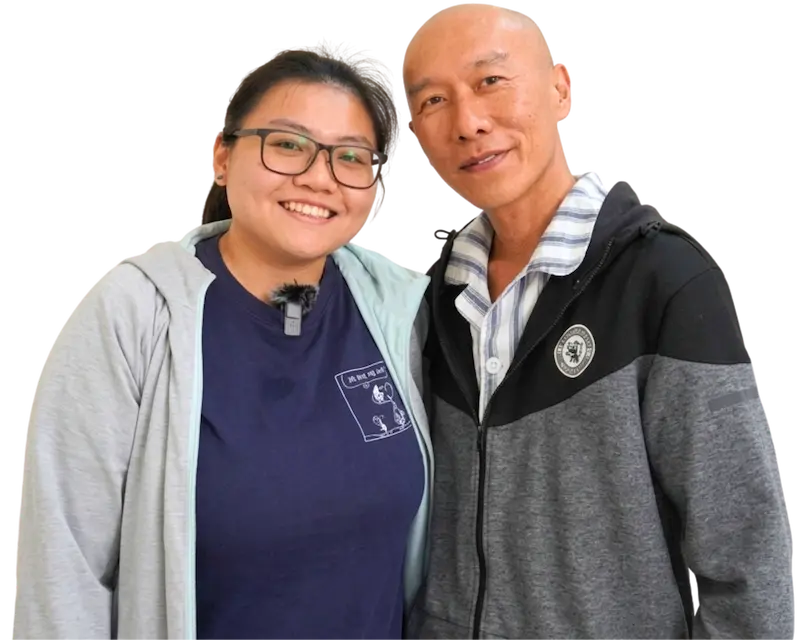


From Wheelchair to Recovery: How Peng Kooi’s Battle with Advanced Nasopharyngeal Cancer
A Moment of Realization
In May 2014, Peng Kooi from Malaysia first noticed traces of blood in his saliva. When he visited a local physician, the doctor dismissed it as a minor throat irritation that would heal on its own. Peng Kooi initially accepted this explanation, but the symptom persisted and gradually worsened. His wife grew increasingly concerned that something more serious might be occurring and strongly encouraged him to seek a consultation with an ear, nose, and throat specialist.
Following imaging studies and tissue sampling, the diagnosis was confirmed: malignant nasopharyngeal cancer. Rather than succumb to fear, Peng Kooi responded with quiet determination. He explained his perspective: “When I received the nasopharyngeal cancer diagnosis, I did not feel afraid. In my view, cancer is not something to dread because every person carries cancer cells within their body. What truly matters is one’s approach and mindset. I decided to face this challenge with positivity and acceptance.”
A Path of Resistance and Consequences
When Malaysian oncologists recommended conventional chemotherapy, Peng Kooi declined their advice. He had concerns about the treatment approach available locally, stating that traditional chemotherapy would destroy healthy cells alongside cancer cells, resulting in significant adverse effects. Instead, a friend suggested an alternative medicine purported to strengthen immunity and eliminate cancer without harmful side effects.
His family expressed serious reservations about this approach, emphasizing that it lacked scientific validation and rigorous testing. Despite their earnest pleas, Peng Kooi remained convinced of his choice and proceeded with the alternative treatment. What followed was a year of taking this medication, but rather than improvement, his condition deteriorated progressively. He became increasingly emaciated, and two swellings developed in both sides of his neck, gradually enlarging and developing areas of discharge. He also experienced mounting difficulties with speech and swallowing.
The Turning Point
As Peng Kooi’s suffering intensified and his family watched helplessly, a new opportunity emerged unexpectedly in October 2016. His wife’s sister discovered St. Stamford Modern Cancer Hospital through social media and came across patient testimonials documenting the effectiveness of minimally invasive cancer treatments. The hospital was holding an anti-cancer educational event in Malaysia, and she registered to attend. Following the presentation, she enthusiastically recommended that Peng Kooi explore minimally invasive therapy as a treatment option.
Given his previous resistance to outside guidance, Peng Kooi remained unconvinced initially. However, the persuasive encouragement from his sister-in-law, combined with his deep affection for his wife, gradually shifted his perspective. He made the pivotal decision to travel to China for treatment, viewing the journey as an opportunity to spend meaningful time with his beloved spouse rather than merely undergoing medical procedures.
Assessment and Customized Treatment Strategy
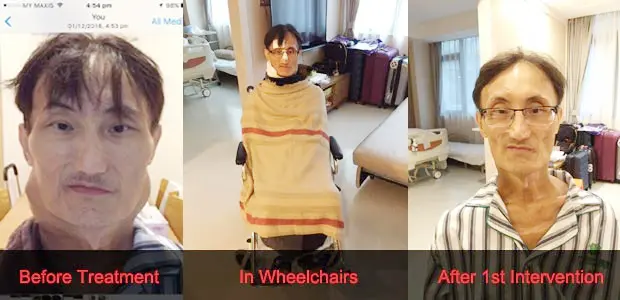
When Peng Kooi arrived at St. Stamford Modern Cancer Hospital on October 13, 2016, he entered in a wheelchair, severely compromised by disease progression. At that time, his weight had dropped to just 39 kilograms despite his height of approximately 1.7 meters. His physical frame appeared skeletal and fragile. Medical imaging revealed an extensively grown nasopharyngeal mass measuring 6×4 centimeters, along with a 7×8 centimeter tumor on the left side of his neck and a significantly larger 13×9 centimeter tumor on the right side. These advanced tumors had rendered him unable to ambulate independently, speak clearly, or consume food normally.
Dr. Liang Feilv and Dr. Hu Xiliu conducted comprehensive evaluations and identified a critical condition known as cancer cachexia—a state of severe, progressive muscle and weight loss accompanied by extreme malnutrition. This syndrome represents one of the most challenging aspects of advanced malignancy. Clinical data indicates that approximately half of all cancer patients experience cachexia during their illness, and in 10 to 25 percent of cases, this wasting syndrome contributes directly to mortality.
Cachexia develops through two primary mechanisms. First, as malignant tumors expand and spread to distant organs, they consume enormous quantities of the body’s nutritional resources. Second, in advanced disease stages, patients frequently lose appetite or become physically unable to eat, creating a severe nutritional deficit. The consequences are devastating: cachexia simultaneously depletes muscle tissue and function while severely compromising immune system capacity. This immunological deterioration accelerates cancer cell growth and dissemination. In Peng Kooi’s state of severe physical compromise, initiating aggressive anti-cancer therapy would have placed unbearable stress on his already weakened body.
The hospital’s multidisciplinary team (MDT) designed a personalized and phased treatment approach. Rather than immediately pursuing cancer-directed therapy, the first month of treatment focused on restoring his physical resilience through supportive measures, including traditional Chinese medicine and nutritional rehabilitation. This methodical approach allowed Peng Kooi to gradually regain appetite and achieve better sleep quality, while his protein intake and immune function steadily improved, preparing his body for the minimally invasive procedures ahead.
Remarkable Transformation
The therapeutic impact became evident quickly. Within two to three days following his first interventional therapy session, Peng Kooi observed substantial shrinkage of his cervical tumors, with no accompanying side effects. After the second interventional therapy procedure, the tumors on both sides of his neck had vanished completely. Over a 10-week period, Peng Kooi made four visits to the hospital and received five interventional therapy sessions.
The clinical results exceeded expectations. Peng Kooi’s weight increased from 39 kilograms to 55 kilograms, representing a gain of 16 kilograms over approximately three months. His capacity for independent movement returned, and he no longer required wheelchair assistance. His nasopharyngeal tumor had reduced by 60 percent. More significantly, he recovered normal appetite, restful sleep patterns, and an overall improvement in mental well-being and physical vitality.
A Patient’s Gratitude and Perspective
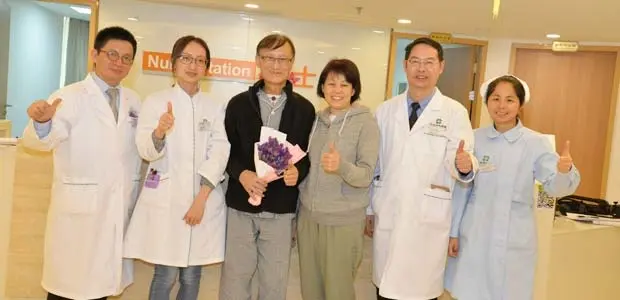
Peng Kooi expressed deep satisfaction with his experience at the hospital, saying: “I feel completely at home in this environment. The physicians and nursing staff demonstrate exceptional professionalism and genuine compassion for patient well-being. The hospital setting itself is warm and welcoming. I want to strongly recommend interventional therapy to others facing cancer. This approach directly delivers anti-cancer medications precisely into the tumor area, attacking cancer cells with accuracy and effectiveness while producing virtually no adverse effects. What has impressed me most is witnessing the remarkable transformations in other patients. Many arrive in poor health during their initial hospitalization, yet after one or two treatment cycles, their conditions improve dramatically. This hospital deserves the trust of cancer patients everywhere.”
He reserved special gratitude for his devoted wife and a spiritual mentor he referred to as an Indian master, saying: “My spiritual guide has been like God to me. He continuously assured me that recovery was possible, filling me with confidence and hope. Throughout my hospitalization, I felt his presence beside me constantly, and this awareness lifted me beyond physical pain. I am profoundly grateful for his influence in my life.”
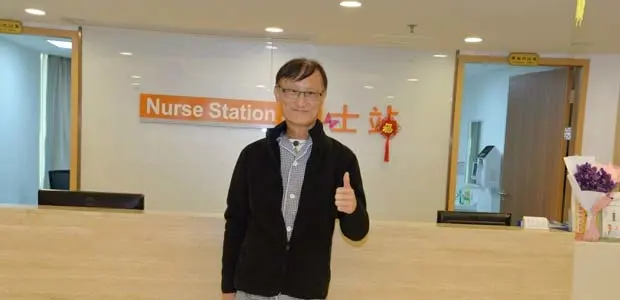
Looking ahead to his discharge, Peng Kooi mentioned attending to business matters awaiting him in Malaysia and the approaching Chinese New Year celebrations, which would allow him to reunite with his extended family and participate in holiday festivities. The hospital staff, equally gratified by his remarkable recovery, expressed their sincere hope that his success would inspire other cancer patients facing similar battles to maintain faith and persevere in their pursuit of healing.