

When Minimally Invasive Treatment Transforms an Advanced Lymphoma Journey
A Young Patient Discovers Hope Beyond Conventional Therapy
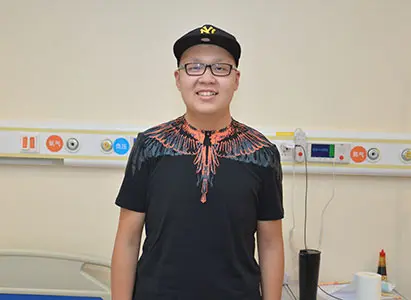
At just 22 years of age, Michael Sanjaya Irawan’s life took an unexpected turn when he received a diagnosis that would test both his physical resilience and emotional strength. Hailing from Surabaya, Indonesia, Michael’s story represents a turning point for countless patients seeking alternatives to traditional cancer management approaches. His journey demonstrates that determination, combined with access to advanced therapeutic options, can transform outcomes for those facing advanced-stage malignancies.
Early Symptoms and the Path to Diagnosis
During August 2018, Michael began experiencing a persistent respiratory cough accompanied by discomfort in his thoracic spine region. Initially dismissing these symptoms as minor ailments treatable with over-the-counter medications, he continued with his daily activities. However, by December of that year, his condition noticeably deteriorated. The cough intensified considerably, and he developed additional pain in his cervical spine. These escalating symptoms prompted him to seek professional medical evaluation.
Upon visiting a local healthcare facility, orthopedic specialists ordered imaging studies that revealed multiple abnormal growths distributed throughout his lung tissue. The initial clinical assessment suggested lung cancer as a working diagnosis, and physicians recommended a tissue biopsy to confirm the malignancy type. The recommended treatment pathway included conventional approaches such as chemotherapy and radiation therapy.
However, Michael harbored significant concerns about pursuing these traditional interventions. He questioned whether undergoing an invasive biopsy procedure might exacerbate his condition, and worried about the potential complications that could arise from chemotherapy and radiation. These apprehensions led him to decline the recommended therapeutic plan and instead pursue alternative options.
Seeking an Alternative Treatment Path
Rather than accepting the conventional treatment recommendations, Michael actively researched other approaches to managing his condition. Through discussions with family members and online research, he learned about St. Stamford Modern Cancer Hospital in Guangzhou and their minimally invasive therapeutic protocols. Intrigued by the possibility of less invasive treatment methodologies, he promptly contacted the hospital’s satellite office in Indonesia to schedule an appointment.
Following initial consultations at the Indonesian satellite office, Michael participated in a remote video consultation with specialized oncologists. During this session, the medical team reviewed his diagnostic imaging, discussed his clinical presentation, and outlined a personalized treatment strategy tailored to his specific condition. Satisfied with the treatment plan proposed and confident in the medical team’s expertise, Michael made arrangements to travel to Guangzhou for his therapeutic intervention.
Comprehensive Diagnostic Evaluation in Guangzhou
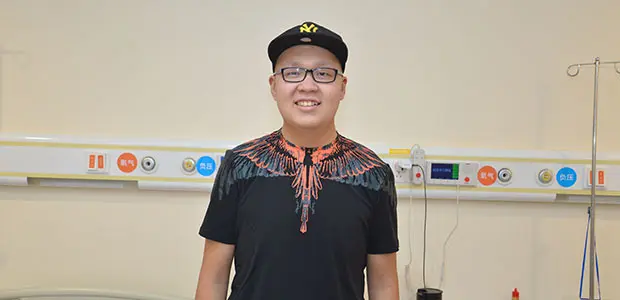
Upon arrival at St. Stamford Modern Cancer Hospital Guangzhou in December 2018, Michael underwent comprehensive diagnostic testing, including a tissue biopsy that definitively confirmed his diagnosis: stage IV lymphoma with metastatic involvement. The malignancy had already disseminated to his axillary lymph nodes and bilateral lungs, representing advanced disease requiring immediate intervention. Beyond the structural burden of the tumors, Michael was experiencing significant constitutional symptoms including persistent cough, localized bone pain at cervical and thoracic levels, insomnia, and diminished appetite—all of which substantially impacted his quality of life.
The hospital’s multidisciplinary team, comprising oncologists, radiologists, and specialized interventional physicians, collaboratively designed a customized treatment protocol centered on interventional therapy. This approach represented a paradigm shift from the conventional systemic chemotherapy that had initially been recommended in Indonesia.
Interventional Therapy: Mechanism and First Treatment Session
Michael’s therapeutic regimen consisted of multiple sessions of interventional therapy—an advanced minimally invasive technique that represents a significant evolution beyond traditional systemic chemotherapy. Unlike conventional chemotherapy that distributes medications throughout the entire bloodstream, interventional therapy precisely delivers high-concentration anticancer medications directly into the arterial blood supply feeding the tumor sites. This targeted approach maximizes therapeutic drug concentration at the malignant tissue while minimizing systemic exposure and associated side effects.
Acknowledging that undergoing any new medical procedure can generate anxiety, Michael admitted that he felt apprehensive before his first interventional therapy session despite the medical team’s thorough explanation of the procedure. However, the tangible benefits became apparent remarkably quickly. Following just the initial treatment session, several tumors located within his axillary region demonstrated visible regression on imaging studies.
As Michael progressed through subsequent treatment sessions, he observed a consistent pattern of clinical improvement. The overall disease burden steadily decreased, lymph node tumors in his cervical region gradually shrank, and the metastatic lesions affecting his lungs and other organ systems responded positively to therapy. Remarkably, Michael tolerated these interventions exceptionally well, experiencing minimal adverse effects in contrast to the severe toxicities commonly associated with systemic chemotherapy and radiation therapy.
Progressive Symptom Resolution and Treatment Outcomes
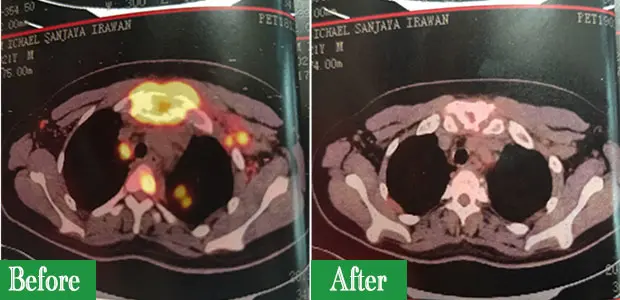
By the completion of three consecutive interventional therapy sessions, Michael experienced dramatic clinical improvements. The chronic cough that had plagued him for months completely resolved. The localized bone pain affecting both his thoracic and cervical spine regions became substantially alleviated, finally allowing him to sleep through the night without discomfort-related interruptions. His appetite gradually normalized, and his overall energy levels progressively improved.
Following the fourth and final interventional therapy session, the results were remarkable. The persistent cough remained completely resolved, and objective imaging studies demonstrated that approximately 90 percent of his measurable tumor burden had disappeared. Most significantly, tumor metabolic activity—a key indicator of remaining viable malignant cells—achieved complete remission, indicating the disease was no longer actively progressing. Michael’s overall physical condition showed substantial enhancement, with restored appetite, improved sleep quality, and renewed ability to engage in normal daily activities.
Understanding Interventional Therapy’s Advantages
Interventional therapy functions as an enhanced refinement of conventional systemic chemotherapy delivery. The procedure involves accessing the arterial blood vessels directly supplying cancerous lesions and infusing high-concentration anticancer agents through these vessels into the tumor tissue itself. This precision-targeting methodology ensures thorough and effective tumor cell elimination while maximizing drug concentration where it is therapeutically needed.
This therapeutic approach particularly benefits patients with intermediate or advanced-stage malignancies who are unsuitable candidates for surgical intervention or who prefer to avoid conventional systemic chemotherapy and radiation therapy due to concerns about toxicity. By sparing surrounding healthy tissue from high drug exposure, interventional therapy effectively destroys malignant cells while significantly reducing collateral damage to normal biological structures.
Michael’s Message: Hope for Other Cancer Patients
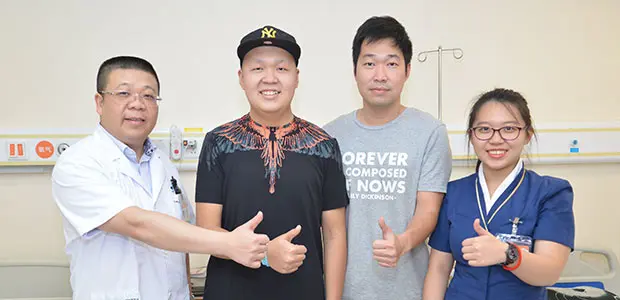
Upon his discharge from the hospital, Michael expressed profound gratitude to the entire care team—the attending physicians, nursing staff, and medical interpreters whose expertise and compassion guided him through his treatment journey. Reflecting on his transformation, he acknowledged how access to advanced minimally invasive technologies had profoundly impacted his prognosis and quality of life.
Most powerfully, Michael extended encouragement to other individuals currently battling cancer, urging them not to abandon hope even when confronting a serious diagnosis. He emphasized the importance of maintaining psychological resilience and an optimistic mindset throughout treatment. He expressed appreciation for the medical professionals dedicated to providing innovative care and reflected on the value of faith and spiritual strength in overcoming health challenges. His message resonates simply: resistance and determination, coupled with access to cutting-edge therapeutic innovations and compassionate medical care, can yield remarkable transformations even in advanced malignancy.