


A Minimally Invasive Victory: Combined Knife Ablation Defeats 10cm Sarcoma
A Patient’s Journey Through Cancer Recurrence
Ms. Li’s story represents a triumph of modern medical innovation. At age 40, she had previously battled spindle cell sarcoma and underwent surgical intervention to eliminate the malignancy. For a time, she believed her ordeal had concluded. However, three years later, the disease returned with a vengeance. Towards the conclusion of the previous year, Ms. Li began experiencing an unusual foreign body sensation deep within her abdominal and pelvic regions. Accompanying this discomfort came intensifying pain in her left leg that progressively worsened, making daily activities increasingly difficult and affecting her quality of life.
Upon undergoing imaging review and clinical assessment, the diagnosis became clear: her spindle cell sarcoma had recurred. The recurring lesion presented a formidable challenge. The pelvic mass measured approximately 10 centimeters in diameter and had invaded the musculature of the left gluteus maximus. More concerning still, the expanding tumor compressed nearby nerve structures responsible for leg mobility and sensation, resulting in the progressive pain and functional impairment she experienced.
The Combined Knife Solution: An Innovative Treatment Approach
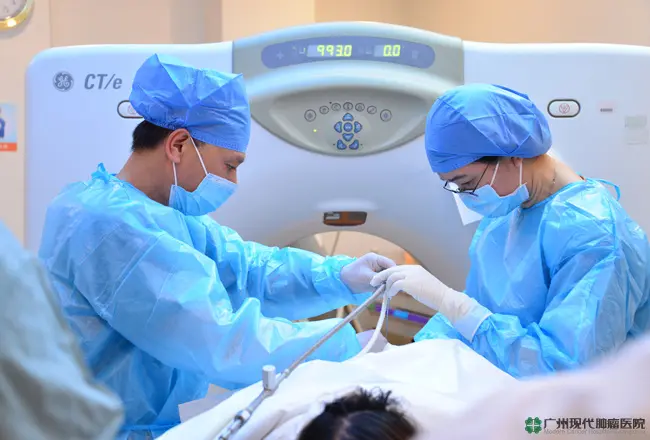
Faced with this complex clinical scenario, Director Dai Wenyan of the hospital’s Oncology Department, alongside the collaborative expertise of specialists from the Minimally Invasive Surgery Department and imaging team, determined that conventional surgical resection would prove inadequate and potentially unsafe for this patient. On March 7th, they implemented an advanced ablation strategy utilizing the Combined Knife technology—marking this institution’s inaugural clinical application of this groundbreaking treatment modality.
The Combined Knife represents a paradigm shift in tumor management, despite its misleading name. Rather than functioning as an actual surgical instrument, it operates as an ablation probe measuring a mere 2 millimeters in diameter. This sophisticated device possesses remarkable thermal capabilities, cycling between extremely low temperatures of -196 degrees Celsius and significantly elevated temperatures of 80 degrees Celsius. Through precisely controlled alternation between these extreme thermal environments, the technology delivers comprehensive tumor cell destruction.
Technical Advantages and Clinical Rationale
Director Dai elaborated on why this technology represented the optimal therapeutic strategy for Ms. Li’s particular situation. The recurrent sarcoma’s substantial size, combined with its invasion into adjacent pelvic structures, rendered traditional open surgery inadvisable. The Combined Knife methodology offered a superior alternative. A single needle puncture generates an ablation field spanning 4.5 to 6 centimeters in diameter, substantially reducing the number of needle placements required and correspondingly minimizing procedural trauma and associated complications.
The financial implications also favored this approach, reducing the overall cost burden borne by the patient. Beyond these practical considerations, the Combined Knife achieves extraordinary therapeutic efficacy through its dual-temperature mechanism. The sequential application of extreme cold followed by intense heat creates an environment profoundly hostile to malignant cell survival.
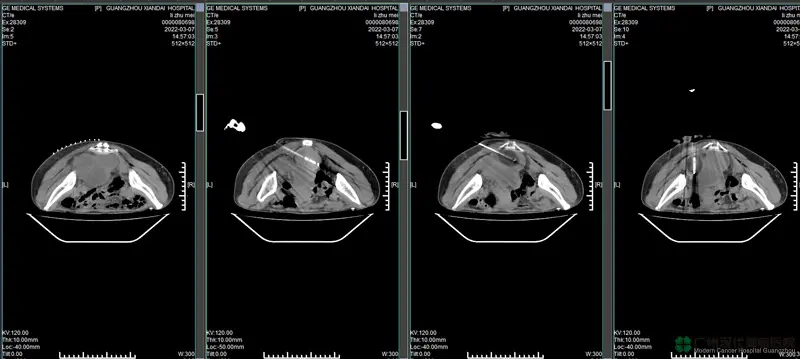
Director Dai emphasized that this combined cryo-hyperthermic approach typically produces superior tolerability compared to conventional ablation methodologies. Through precision ablation utilizing the Combined Knife, approximately 90 percent of the tumor mass could be effectively neutralized, effectively controlling the malignancy and creating opportunities for subsequent therapeutic interventions. Furthermore, the procedure’s efficacy in tumor destruction helps prevent devastating complications including intestinal obstruction, urinary tract blockage, and permanent loss of leg function—all potential consequences had the tumor continued its progression unchecked.
Remarkable Post-Treatment Recovery
The morning following her procedure, Ms. Li spoke with Director Dai Wenyan and expressed her profound satisfaction with the results. She reported dramatically improved comfort levels, noting that sensation had returned throughout her entire leg with markedly reduced discomfort. Most significantly, she had experienced her first peaceful, uninterrupted night’s sleep in months. When reflecting on her surgical experience, Ms. Li highlighted that the minimally invasive nature of the procedure meant she remained fully conscious throughout the intervention, experiencing minimal procedural discomfort—a stark contrast to more invasive surgical alternatives.
Understanding Combined Knife Technology in Broader Context
Ablation-based minimally invasive techniques have emerged as increasingly prevalent therapeutic modalities in contemporary oncology, with established track records of clinical effectiveness. Established ablation methodologies such as Argon-Helium Knife Cryotherapy and microwave ablation have demonstrated considerable therapeutic value. The Combined Knife represents the next evolutionary step, developed through independent research conducted by the Technical Institute of Physics and Chemistry under the Chinese Academy of Sciences. This innovative system integrates high-temperature and low-temperature ablation technologies, enabling alternating thermal cycles that achieve minimum temperatures of -196 degrees Celsius and maximum temperatures reaching 80 degrees Celsius within a compressed 20-minute treatment window.
Perhaps most advantageously, this methodology requires no general anesthesia, permitting patients to undergo treatment while maintaining consciousness and experiencing minimal to no pain sensation. The applicability of Combined Knife technology extends broadly across solid malignancies, demonstrating effectiveness against more than 80 percent of solid tumor types. Its therapeutic range encompasses lung carcinoma, hepatic cancer, pancreatic malignancy, renal carcinoma, prostatic cancer, and breast cancer, among numerous additional malignancies.
A New Dawn for Advanced Cancer Patients
St. Stamford Modern Cancer Hospital Guangzhou has cultivated specialized expertise in minimally invasive tumor therapeutics throughout 16 years of dedicated clinical practice. The introduction of Combined Knife cold-thermal compound ablation into the institutional treatment armamentarium reflects the facility’s commitment to providing increasingly personalized and sophisticated therapeutic strategies. For patients who have exhausted or been deemed unsuitable candidates for conventional surgical intervention, this innovative technology offers renewed therapeutic hope and realistic prospects for meaningful disease control and improved quality of life.