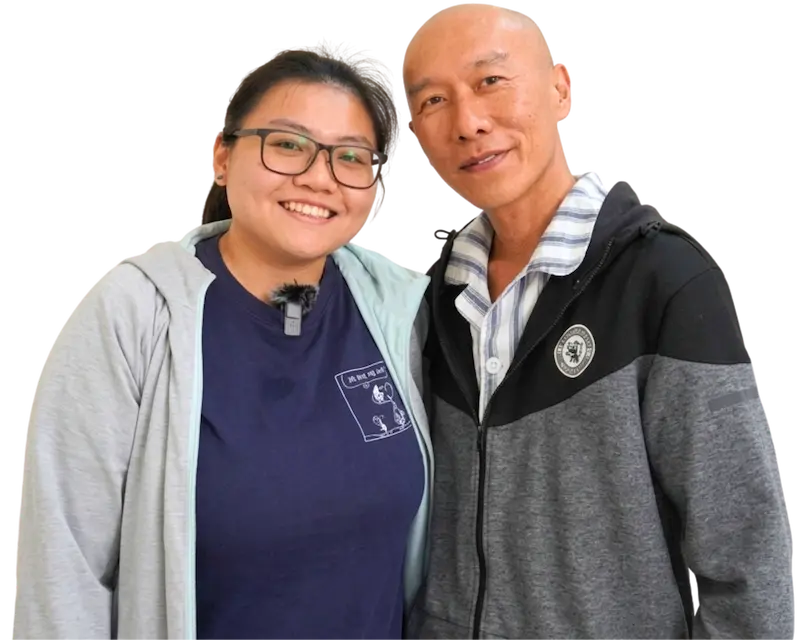


A Coconut-Sized Tumour, a Race Against Time: How Interventional Therapy and Cryotherapy Gave a Thai Patient a Second Life
Nearly nine months separated the day Prasit Sumonta was first admitted for treatment from the day he finally walked out of the hospital cured. Looking back on it now, in his own words, life has been kind to him ever since — he considers the number nine almost a personal lucky charm, since it also marks how many years he has now lived cancer-free. In Chinese culture, the number nine is associated with permanence and lasting good fortune, and Prasit feels that meaning fits his own story perfectly.
That reflection came in November 2023, when Prasit returned to St. Stamford Modern Cancer Hospital Guangzhou to take part in a reunion event honouring long-term cancer survivors, held to celebrate patients who have kept the disease at bay for many years.
From a Death Sentence to a Second Chance
Prasit was first diagnosed with cancer back in 2011, at a point in his life when he could never have imagined the word “longevity” would one day describe him. Doctors in his home country told him plainly that his throat cancer was terminal and that he had roughly two months left to live. He has described the terror of hearing that countdown — sixty days felt like it would pass in the blink of an eye, and the fear of dying from a disease in his own throat weighed on him constantly.
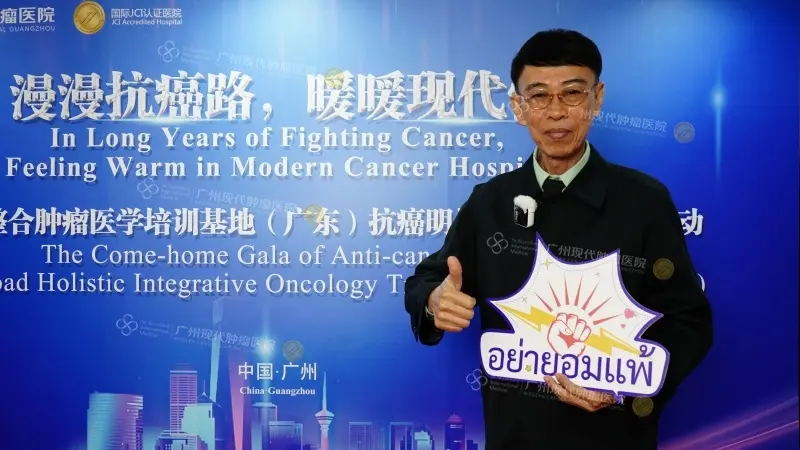
More than a decade later, entering his ninth year of remission, Prasit says his health is stable and unremarkable in the best possible sense — just an ordinary, healthy life. He credits St. Stamford Modern Cancer Hospital Guangzhou with giving him that second chance, and when he talks about his fight against the disease today, he does so with the calm confidence of someone who has already won.
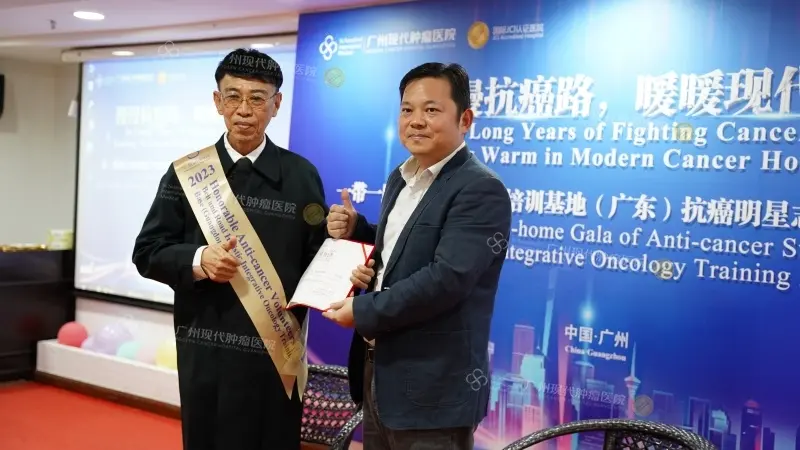
Wanting to pass that hope on to others, Prasit has since visited breast cancer and bowel cancer patients back home in Thailand to share his story. One of them, a colorectal cancer patient named Anocha, was so moved after hearing Prasit speak at a public event that she decided to seek treatment at the same hospital, telling others she hoped to follow his example and become an “anti-cancer star” herself one day.
A Tumour the Size of a Coconut
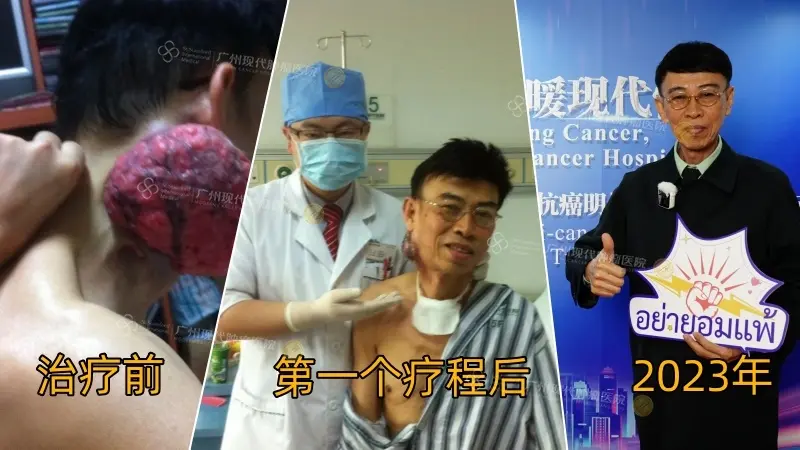
The trouble began around 2010, when a lump appeared on the right side of Prasit’s neck. It kept growing until it reached the size of a coconut, eventually breaking through the skin. The wound ulcerated, bled, and oozed a whitish discharge. The pain was constant enough that Prasit often couldn’t sleep, and over time he lost around 20 kilograms.
He recalls one especially frightening night when he dreamed he was drowning, only to wake up and realise the tumour had bled so heavily that his clothes and bedding were soaked through — he had, in effect, been lying in a pool of his own blood. Years of this took a psychological toll as well; he developed a habit of standing in front of the mirror, measuring the tumour with his hands, quietly hoping that one day it might simply vanish.
When Conventional Treatment Fell Short
In 2011, Prasit was formally diagnosed with laryngeal cancer, and local doctors started him on systemic chemotherapy. The side effects were severe enough that he came to dread every session — vomiting after each round left him fearful of even entering a hospital. When chemotherapy didn’t hold up, doctors suggested radiotherapy instead, but warned him that it would likely cause all of the teeth on the right side of his mouth to fall out, and recommended having them extracted beforehand to avoid compounding the damage. Prasit went through with the extractions, but the radiotherapy plan ultimately fell through anyway, partly because of long waiting lists at the local hospital.
Discouraged and wary of further side effects, Prasit stopped pursuing treatment altogether for a time, relying only on home remedies and daily self-care while his condition steadily worsened. It was around this low point that he and his family first came across St. Stamford Modern Cancer Hospital Guangzhou. The idea of travelling abroad for treatment took root slowly, like a seed, before finally growing into a real decision.
A Wife’s Devotion Through the Darkest Years
Prasit had read about the hospital in a newspaper and researched it further online, but he and his family were initially unsure whether it was legitimate, and worried about the cost of treatment overseas. After weighing the decision carefully, he ultimately followed his wife’s advice and arrived at St. Stamford Modern Cancer Hospital Guangzhou on 12 March 2015 — bracing himself, mentally, for the possibility that he might never make it back home.
Prasit openly credits his wife with keeping him alive. For roughly four years, she stayed constantly by his side, changing his dressings two or three times a day and enduring the ordeal alongside him. Because the tumour had compressed his airway, oesophagus, and larynx, he could only take in liquid food; his breathing grew laboured and his voice turned hoarse. His wife blended his meals into a liquid form and fed him through a tube. Together, they held on until a place opened up for him at St. Stamford Modern Cancer Hospital Guangzhou.
The Multidisciplinary Team’s Approach: Shrinking a Coconut to the Size of an Egg
The trip abroad marked the turning point in Prasit’s story. He later described it as nothing short of a miracle: after just over 20 days of treatment, his tumour shrank from the size of a coconut down to roughly the size of an egg, and his sense of taste returned just two days before he was discharged.
Upon admission, imaging showed the tumour on the right side of his neck measured approximately 20 x 18 x 10 cm, with an additional swollen lymph node on the left side of the neck measuring about 5 x 4 x 3 cm. He was diagnosed with laryngeal squamous cell carcinoma with bilateral cervical lymph node metastasis, classified as stage IVb.
Because the tumour was compressing his laryngeal trachea and putting his airway at risk, the multidisciplinary team (MDT) at St. Stamford Modern Cancer Hospital Guangzhou first prioritised a tracheotomy to relieve his breathing difficulties and create a safer foundation for the minimally invasive treatments that would follow. Surgeons carried out the tracheotomy on 14 March, followed by interventional therapy and cryosurgery on the right neck tumour on 23 and 30 March respectively.
Comparing photographs taken at admission on 12 March with those taken at discharge on 5 April, Prasit’s attending physician noted that the tumour had shrunk by roughly four-fifths over that period.
- Prasit reported being able to see visible shrinkage of the tumour on a daily basis following the intervention.
- By the fourth day after the procedure, the tumour had already reduced by around 40 percent.
- He has said that was the point he began to feel genuine confidence again — the first time in four years he had laughed with real happiness.
Nearly a Decade Later, Still Going Strong
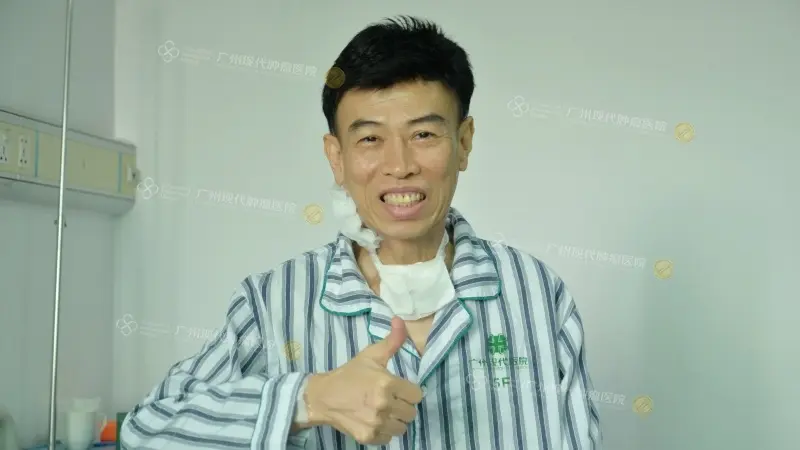
The rest of Prasit’s treatment and recovery proceeded smoothly. Almost nine years on, he is now in his seventies, with a full head of dark hair and a visibly energetic, cheerful presence. Looking at him today, it is hard to picture the disease that once threatened to close off his airway entirely — a battle that modern medical technology ultimately allowed him to win decisively.
Prasit’s story has since resonated with many other patients, and he continues to be held up as an example of what long-term recovery can look like. His message to others facing a cancer diagnosis is simple: stay optimistic, and never give up. He tells fellow patients that choosing the right treatment path matters enormously, and that he considers St. Stamford Modern Cancer Hospital Guangzhou to have been the right choice for him — a sentiment he offers as his most sincere piece of advice to anyone walking a similar road, hoping they too can overcome the disease as soon as possible.
About the Treatment Technologies Used
Cryotherapy (Argon-Helium Knife)
Cryotherapy, also known as Argon-helium Knife treatment, works by releasing argon gas rapidly through a needle tip, which can freeze tumour tissue to between -120°C and -180°C within about 10 seconds, forming an ice ball that induces coagulation necrosis in the tissue. Helium gas is then released through the same needle, rapidly raising the temperature to around 20°C–40°C, which thaws the ice ball quickly and causes it to rupture, destroying the tumour tissue in the process.
- It is a physical form of treatment associated with relatively few side effects.
- It can be applied to nearly all types of solid tumours.
Interventional Therapy
Interventional therapy involves puncturing the target area under the guidance of medical imaging equipment, using precision guide wires and instruments to deliver anti-tumour drugs directly into the tumour at concentrations 2 to 8 times higher than what intravenous administration would achieve. At the same time, the arteries supplying blood to the tumour are embolised, with the goal of shrinking or eliminating the tumour altogether.
- Advantages include reduced trauma, fewer complications, greater safety, and faster recovery compared with more invasive procedures.
- It is often suitable for patients who have not responded well to conventional radiotherapy or chemotherapy, or who are unwilling or medically unsuitable for surgery.