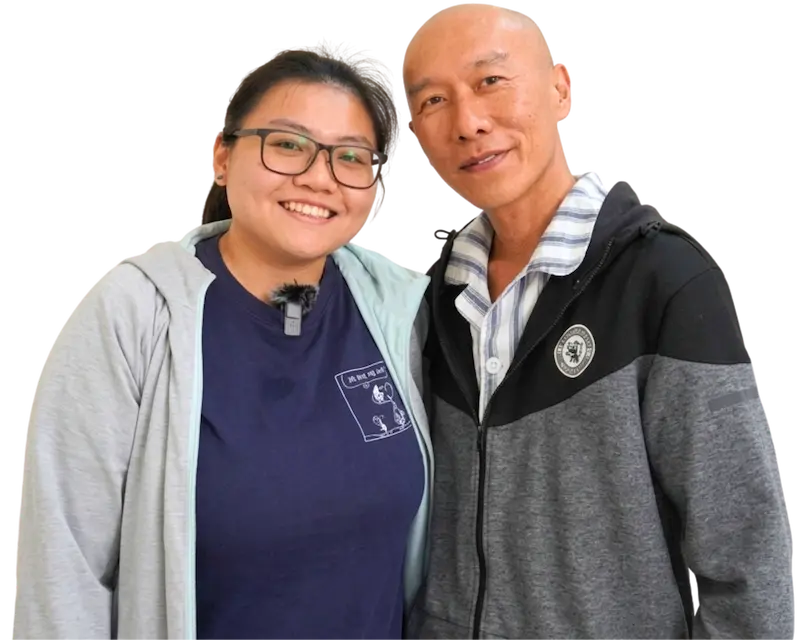


Vietnamese Man’s Gallbladder Cancer Controlled Through Minimally Invasive Care
An Unexpected Diagnosis
At just 27 years old, Nguyen Trong Thuy spent his days working in a greenhouse vegetable operation in Vietnam. He felt healthy, aside from the occasional fatigue he chalked up to long hours on the job. So when a routine biannual health screening in December 2017 revealed a growth in his gallbladder, it came as a shock. Physicians recommended surgical removal once the New Year holidays had passed.

Surgery Reveals a Bigger Problem
In March 2018, Thuy underwent surgery at Viet Duc Hospital, one of Vietnam’s most respected medical institutions, to remove the gallbladder mass. But the procedure uncovered something far more serious: doctors discovered several additional growths in his liver. A biopsy performed shortly after confirmed the worst — gallbladder cancer that had already spread to multiple sites in his liver.
The news devastated Thuy and his family, particularly his wife and parents. Even after surgery and two rounds of chemotherapy, the emotional weight didn’t lift. Reflecting on how little warning he’d had, Thuy explained that his only symptom had been tiredness, which he’d always attributed to his physically demanding job rather than illness.
Finding Hope Abroad
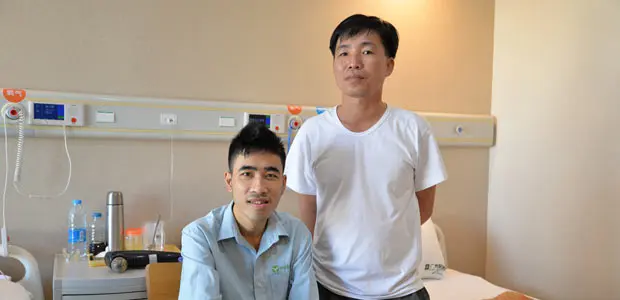
Just as the family felt they had run out of options, Thuy’s wife learned about St. Stamford Modern Cancer Hospital Guangzhou through a friend — a physician who had personally survived cancer. That friend had initially sought treatment in Singapore without success, but later achieved good disease control after switching to minimally invasive therapy at the Guangzhou hospital.
Encouraged by this account, the family wasted no time. They visited the hospital’s Hanoi liaison office for an initial consultation, and with support from the local staff in handling visa paperwork, Thuy traveled to China on May 10, 2018, accompanied by his father.
Facing Stage IV Cancer
Upon arrival, Thuy was in poor shape — experiencing stomach pain and persistent exhaustion, which he attributed to the toll chemotherapy had taken on his body. Following a full diagnostic workup, his attending physician, Dr. Hu Ying, delivered detailed findings: the gallbladder cancer had spread to his liver, producing two sizable tumors measuring 1.7cm by 1.9cm and 1.1cm by 1.3cm, along with several smaller nodules.
Despite the diagnosis being classified as Stage IV, Dr. Hu Ying offered reassurance — since the disease was confined to the liver, it remained a manageable target for treatment. Following review by the hospital’s Multidisciplinary Team (MDT), specialists designed a minimally invasive treatment plan combining interventional therapy and cryotherapy.
 2.asiancancer.com/uploads/allimg/2018/09/29/2-153538283.jpg]
Experiencing Cryotherapy for the First Time
Cryotherapy was an entirely new concept for Thuy, who noted that surgery was essentially the only cancer treatment option available where he lived. He described the procedure in detail: a needle delivering argon and helium gas is guided into the tumor, first freezing it into an ice-like mass, then rapidly warming it to destroy the cancerous tissue — all without traditional surgery.
- Performed under local anesthesia, so the patient remains conscious throughout
- Minimal pain reported during the procedure
- Limited bleeding compared to open surgery
During his first hospital stay, Thuy received both cryotherapy and interventional therapy.
Continuing the Treatment Journey
After roughly two weeks recovering at home, Thuy returned to the hospital on June 10, 2018, for a second round of interventional therapy. By this point, he had grown comfortable with the process, noting that the procedure — a hallmark of minimally invasive treatment — typically takes only about 30 minutes and results in limited bleeding and discomfort.
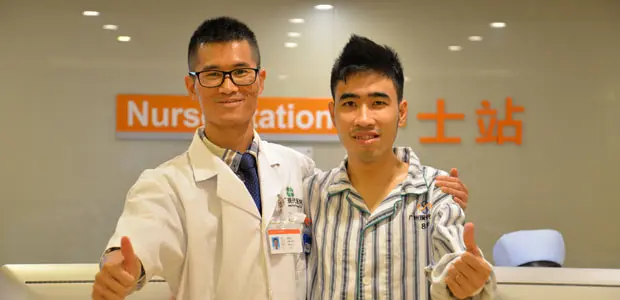
His third hospitalization came in early July. By then, Thuy looked and felt like a different person. His earlier symptoms had faded, he’d gained 2 kilograms during his time at home, and his energy had noticeably returned. A follow-up CT scan brought welcome news: the two larger liver tumors had shrunk by approximately 45%. To reinforce these gains, doctors scheduled another round of interventional therapy during this visit.
Looking Ahead with Renewed Hope
Thuy described being struck by how quickly minimally invasive therapy produced visible results, and how few side effects it caused compared to the systemic chemotherapy he’d experienced earlier. He expressed deep gratitude for the treatment approach, noting that at 27 years old — with a one-year-old daughter depending on him as the family’s main provider — he was determined to keep fighting, stay committed to his treatment plan, and build healthier habits going forward.